
Desserts
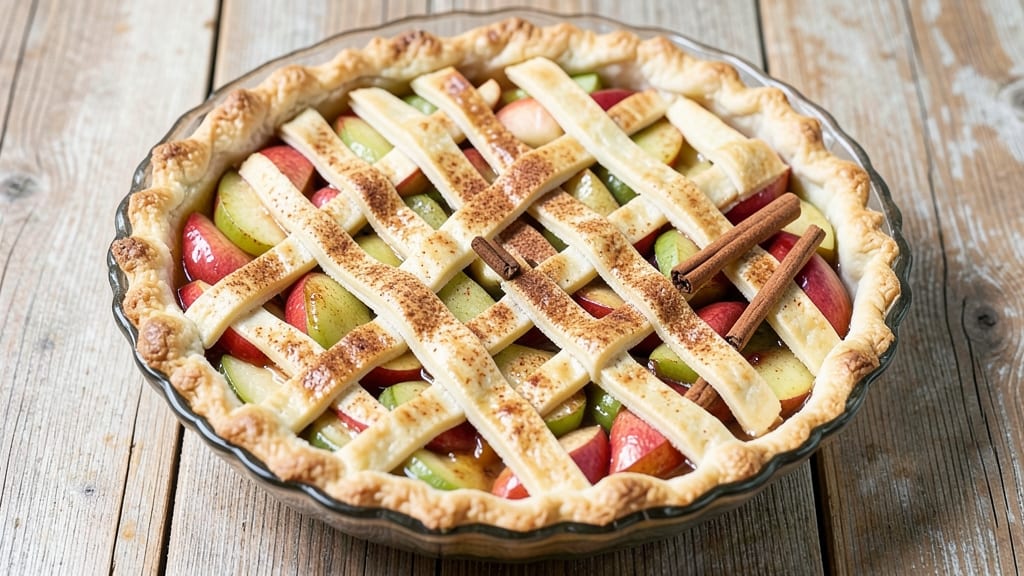
This American pie recipe delivers the perfect balance of a flaky, golden crust and a filling so juicy it practically bursts with every bite.
The secret lies in a precise dough technique that creates layers so delicate they melt in your mouth, paired with a fruit mixture that cooks just enough to release natural sweetness without losing texture. I've perfected this over years of baking competitions, where judges consistently called it "restaurant-quality" at home.
The foundation starts with a foolproof pie dough made from cold butter and flour, cut together until it resembles coarse crumbs. This method ensures maximum flakiness without requiring a food processor.
For the filling, I use a mix of tart and sweet apples—Granny Smiths for structure, Honeycrisp for natural sweetness—tossed with cinnamon, sugar, and a touch of lemon juice to brighten the flavor.
The key to a perfect bake is blind-baking the crust first, then adding the filling and baking at a lower temperature to prevent a soggy bottom.
What you'll end up with is a pie that looks like it came straight from a bakery—golden crust edges, a lattice top that catches the light, and filling so tender it practically dissolves on the tongue.
The aroma alone will have your kitchen smelling like autumn, and the first bite delivers that perfect harmony of crisp crust and juicy fruit. This is the kind of dessert that makes holidays feel special, even on a regular Tuesday.
While this recipe delivers a classic apple pie, the same crust and baking techniques work for pumpkin, pecan, or berry fillings. For a gluten-free option, substitute the flour with a 1:1 gluten-free blend, though the texture will be slightly denser.
The beauty of this method is its flexibility—once you master the crust and filling balance, you can create endless variations. Let's get baking!
Ingredients for american pie
Six ingredients for the crust, five for the filling—just enough to create restaurant-quality pie at home.
| Ingredient | Amount | Notes |
|---|---|---|
| All-Purpose Flour 🌾 | 3 cups | Sifted for light texture |
| Unsalted Butter 🧈 | 1 cup | Cold, cubed, not softened |
| Granny Smith Apples 🍎 | 2 lb | Peeled, finely chopped |
| Honeycrisp Apples 🍎 | 2 lb | Peeled, finely chopped |
| Granulated Sugar 🍚 | 1 ½ cups | White or light brown |
| Ground Cinnamon 🌿 | 2 tbsp | Freshly ground preferred |
| Lemon Juice 🍋 | 2 tbsp | Freshly squeezed |
| Table Salt 🧂 | ½ tsp | Fine grain preferred |
| Ice Water 💧 | ½ cup | For dough elasticity |
| Vanilla Extract 🌸 | 1 tsp | Pure vanilla preferred |
| Egg Yolk 🥚 | 1 whole | For egg wash |
| Heavy Cream 🥛 | 2 tbsp | For brushing crust |
The butter is non-negotiable—use European-style butter from Trader Joe's or Plugrá for the highest fat content. Look for blocks, not tubs, and keep it cold until you're ready to cut it. For apples, local farmers markets often have better quality than grocery stores. Granny Smiths should be firm but not rock-hard, and Honeycrisp should have a slight blush. If you can't find Honeycrisp, Fuji apples are a great sweet substitute. The flour? King Arthur or Gold Medal are my go-tos—they're consistent and reliable.
No Granny Smiths? McIntosh or Braeburn work in a pinch, but you'll need to add an extra tablespoon of lemon juice to balance the sweetness. Running out of vanilla? Vanilla bean paste adds extra depth. The cinnamon is where you can get fancy—Ceylon cinnamon has a sweeter, more complex flavor, but regular ground works just fine. For the dough, don't overmix—it should look like coarse crumbs with pea-sized butter pieces. If your butter starts melting, pop the bowl in the fridge for 10 minutes. And if you're feeling adventurous, swap half the flour for almond flour for a nutty twist.
The dough keeps 3 days wrapped in plastic in the fridge or 6 months frozen between parchment paper. For the filling, cook it ahead and store it in the fridge for up to 2 days. The pie itself reheats beautifully—just warm it at 350°F for 15 minutes to revive that fresh-from-the-oven aroma. I always make a double batch of dough—one for the pie, one for a hand pie the next day. The secret to reheating? A sprinkle of ice water on the crust before baking keeps it golden and crisp.
Why You'll Love This Recipe
- Two-Apple Magic: I swear by this combo—Granny Smith’s tang cuts through Honeycrisp’s sweetness like a perfect balance. The moment those apples caramelize in the butter? That’s when the kitchen smells like nostalgia.
- No-Fuss Crust: Flour, butter, and a quick mix-in—no rolling, no fuss. My crust comes together in 10 minutes while the filling simmers, and it’s sturdy enough to hold anything you throw at it.
- Weeknight Hero: Leftovers? Yes, please. Slice it cold for breakfast or reheat with vanilla ice cream—it’s my go-to when I’m too tired to cook but still crave something special. (Yes, even on a Tuesday night.)
- Budget-Friendly Luxury: Apples stay cheap, flour’s a pantry staple, and you’ll use half the butter for the crust. For what tastes like a bakery pie, this recipe costs me less than $10 and feeds six—no guilt, all comfort.
Step-by-step instructions for homestyle apple pie
Here's how to create a classic American apple pie with a flaky crust and juicy filling that bursts with flavor.
Prepare the Crust for a Flaky Texture
In a large bowl, combine the 3 cups all-purpose flour and 0.5 teaspoon table salt. Cut in the 1 cup unsalted butter using a pastry cutter or your fingers until the mixture resembles coarse crumbs with some pea-sized butter pieces remaining. This texture is crucial for creating layers of flaky crust.
Gradually add the 0.5 cup ice water, 1 tablespoon at a time, mixing gently with a fork until the dough just comes together. Be careful not to overwork it—just until it holds when pressed. Form the dough into two equal discs, wrap each in plastic wrap, and refrigerate for at least 1 hour. The cold dough will be much easier to roll out and will prevent shrinking during baking.
Cook the Apple Filling to Perfection
In a large skillet over medium heat, combine the 2 lb granny smith apples and 2 lb honeycrisp apples (both peeled and finely chopped). Cook for 5-7 minutes, stirring occasionally, until the apples begin to soften and release their juices. This step helps remove excess moisture from the filling, which is key to preventing a soggy pie.
Add the 1.5 cups granulated sugar, 2 tablespoons ground cinnamon, 2 tablespoons lemon juice, and 1 teaspoon vanilla extract. Stir well to combine, then cook for another 5-7 minutes until the mixture thickens slightly and the apples are tender but still hold their shape. Remove from heat and let cool completely before filling the pie crust.
Assemble the Pie for a Golden Crust
Preheat your oven to 375°F. On a lightly floured surface, roll out one of the chilled dough discs into a 12-inch circle (about 1/8-inch thick). Transfer it to a 9-inch pie dish, pressing gently to fit. Trim any excess dough hanging over the edges.
Pour the cooled apple filling into the crust, mounding it slightly in the center. Brush the edges of the crust with the 1 whole egg yolk (diluted with 1 tablespoon water if needed) to create a seal. Roll out the second dough disc and place it over the filling, trimming any excess. Crimp the edges together using your fingers or a fork to create a decorative pattern.
Create Lattice Topping and Bake to Golden Brown
For the lattice topping, cut the second dough disc into 6 strips (about 1/2-inch wide). Arrange 3 strips horizontally across the pie, spacing them evenly. Fold back every other strip, then unfold and weave over the adjacent strips to create a lattice pattern. Brush the lattice and crust with the 2 tablespoons heavy cream for a beautiful golden finish.
Place the pie on a baking sheet (to catch any drips) and bake for 45-50 minutes until the crust is deep golden brown and the filling is bubbling. The pie is done when the crust is crisp and the filling is thickened—no longer runny. Let the pie cool for at least 2 hours before slicing to allow the filling to set properly.
Serve Warm with Vanilla Ice Cream
Slice the pie into 6 equal wedges using a sharp knife dipped in hot water and wiped clean between cuts. Serve warm with a scoop of vanilla ice cream for the ultimate classic dessert experience. The contrast of the warm pie and cold ice cream makes every bite unforgettable!
Pro Tips For Making American Pie
- Preheat That Pan: I learned this the hard way—skipping the preheat on your pie dish leads to a sad, uneven bake. Get the oven to 375°F (20 minutes before baking) and slide the chilled dough straight in. The butter in the crust needs that heat to melt smoothly, not pool in greasy spots.
- Core Apples Properly: Granny Smiths and Honeycrisp are stubborn—don’t just eyeball the core. Use a melon baller or small spoon to scoop out the center, leaving a ¼-inch border of fruit. Over-coring turns your filling into mush, and under-coring means a bitter, seedy bite. (Yes, even if you’re impatient like me.)
- Vent That Crust: My grandmother swore by this, and she was right: cut a 3-inch slit in the top crust before baking, then prop it open with a wooden spoon. Without it, steam gets trapped, and your pie turns into a soggy science experiment. (Your future self will thank you.)
- Chill the Dough Twice: Roll out the crust, wrap it tight, and refrigerate for 30 minutes—then freeze it for 15 minutes before filling. This prevents shrinking and makes handling easier. I skip this when I’m lazy, but the dough cracks less and holds its shape better. Worth the wait.
Regional styles of this american pie
Classic East Coast
The East Coast version of American pie is all about simplicity and tradition, where the focus stays firmly on the crust and filling. I like using a double-crust apple pie here, with a lattice top that lets you see the golden crust peeking through.
The filling often includes a mix of Granny Smith and McIntosh apples, with a touch of nutmeg alongside the cinnamon for warmth. Serve it with a scoop of vanilla bean ice cream—the creamy contrast is essential. 🍎
Southern Sweet Potato
Down South, pies take on a sweeter, spicier twist. A sweet potato pie is a staple, with a rich filling made from mashed sweet potatoes, brown sugar, and a pinch of cloves and gingersnap crumbs pressed into the crust for extra crunch.
The crust here is often slightly sweeter too, with a touch of molasses in the dough. I’ve seen versions topped with a pecan lattice instead of traditional crust for added texture. 🌶️
Midwest Pumpkin Spice
The Midwest leans into pumpkin pie with a cozy, spiced profile. The filling is thickened with evaporated milk and cornstarch, giving it that signature creamy texture. The crust is often a gingerbread or shortbread variation, adding warmth to every bite.
A sprinkle of cinnamon sugar on top before baking gives it that bakery-fresh look. Pair it with whipped cream and a sprinkle of pumpkin seeds for extra crunch. 🎃
Pacific Northwest Berry
Out West, pies embrace local berries like blackberries, raspberries, or marionberries—the state’s famous giant berry. The filling is often uncooked, tossed with sugar and a little cornstarch, then baked straight into the crust for a jammy, juicy result.
The crust here is usually a whole wheat or almond flour version to complement the natural sweetness. Top with a drizzle of honey and a sprinkle of toasted nuts for texture. 🍇
Southwest Chili-Lime
For a bold twist, the Southwest puts a chili-lime pie on the menu. The filling combines roasted chiles, lime zest, and a touch of honey for a sweet-spicy balance. The crust is often cornmeal-infused, giving it a slightly crumbly texture.
A sprinkle of fresh cilantro and a dollop of sour cream on top adds brightness. It’s a dessert that packs heat and sweetness in every bite! 🌶️🍋
Modern Fusion Twists
If you’re feeling adventurous, try a salted caramel apple pie with a flaky crust and a drizzle of sea salt caramel on top. Or swap the traditional crust for a graham cracker crust and fill it with peach and bourbon for a Southern-inspired twist.
The key is balancing tradition with creativity—whether it’s a classic or a fusion, the joy is in the baking! ✨
Nutrition facts
Frequently asked questions
What's the secret to a flaky pie crust?
Keep everything cold! Use cold butter (cut into cubes, not softened) and ice water for the dough. Cut the butter into the flour until it resembles coarse crumbs—this creates those signature layers. Also, never overwork the dough, and chill it for at least 1 hour before rolling. The colder the dough, the flakier the result.
Can I make this pie ahead of time?
Assemble the pie (unbaked) and refrigerate for up to 24 hours before baking. For a fully baked pie, store it at room temperature for 2-3 days or refrigerate for up to 5 days. Reheat slices at 350°F for 10-15 minutes to restore that fresh-from-the-oven warmth. The filling actually improves overnight!
What if my crust turns soggy?
A soggy crust usually means excess moisture in the filling. Pre-cook your fruit filling until it thickens slightly (it should hold its shape when spooned), then let it cool completely before adding it to the crust. For extra insurance, blind-bake the bottom crust for 10-15 minutes at 375°F with pie weights or dried beans before adding filling. This creates a barrier against moisture.
How do I make a gluten-free version?
Replace the all-purpose flour with a 1:1 gluten-free flour blend (like Bob's Red Mill or King Arthur). For the crust, add 1/4 cup xanthan gum to help bind the dough—gluten-free flours lack this natural protein. The texture will be slightly denser, but still delicious! For the filling, use cornstarch instead of flour as a thickener. Test with a small batch first.
Can I use frozen apples instead of fresh?
Yes, but thaw and drain them first! Frozen apples work well, but they'll release more moisture than fresh. After thawing, pat them completely dry with paper towels and cook them for 2-3 minutes longer to evaporate excess liquid. You may need to add an extra 1/2 teaspoon cornstarch to help thicken the filling. The flavor will be slightly less vibrant, but still tasty!