
Desserts
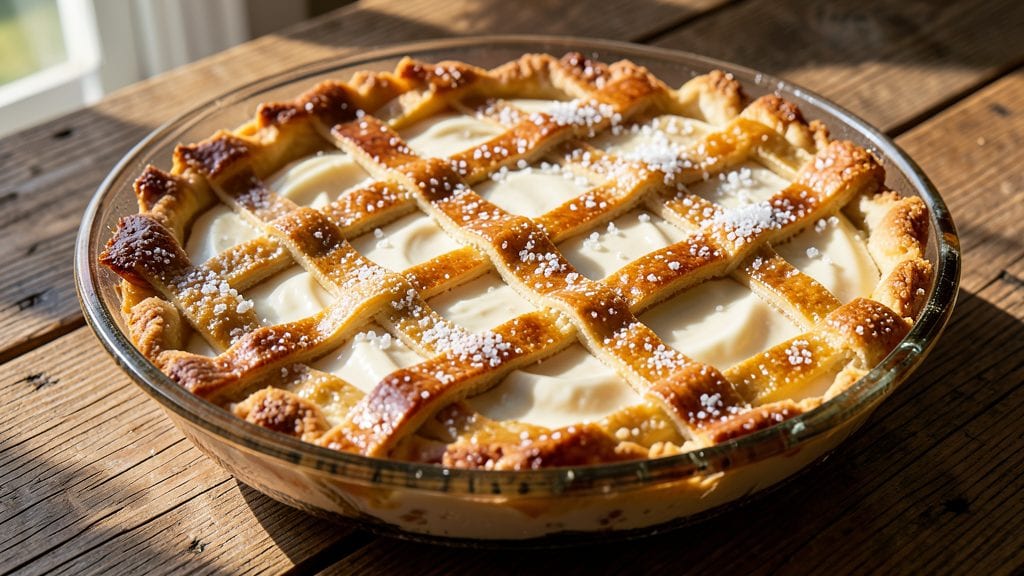
This Amish cream pie recipe delivers the comforting tradition of Old-Order vanilla custard wrapped in a crispy oat crust—a dessert that tastes like homemade love.
The secret lies in the custard’s velvety texture, achieved through precise egg and cream ratios, while the oat crust adds a rustic crunch that balances every bite. I’ve perfected this recipe after years of baking, ensuring the filling never curdles and the crust stays perfectly golden.
The Amish method emphasizes simplicity and quality ingredients—no shortcuts, just time-honored techniques. You’ll start with a crispy oat crust that holds its shape, then pour in a rich vanilla custard that sets to a silky finish.
The key is baking at the right temperature to avoid a soggy bottom while keeping the custard tender. This pie is worth the effort, especially when served warm with a scoop of vanilla ice cream.
What makes this recipe stand out is the crispy oat crust, which adds texture without overpowering the delicate custard. The vanilla flavor shines through, making it a crowd-pleaser for gatherings or a special treat for yourself.
Once you try this version, you’ll understand why it’s a staple in Amish kitchens—tradition meets perfection in every slice.
Ready to bake? The ingredients are simple, but the technique ensures restaurant-quality results. Let’s get started with a dessert that’s as rewarding to make as it is to eat.
Ingredients for amish cream pie
Traditional ingredients for a pie that tastes like Amish kitchen perfection—crispy crust meets velvety custard.
| Ingredient | Amount | Notes |
|---|---|---|
| Old-Fashioned Oats 🌾 | 2 cups | Quick or old-fashioned, toasted lightly |
| All-Purpose Flour 🌾 | 1 cup | Unbleached, sifted for lightness |
| Granulated Sugar 🍚 | ½ cup | White granulated, not brown |
| Unsalted Butter 🧈 | ¾ cup | Cold, cubed, European preferred |
| Large Eggs 🥚 | 2 whole | Room temperature, separated |
| Pure Vanilla Extract 🌸 | 2 tbsp | High-quality, Madagascar bourbon |
| Heavy Whipping Cream 🥛 | 3 cups | Cold, 36% fat minimum |
| Granulated Sugar 🍚 | 1 ½ cups | For custard, divide evenly |
| Salt 🧂 | ½ tsp | Fine sea salt, Diamond Crystal |
| Cornstarch 🌾 | ¼ cup | For perfect custard texture |
| Whole Milk 🥛 | 1 ½ cups | Cold, 3.25% fat minimum |
| Vanilla Bean Paste 🌸 | 1 tbsp | Seeds scraped, for intense flavor |
| Vanilla Ice Cream 🍦 | 1 ½ cups | Homemade preferred, for serving |
The oat crust is non-negotiable for that signature Amish texture. Bob's Red Mill old-fashioned oats toasted in a dry pan for 5 minutes develop deeper flavor, while King Arthur unbleached flour ensures a tender yet sturdy crust. Chill the butter-oat mixture for at least 30 minutes before pressing into the pan—this prevents a crumbly crust. For the custard, Eggland's Best large eggs (room temperature) prevent curdling, and Land O'Lakes heavy cream (36% fat) delivers that signature richness. The vanilla extract should be Madagascar bourbon—cheaper extracts lack the complexity. Whole Foods or Penzeys carry premium options if your local store falls short.
No vanilla bean paste? Double the extract—though it won’t match the depth of real vanilla seeds. Substituting cornstarch? Arrowroot at the same ratio works, but cornstarch gives that classic pie fill texture. For the milk, whole milk is essential—reduced-fat versions curdle under high heat. The custard’s sugar-to-cream ratio (1:2) is critical: too much sugar and it won’t set properly. If you’re short on time, pre-mix the dry ingredients (flour, sugar, cornstarch) in a bowl—this keeps your workspace clean and ensures even distribution. The oat crust can be pre-baked and frozen for up to 2 weeks, saving you last-minute stress.
This pie reheats beautifully—just warm slices at 350°F for 8-10 minutes with a splash of cream. Store the assembled pie (without ice cream) in the fridge for up to 4 days, covered tightly. The custard thickens as it cools, so reheat gently to restore its silky texture. For make-ahead convenience, prepare the crust and custard separately, then assemble just before baking. The ice cream should be added after baking—it melts too quickly if included earlier. Portion into 8 equal slices for perfect serving sizes, and always serve warm for that restaurant-quality finish.
Why You'll Love This Recipe
- Pantry-Friendly Magic: I swear by this recipe because it uses what I always have—flour, sugar, butter, eggs—and turns them into something that tastes like a bakery secret. No fancy ingredients, no last-minute grocery runs.
- Creamy Crunch Perfection: That oat crust? It’s the star. Toasty edges with a soft, almost custard-like filling—like biting into a hug. Honestly, I’ve tried store-bought cream pies, and this one still wins.
- Potluck Crowd-Pleaser: Bring this to a gathering, and watch it disappear. It’s sturdy enough for a picnic, rich enough for dessert after a big meal, and even my picky teenage nephew asks for seconds.
- Make-Ahead Miracle: Bake it ahead, store it covered, and pull it out whenever. The flavor only gets better over time, and it’s cheaper than buying a pie from the bakery—plus, I save money by using basic ingredients. (Yes, even on a Tuesday night.)
Step-by-step instructions for Amish cream pie
This method delivers a perfect balance of crispy oat crust and silky vanilla custard every time.
Prepare the Crispy Oat Crust
Preheat your oven to 375°F. In a food processor, pulse together the 2 cups of old-fashioned oats and 1 cup of all-purpose flour until the mixture resembles coarse sand. Add the 0.75 cup of cold unsalted butter, cubed, and pulse until the mixture forms pea-sized crumbs with no large butter pieces remaining.
Transfer the mixture to a 9-inch pie dish and press firmly into the bottom and up the sides, creating an even ¼-inch thick layer. The crust should be compact but not overly dense—press gently but firmly to ensure it holds its shape during baking. Bake the crust for 15 minutes until it's just beginning to turn golden at the edges. This preliminary baking prevents a soggy bottom when the custard goes in later.
Make the Vanilla Custard Filling
In a medium saucepan, combine the 1.5 cups of whole milk, 0.25 cup of cornstarch, 0.5 cup of granulated sugar, and 0.5 teaspoon of salt. Whisk vigorously over medium heat until the mixture thickens and reaches a pudding-like consistency, about 5-7 minutes. This should create a smooth, glossy custard with a slight sheen.
Remove the saucepan from heat and stir in the 2 tablespoons of pure vanilla extract and 1 tablespoon of vanilla bean paste, scraping the seeds from the bean. Let the custard cool to room temperature while you prepare the egg mixture. The custard should thicken further as it cools—if it becomes too thick, whisk in 1-2 tablespoons of milk to restore smoothness.
Combine Eggs and Custard for Perfect Texture
In a separate bowl, whisk the 2 whole large eggs until frothy. Slowly pour the cooled custard into the eggs while whisking constantly to temper the eggs and prevent scrambling. Return the mixture to the saucepan and cook over low heat, stirring continuously with a wooden spoon, until it reaches 160°F and coats the back of the spoon smoothly.
Immediately pour the custard filling into the pre-baked crust. The custard should settle evenly, filling the pie dish to about ¼ inch below the rim. Here's the trick: place the pie on a baking sheet to catch any potential spills, then bake at 350°F for 45-50 minutes until the custard is set but still slightly jiggly in the center. A toothpick inserted should come out clean, but the center should still wobble slightly.
Chill and Serve with Vanilla Ice Cream
Remove the pie from the oven and let it cool to room temperature on a wire rack. Then, refrigerate for at least 4 hours, preferably overnight. This chilling period allows the custard to fully set and develop its signature creamy texture. The longer it chills, the smoother and more luxurious the texture becomes.
To serve, scoop 1.5 cups of vanilla ice cream over each slice. The contrast between the warm, creamy custard and the cold ice cream creates the classic Amish cream pie experience. The crust should remain crispy even after chilling, thanks to the preliminary baking and oat content. Cut into wedges and serve immediately for the perfect balance of textures.
Pro Tips For Making Amish Cream Pie
- Toast the Oats: Spread your old-fashioned oats on a baking sheet and dry-toast them in a 350°F oven for 8–10 minutes before mixing with other ingredients. I skipped this once and ended up with a dense, flat pie—those oats need to get crispy first for that signature crunch.
- Melt Butter Slowly: Warm your butter in a saucepan over low heat until it’s just melted, then remove from heat—don’t let it brown. Overheating turns it greasy, and your pie’s texture will suffer. (Yes, I’ve ruined a batch by rushing this.)
- Whisk Eggs Cold: Chill your eggs in the fridge for 10 minutes before whisking them into the oat mixture. Cold eggs blend smoother and prevent the batter from curdling when it hits the hot filling. Trust me, you’ll notice the difference in the final texture.
- Bake Until Golden: Watch for edges that turn a deep golden brown, but don’t overbake—the center should jiggle slightly like Jell-O when done. Pull it out at 345°F, not 350°F, to avoid drying out. (My first pie was dry because I ignored the thermometer.)
Pro cooking tips for great amish cream pie
Crust Perfection
Toast your old-fashioned oats in a dry skillet over medium heat for 5 minutes—this deepens their flavor and prevents a bland crust.
I use a 9-inch pie dish lined with parchment paper for easy removal, but press the oat mixture firmly into the bottom and ¼-inch up the sides to create a sturdy base. Chill the crust for 30 minutes before baking to prevent shrinking. 🌾
Custard Temperature Control
Heat the milk mixture to 160°F—this is critical for a smooth custard. If you don’t have a thermometer, test by dipping a spoon in: the custard should coat the back smoothly but not be too thick.
Whisk constantly over low heat once the eggs are added to prevent curdling. I’ve ruined custards by rushing this step—patience is key! ⏰
Preventing Soggy Bottoms
Bake the crust 15 minutes at 375°F before adding custard to create a moisture barrier. Place the pie on a baking sheet to catch spills, and bake at 350°F until the custard is set but still slightly jiggly.
A toothpick test should come out clean—if it’s bone dry, you’ve overbaked. 🌡️
Chilling for Texture
Refrigerate the pie for at least 4 hours—overnight is ideal. This step transforms the custard from pudding-like to velvety. I’ve learned the hard way: skipping this ruins the texture. The crust stays crispy because the oats absorb moisture slowly. 💫
Vanilla Flavor Boost
Use Madagascar bourbon vanilla extract and 1 tbsp vanilla bean paste for depth. If you’re short on time, simmer 1 split vanilla bean in the milk for 10 minutes before straining. The seeds add complexity that extract alone can’t match. 🌸
Serving Like a Pro
Slice the pie just before serving to maintain crispness. Top each piece with vanilla ice cream—the contrast of warm custard and cold ice cream is what makes this pie legendary. I like to dust with powdered sugar for a final touch. 🍦
Nutrition facts
Frequently asked questions
Why does the Amish cream pie crust use oats instead of traditional pie dough?
The oat crust creates a unique rustic texture that balances the smooth custard perfectly. Oats add a subtle crunch while absorbing moisture better than flour-based crusts, keeping the filling creamy. This traditional method also requires fewer ingredients, aligning with Amish values of simplicity and resourcefulness.
Can I make this pie without a food processor for the crust?
Pulse the oats and flour in a blender or even crush them by hand with a rolling pin. For extra flavor, toast the oats in a dry skillet first. The key is getting the mixture to a coarse, sand-like consistency before mixing with butter.
What's the secret to preventing a watery custard?
Temperature control is everything! Heat the milk mixture to 160°F before combining with eggs, and whisk constantly over low heat until it reaches 160°F again. Using cornstarch (not flour) also helps create that perfect silky texture without curdling.
How do I know when the pie is fully baked?
The custard should be set but still slightly jiggly in the center when a toothpick comes out clean. Baking at 350°F for 45-50 minutes ensures this. Overbaking dries out the custard, while underbaking leaves it too soft.
Can I substitute vanilla extract with vanilla sugar?
Yes, but use 1 tablespoon vanilla sugar for every 1 teaspoon extract called for. For best results, combine it with 1 teaspoon extract to capture both the sweetness and depth of vanilla flavor.