
Desserts
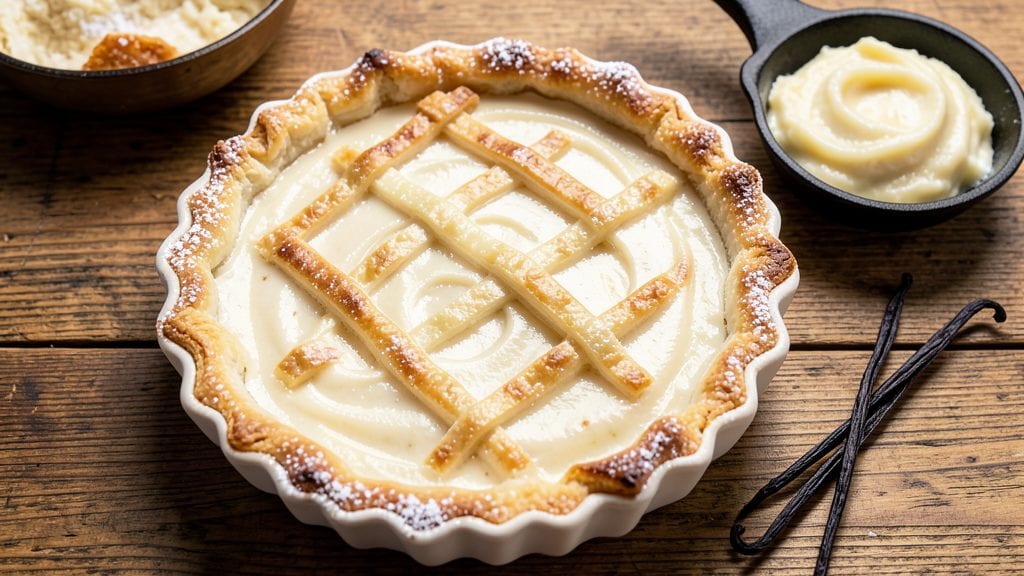
This Amish custard pie recipe brings the comforting flavors of Old-Order tradition to your kitchen with its signature buttery crust and velvety vanilla custard filling.
The simplicity of this recipe reflects Amish values—no artificial ingredients, just wholesome, time-tested techniques that deliver a dessert with a tender, flaky crust and a rich, creamy center that swirls together perfectly.
I’ve perfected this recipe over years of baking, ensuring every slice delivers that homemade taste that store-bought versions can’t match.
The key to this custard pie lies in the homemade pie crust, made with just flour, lard, and a touch of salt for that signature Amish flakiness.
The custard filling, a blend of eggs, milk, sugar, and pure vanilla extract, is cooked to a gentle simmer for a smooth, thick consistency that bakes into a luscious, golden layer.
The beauty of this recipe is in its foolproof method—no fancy equipment or complicated steps, just a few simple ingredients combined with patience and care.
What you’ll end up with is a pie that’s as pleasing to the eye as it is to the palate—golden brown crust with a delicate lattice top, filled with swirls of creamy custard that’s just sweet enough to satisfy.
The aroma alone as it bakes will fill your home with warmth, and the first bite will transport you to an Amish kitchen, where every dessert is made with love and tradition. This pie is perfect for family gatherings, church potlucks, or simply treating yourself to a slice of comfort.
Once baked, let it cool slightly before slicing to enjoy that perfect balance of warm custard and crisp crust. Serve it with a dollop of whipped cream or a scoop of vanilla ice cream for an extra touch of indulgence.
The leftovers, if there are any, keep well in the refrigerator for a few days, making this a great make-ahead dessert for any occasion. Let’s get started on creating this timeless classic!
Ingredients for amish custard pie
Fourteen simple ingredients transform into a timeless Amish dessert with golden crust and velvety vanilla swirls.
| Ingredient | Amount | Notes |
|---|---|---|
| All-Purpose Flour 🌾 | 2 ½ cups | Unbleached, sifted for flakiness |
| Lard 🧈 | 1 cup | Leaf or leaf lard preferred |
| Granulated Sugar 🍚 | 1 ½ cups | White sugar, not brown |
| Large Eggs 🥚 | 4 whole | Room temperature for even baking |
| Whole Milk 🥛 | 2 cups | Full-fat for creamy texture |
| Pure Vanilla Extract 🌸 | 2 tsp | Bottled vanilla preferred |
| Salt 🧂 | 1 tsp | Fine sea salt preferred |
| Unsalted Butter 🧈 | ½ cup | Cold, cubed for crust |
| Ice Water 💧 | ½ cup | Chilled for dough handling |
| Cornstarch 🌾 | 2 tbsp | For custard thickening |
| Heavy Cream 🥛 | ½ cup | Optional for lattice swirls |
| Vanilla Ice Cream 🍦 | 1 cup | For serving suggestion |
The lard is non-negotiable for that signature Amish flakiness—leaf lard from Whole Foods or Costco delivers the best texture. If you prefer butter, use 1 cup cold butter instead, but expect slightly less flaky layers. For the flour, King Arthur Unbleached is my go-to—it’s finely milled and sifted for perfect crust consistency. The vanilla extract should be bottled, not imitation, to capture that authentic Old-Order flavor. Trader Joe’s carries a great option at a reasonable price, and it lasts for years in a cool pantry. The eggs and milk should be at room temperature when measuring to ensure even baking and a smooth custard.
No lard on hand? Shortening works in a pinch, but the flavor won’t be as rich. Butter is the next best option, though it yields a slightly denser crust. For the vanilla, if you’re out, vanilla bean paste or even vanilla sugar (1 tsp) can add depth. The cornstarch is crucial for thickening the custard—Bob’s Red Mill is a reliable brand, and it keeps indefinitely in the pantry. If you’re making this ahead, prepare the crust dough first and refrigerate it for up to 2 days before rolling. The heavy cream for lattice swirls is optional but adds a luxurious touch—Hillfarm or Organic Valley brands are excellent choices for their rich, creamy texture.
This pie keeps beautifully in the refrigerator for 4-5 days, though it’s best enjoyed within 2 days for optimal texture. For longer storage, wrap tightly in plastic wrap and foil to prevent drying. It also freezes well—up to 3 months—if you wrap each slice individually. To reheat, warm at 350°F for 10-15 minutes until the custard is just set. The vanilla ice cream suggestion is optional but pairs perfectly with the warm custard. If you’re serving a crowd, double the recipe—it’s a crowd-pleaser that disappears quickly.
Why You'll Love This Recipe
- No Fuss Crust: I swear by that lard crust—it’s flaky without the fuss of butter, and the flour mix comes together in minutes. No chilling required, no rolling stress, just dump, pat, and bake.
- Silky Smooth Magic: That egg-milk custard? It’s where the real charm happens. The sugar caramelizes just enough to balance the richness, and the whole milk keeps it velvety. One bite, and you’ll understand why this pie tastes like nostalgia.
- Pantry Staple Power: Five ingredients. That’s it. No specialty items, no last-minute grocery runs. If you’ve got flour, sugar, and eggs, you’ve got a pie. Between us, this is my go-to when I’m broke or lazy—or both.
Step-by-step instructions for Amish custard pie
Follow these precise steps to create the signature Amish vanilla swirls with a flaky, buttery crust.
Prepare the Crust Using Lard for Flakiness
In a large mixing bowl, combine the 2.5 cups all-purpose flour and 1 teaspoon salt. Cut in the 1 cup lard using a pastry cutter or your fingers until the mixture resembles coarse crumbs with pea-sized fat pieces. This texture is crucial for achieving that signature flaky crust.
Gradually add the 0.5 cup ice water, 1 tablespoon at a time, mixing gently with a fork until the dough just comes together. The dough should be cool to the touch and not sticky—if it feels too dry, add 1 teaspoon more ice water. Shape the dough into a disk, wrap in plastic, and refrigerate for at least 1 hour to firm up.
Make the Vanilla Custard Filling
In a medium saucepan, whisk together the 4 whole large eggs, 1.5 cups granulated sugar, 2 tablespoons cornstarch, and 2 teaspoons pure vanilla extract until smooth. Slowly pour in the 2 cups whole milk while whisking continuously to prevent lumps from forming.
Cook the mixture over medium heat, stirring constantly with a wooden spoon, until it thickens enough to coat the back of the spoon—about 5-7 minutes. The custard should reach 170°F on an instant-read thermometer. Immediately transfer the custard to a heatproof bowl and press plastic wrap directly onto the surface to prevent a skin from forming. Let it cool completely at room temperature.
Roll Out the Dough and Assemble the Pie
Preheat your oven to 375°F. On a lightly floured surface, roll out half of the chilled dough into a 12-inch circle (about 1/8-inch thick). Transfer it to a 9-inch pie dish and press gently into the bottom and up the sides. Trim any excess dough hanging over the edge.
Pour the cooled custard into the prepared crust, filling it to within 1/2 inch of the top. Roll out the remaining dough and cut it into 1-inch strips. Weave the strips over the custard in a lattice pattern, leaving the center open. Brush the lattice with the 0.5 cup heavy cream for a golden finish.
Bake Until Golden and Set
Place the pie on a baking sheet (to catch any potential drips) and bake for 45-50 minutes, until the crust is deep golden brown and the custard is set but still slightly jiggly in the center. The pie is done when it reaches 165°F internally.
Remove the pie from the oven and let it cool on a wire rack for 1 hour before slicing. For the best texture, serve warm with 1 cup vanilla ice cream on the side. The contrast of warm pie and cold ice cream is a classic Amish dessert tradition.
Pro Tips For Making Amish Custard Pie
- Chill the Lard First: Amish custard pie crust relies on lard’s fat content for flakiness, but cold butter is easier to handle. Cut the lard into ½-inch cubes and refrigerate it for 20 minutes before mixing with flour—this prevents greasy messes and ensures even distribution. (Yes, even if you’re impatient like me, don’t skip this.)
- Whisk Eggs Until Ribbon-Stage: The custard filling’s texture hinges on properly emulsified eggs. Whisk the eggs and sugar until the mixture trails a slow, thick ribbon when the whisk is lifted—about 3-4 minutes. Under-whisked eggs lead to a grainy filling, and over-whisking risks curdling later.
- Temper Milk Gradually: Pouring hot milk directly into the egg mixture is a recipe for scrambled eggs in a pie. Warm the milk to 160°F first, then whisk in just ½ cup at a time while constantly stirring. The goal? A smooth, silky custard, not a lumpy disaster.
- Bake Until Edge Jiggles: The pie’s done when the center still wobbles slightly—like Jell-O—when gently shaken. Overbaking turns custard to glue; underbaking leaves it soupy. If unsure, check at 15 minutes before the recipe’s suggested time. (A toothpick test works too, but the jiggle method is foolproof.)
Common mistakes when making this dish
Overmixing the Dough
One of the most common mistakes is overworking the crust dough, which leads to a tough, dense texture instead of the signature Amish flakiness. I’ve seen beginners use mixers or knead too vigorously, but this recipe relies on gentle handling.
Work the dough just until it comes together—no more than 10-12 strokes with a fork. The goal is pea-sized fat pieces, not a smooth, elastic dough. If the dough feels sticky, chill it for 15 minutes before rolling. 🧈
Skipping the Chill Time
Rushing the 1-hour chill for the dough is a recipe for disaster. The cold temperature firms up the fat, preventing it from melting too quickly in the oven. I’ve made this mistake early on, and the crust turned out greasy and soggy.
If you’re short on time, at least chill it for 30 minutes—but trust me, the extra time is worth it for that perfect flaky texture.
Undercooking the Custard
If the custard doesn’t reach 170°F, it won’t thicken properly, leading to a runny filling that pools at the bottom.
I use an instant-read thermometer to monitor the temperature, but if you don’t have one, look for the "soft ball" stage—when the custard coats the back of a spoon but still jiggles slightly. Overcooking can cause curdling, so remove it as soon as it thickens.
Let it cool completely before pouring into the crust to prevent steam pockets.
Overfilling the Crust
Filling the crust to the top forces custard to spill over during baking, creating a messy crust and potential burns. Leave at least ½ inch of space at the top to allow the custard to rise slightly.
If you’re concerned about the lattice covering the custard completely, trim the strips to fit snugly without overlapping. The lattice should sit directly on the custard, not press down on it.
Ignoring the Lattice Technique
The lattice isn’t just decorative—it regulates airflow, ensuring even baking and a golden finish. If the strips are too wide (1.5 inches or more), the center may stay undercooked. Cut them into 1-inch strips and weave them loosely, leaving gaps for steam to escape.
Brush the lattice with heavy cream for extra shine, but don’t overdo it—2-3 tablespoons is plenty to avoid a soggy crust.
Serving Too Soon
Cutting into the pie immediately after baking can cause the custard to shift and the crust to collapse. Let it cool on a wire rack for at least 1 hour—this allows the filling to set fully and the crust to firm up.
If you’re impatient, serve it warm but wait until it’s cooled enough to handle. The first slice is always the hardest to resist, but patience ensures that perfect balance of warm custard and crisp crust. 💫
Nutrition facts
Frequently asked questions
Why does this recipe use lard instead of butter for the crust?
Traditional Amish baking relies on lard for its superior flakiness and higher smoke point, which creates that signature delicate, layered texture. The fat content in lard stays solid longer during baking, preventing a tough crust. If you must substitute, use 1 cup cold butter or a 50/50 butter-shortening blend, but expect slightly less flake.
Can I make this pie ahead of time for a gathering?
This pie actually tastes better the next day as the flavors meld. Assemble it up to 24 hours ahead and refrigerate uncovered. Bake just before serving to maintain that warm, custardy texture. For longer storage, freeze individual slices wrapped tightly for up to 3 months—thaw overnight in the fridge.
What's the secret to getting that perfect lattice pattern?
Use 1-inch wide strips cut from the remaining dough and weave them loosely with ½-inch gaps between strips to allow steam to escape. Brush the lattice with 2-3 tablespoons heavy cream before baking for a golden finish. Start with the longest strips first, then weave shorter ones underneath for stability.
How do I know when the custard is done?
The custard is ready when it reaches 170°F on an instant-read thermometer and coats the back of a spoon with a slight jiggle. If you don't have a thermometer, look for the "soft ball" stage—when it thickens enough to hold its shape but still has a slight wobble. Remove it immediately to prevent curdling.
Can I use this recipe for a gluten-free version?
Traditional Amish recipes rely on wheat flour for structure, but you can adapt it with a 1:1 gluten-free flour blend like Bob's Red Mill 1-to-1. Replace the lard with ½ cup butter + ½ cup shortening to improve texture. Expect a slightly denser crust—chill the dough longer (2 hours) for better results.