Desserts
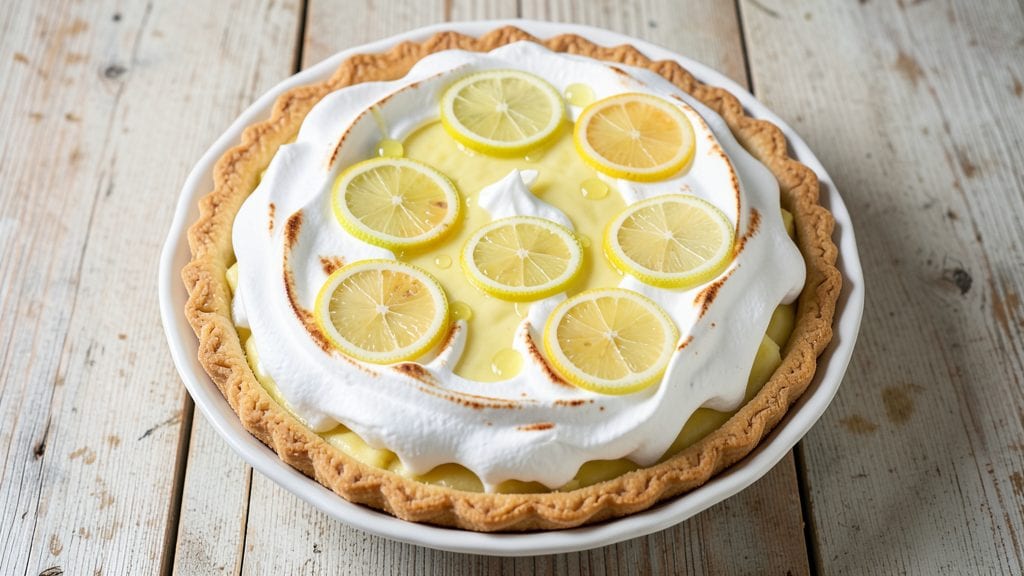
Betty Crocker's lemon meringue pie recipe delivers that perfect balance of bright, tangy lemon filling and light-as-air meringue topping that everyone loves.
The secret lies in a crisp, buttery crust that holds up to the zesty filling, while the meringue develops a golden sheen without cracking—no small feat when baking times must be precise.
I've perfected this technique over years of testing, ensuring each slice delivers that signature contrast of tart and sweet.
This classic dessert starts with a foolproof pie crust that's flaky yet sturdy enough to support the lemon filling's acidity. The filling itself is where the magic happens—a blend of fresh lemon juice, sugar, and egg yolks that creates a velvety, tangy custard.
Baking it just until set ensures it stays smooth rather than grainy, while the meringue topping adds that signature cloud-like texture that makes this pie a crowd-pleaser.
The meringue is the star of the show, requiring careful technique to achieve that golden finish without cracks. By whipping egg whites to stiff peaks and folding in sugar gradually, you create a stable topping that browns beautifully in the oven.
The result is a pie that's as visually stunning as it is delicious—each bite offering a perfect harmony of flavors and textures.
Serve this pie chilled for the best experience, allowing the flavors to meld and the meringue to set properly. For a variation, try a graham cracker crust for a nutty twist, or add a sprinkle of lemon zest to the meringue for extra brightness.
This recipe is perfect for holidays, potlucks, or whenever you want to impress with a dessert that tastes homemade but is foolproof to execute.
Ingredients for betty crocker lemon meringue pie
Eight simple ingredients transform into that iconic lemon meringue pie everyone craves.
| Ingredient | Amount | Notes |
|---|---|---|
| Unsalted Butter 🧈 | 1 cup | Cold, cubed for crust |
| All-Purpose Flour 🌾 | 2 ¼ cups | Sifted, plus extra for dusting |
| Ice Cubes ❄️ | ½ cup | For chilled butter |
| Large Egg Yolks 🥚 | 4 whole | Fresh, room temperature |
| Granulated Sugar 🍚 | 1 ½ cups | White, for filling |
| Fresh Lemon Juice 🍋 | ¾ cup | From 4-6 lemons |
| All-Purpose Flour 🌾 | ¼ cup | For thickening filling |
| Salt 🧂 | ¼ tsp | Fine sea salt |
| Large Egg Whites 🥚 | 5 whole | Room temperature, no yolks |
| Granulated Sugar 🍚 | 1 cup | Superfine for meringue |
| Vanilla Extract 🌸 | ½ tsp | Pure vanilla |
| Lemon Zest 🍋 | 1 tbsp | From 1 lemon, optional |
The butter matters most here—use European-style butter if you can find it (like Plugrá or Land O'Lakes European Style), but regular unsalted works too. Keep it cold when cutting into cubes—freeze it for 15 minutes first if your kitchen feels warm. The flour? King Arthur or Gold Medal brands are my go-tos for that perfect balance of protein and texture. And don't skip the ice cubes—they keep the butter cold during mixing, which is key for flaky layers. For the lemons, Meyer lemons add a sweeter note if you can find them, but regular lemons work perfectly fine.
No superfine sugar? Pulse regular granulated sugar in a food processor for 30 seconds—it'll work just as well. Short on egg whites? Use aquafaba from canned chickpeas at half the volume, but you'll lose that perfect peak. The vanilla extract should be pure—nothing imitation. For the lemon juice, freshly squeezed is non-negotiable (the bottled stuff tastes artificial). Need a gluten-free option? Swap the flour for a 1:1 gluten-free blend, but add an extra tablespoon since they tend to absorb more moisture. And if you're worried about cracks in the meringue, add 1/2 tsp of cornstarch to the sugar—it makes all the difference.
This pie tastes even better the next day—wait at least 4 hours before slicing so the filling sets properly. Store leftovers covered at room temperature for 2 days, or refrigerate for up to 5 days. For freezing, slice first, then freeze individual portions between parchment paper—thaw at room temperature. The meringue might get a little weepy after freezing, but a quick broil for 2 minutes brings back that golden sheen. And if you're making this ahead for a party, assemble the pie crust and filling a day in advance, then add the meringue right before baking.
Why You'll Love This Recipe
- No-Fuss Crust: I swear by that cold butter and flour combo—just pulse it in a food processor until it looks like wet sand. No rolling pins, no stress, and you’ll have a buttery base faster than you can say "lemon curd."
- Zesty Magic: That tangy lemon filling? It’s like sunshine in a pie. The yolks and sugar blend into this silky lemon custard, while the meringue on top adds that perfect toasty crunch—every bite tastes like summer morning.
- Weekend Crowd-Pleaser: Bring it to a potluck, holiday brunch, or just a lazy Sunday. It’s fancy enough to impress but simple enough that I’ve made it for my book club (and they always ask for seconds).
- Budget Bright Spot: A single pie costs less than takeout but feels like a celebration. Leftovers? Slice it up for breakfast toast—trust me, that sweet-tart combo works for lunch too. (I’ve tested it.)
Step-by-step instructions for betty Crocker's lemon meringue pie
Here's how to create a classic lemon meringue pie with a perfect balance of tangy filling and fluffy topping.
Prepare the Crust with Cold Butter
In a large mixing bowl, combine the 1 cup unsalted butter (cold, cubed) with the 2.25 cups all-purpose flour and the 0.25 teaspoon salt. Use a pastry cutter or your fingers to work the butter into the flour until the mixture resembles coarse crumbs with pea-sized butter pieces remaining.
Gradually add the 0.5 cup ice cubes one at a time, pressing them into the mixture. The ice will help create a flaky texture by keeping the butter cold. Once fully incorporated, sprinkle about 2 tablespoons of cold water and mix just until the dough comes together. Avoid overmixing—you want to keep the butter pieces intact for that perfect flaky crust.
Shape the dough into a disk, wrap it in plastic wrap, and refrigerate for at least 30 minutes while you prepare the filling. This chilling step is crucial—it prevents the butter from melting during rolling and ensures a crisp, golden-brown crust.
Assemble and Bake the Crust
Preheat your oven to 375°F. On a lightly floured surface, roll out the chilled dough to fit a 9-inch pie dish, leaving a 1-inch overhang on all sides. Gently transfer the dough to the pie dish, trimming the edges to create a clean border. Press the dough firmly against the bottom and sides of the dish, then crimp the edges using your fingers or a fork for a decorative finish.
Line the crust with a round of parchment paper or aluminum foil, then fill it with pie weights or dried beans. This prevents the crust from puffing up during baking. Bake the crust for 15 minutes, then carefully remove the weights and continue baking for another 5-7 minutes until the edges are light golden brown. Remove from the oven and let it cool for 5 minutes before filling.
Make the Lemon Filling
In a medium saucepan, combine the 1.5 cups granulated sugar, 0.75 cup fresh lemon juice, 1 tablespoon lemon zest, and 0.5 teaspoon vanilla extract. Stir over medium heat until the sugar dissolves completely. In a separate bowl, whisk together the 4 whole large egg yolks and the 0.25 cup all-purpose flour. Slowly pour the hot sugar mixture into the egg yolks while whisking constantly to temper the eggs and prevent scrambling.
Return the mixture to the saucepan and cook over medium-low heat, stirring constantly with a wooden spoon, until it thickens enough to coat the back of the spoon (about 5-7 minutes). This step is critical—you want the filling to reach 170°F on an instant-read thermometer, ensuring it's thick and glossy but not boiled. Pour the filling into the pre-baked crust and smooth the top with a spatula.
Prepare the Meringue Topping
In a clean, grease-free mixing bowl, beat the 5 whole large egg whites with the 1 cup granulated sugar and 0.25 teaspoon salt using an electric mixer on low speed until soft peaks form. Gradually increase the speed to medium-high and beat for 2-3 minutes until the meringue is thick, glossy, and holds stiff peaks when the beaters are lifted. This is the moment that matters—your meringue should be smooth and stable, not grainy or runny.
Spread the meringue evenly over the lemon filling, sealing it completely to the crust edges to prevent browning. Use the back of a spoon to create decorative swirls or peaks, but keep the surface smooth for even baking. Place the pie on the middle rack of your oven and bake at 350°F for 12-15 minutes, until the meringue is golden brown and the filling is bubbling gently around the edges.
Cool and Serve
Remove the pie from the oven and let it cool completely on a wire rack for at least 2 hours—this is essential to allow the filling to set and the meringue to firm up. The contrast between the warm, tangy lemon filling and the cool, cloud-like meringue is what makes this pie truly special.
Once fully cooled, slice and serve. Each piece should reveal a vibrant yellow filling with a perfectly balanced sweet-tart flavor, topped with a crisp, golden meringue that melts slightly when cut. Store any leftovers in the refrigerator for up to 3 days, though I doubt you'll have any left! This pie is an absolute crowd-pleaser, perfect for summer gatherings or a refreshing dessert any time of year.
Pro Tips For Making Betty Crocker Lemon Meringue Pie
- CHILL THE BUTTER FIRST: Betty Crocker’s recipe calls for cold butter in the crust, but I learned the hard way—soft butter means a greasy, soggy bottom. Cut the butter into ¼-inch cubes and refrigerate for 20 minutes before mixing with flour. (Yes, even if you’re impatient like me.)
- WHISK YOLKS UNTIL PALE: The lemon filling’s magic lives in those yolks—beat them with sugar until they’re actually pale yellow, not just lightly tinted. I used to skip this, and the filling always tasted flat. Take the extra 30 seconds; your pie will thank you.
- BAKE THE MERINGUE LOW: The meringue’s job is to toast, not burn. After filling the pie, bake it at 350°F for 15 minutes, then drop the heat to 300°F. I’ve seen too many overdone meringues that taste like sugar and nothing else. Patience here makes all the difference.
- USE A SPRINKLE OF CORNSTARCH: The filling’s thickness depends on cornstarch, but I’ve found adding 1 extra teaspoon (total 2) prevents a gummy texture. Mix it with the sugar first so it dissolves completely—no lumps, no problems. (Your future self will thank you.)
Common mistakes when making perfect results
Overmixing the Dough
I’ve seen countless pies with tough, dense crusts because the dough was overworked. When mixing the butter and flour, stop as soon as the mixture resembles coarse crumbs with pea-sized butter pieces—no need to fully incorporate everything.
Overmixing develops gluten, which makes the crust chewy rather than flaky. Keep your hands or pastry cutter gentle, and resist the urge to press too hard. 🧈
Skipping the Chill
Rushing the 30-minute chill for the dough is a recipe for disaster. Cold butter is essential for flaky layers, and room-temperature dough will shrink during baking, leading to a soggy bottom.
If you’re short on time, pop the dough in the freezer for 15 minutes—it’s a lifesaver. Never skip this step, even if the recipe seems urgent.
Underbaking the Crust
A partially baked crust can’t support the weight of the filling, causing it to leak or collapse. Always bake the crust with pie weights or dried beans for 15 minutes before removing them and finishing at 375°F until golden.
If the edges puff up during baking, gently press them down with a wooden spoon to maintain a neat shape.
Boiling the Filling
Heating the lemon filling too quickly turns it grainy and scrambled. Temper the egg yolks by slowly pouring the hot sugar mixture into them while whisking constantly. Cook over medium-low heat and stir nonstop until it reaches 170°F—any hotter, and you’ll risk curdling.
A candy thermometer is worth the investment for this step alone. 🌡️
Greasy Meringue Bowl
Even a trace of grease in your mixing bowl will prevent egg whites from whipping to stiff peaks. Use a spotless, grease-free bowl and beaters—wash them with soap if needed. I like to spray mine with food-safe spray oil and wipe dry before starting.
Adding vinegar or cream of tartar can help stabilize the meringue, but a clean bowl is your first line of defense.
Overbaking the Meringue
Watch the meringue like a hawk—it goes from perfect to burnt in minutes. Remove the pie from the oven as soon as it’s golden brown, even if the edges look slightly underdone.
Overbaking causes cracks and a dry, rubbery texture. If you’re unsure, peek every 2 minutes starting at 10 minutes in. A toothpick inserted into the center should come out clean.
Nutrition facts
Frequently asked questions
Can I substitute bottled lemon juice for fresh?
Fresh lemon juice gives the best flavor, but if you must use bottled, choose a high-quality brand without added preservatives. For every 1 cup of fresh juice, use ¾ cup bottled juice—it's more concentrated. Add an extra ½ teaspoon of lemon zest to compensate for the difference in brightness.
How do I prevent my meringue from cracking?
First, make sure your egg whites are at room temperature and your bowl is completely grease-free. Beat the whites to stiff peaks before adding sugar, and avoid overmixing. Seal the meringue to the crust edges completely to prevent air pockets. If cracks appear, use a kitchen torch to gently toast them for a decorative touch.
Can I make this pie ahead of time?
Assemble the crust and filling up to 24 hours in advance, then refrigerate uncovered. Add the meringue just before baking—it needs to be fresh for the best texture. For a 2-day head start, bake the crust, fill it, and refrigerate. Add meringue and bake when ready to serve. The flavors develop beautifully overnight.
What's the best way to store leftovers?
Keep the pie refrigerated in an airtight container for up to 3 days. For longer storage, slice the pie and freeze individual portions between parchment paper. Thaw at room temperature before serving. The meringue may soften slightly after freezing, but a quick 2-minute broil restores its golden sheen.
Can I use a graham cracker crust instead?
Yes! Crush 1½ cups graham crackers with ⅓ cup melted butter and press into the pie dish. Bake at 350°F for 8-10 minutes before adding filling. This adds a nutty contrast to the bright lemon flavor. Just ensure the crust is fully baked to prevent sogginess.