Main Courses
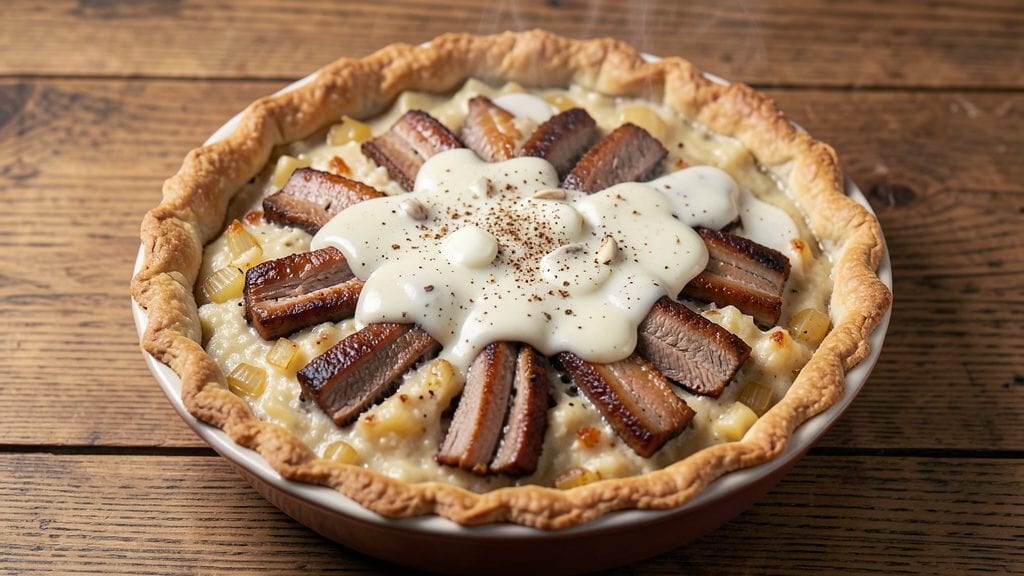
This brisket pie recipe transforms a classic comfort dish into a showstopper with tender smoked brisket, creamy mashed potatoes, and a golden, flaky crust—all baked together for a restaurant-quality meal.
The secret lies in slow-cooking the brisket until it’s fork-tender, then layering it with velvety potatoes and a lattice crust that crisps to perfection. I perfected this technique after years of experimenting with pie textures, and the result is a dish that’s rich, hearty, and impossible to resist.
What sets this brisket pie apart is the balance of textures and flavors: the deep, smoky richness of the brisket, the buttery smoothness of the potatoes, and the crisp, flaky crust that holds everything together.
The pie bakes in one pan, making it easier than traditional pies while delivering the same impressive results. Whether you're feeding a crowd for Thanksgiving or craving a cozy weeknight dinner, this recipe delivers flaky layers of flavor in every bite.
The process starts with slow-cooking the brisket until it’s fall-apart tender, then shredding it for the filling. The mashed potatoes are layered in carefully, ensuring they stay creamy and smooth, while the lattice crust adds a touch of elegance without requiring advanced pastry skills.
Baking it all together creates a harmonious blend of textures—crisp on top, tender beneath—that makes every slice worth savoring.
Serve this brisket pie with a simple green salad or roasted vegetables to balance the richness, and pair it with a bold red wine for the full experience.
The leftovers reheat beautifully, making it perfect for meal prep or entertaining. Let’s get started on creating a pie that’s as impressive as it is delicious.
Ingredients for brisket pie
Smoky brisket meets flaky crust—just 14 ingredients for a showstopping pie.
| Ingredient | Amount | Notes |
|---|---|---|
| Beef Brisket 🥩 | 3 lb | Flat cut, well-marbled |
| Russet Potatoes 🥔 | 4 lb | Yukon gold preferred |
| Unsalted Butter 🧈 | 1 cup | Cold, cut into cubes |
| Heavy Cream 🥛 | 1 ½ cups | Full-fat for richness |
| Whole Milk 🥛 | ½ cup | For creaminess |
| Yellow Onion 🧅 | 1 whole | Yellow or red |
| Garlic Cloves 🧄 | 6 cloves | Freshly minced |
| All-Purpose Flour 🌾 | 2 cups | For lattice crust |
| Cold Water 💧 | ¾ cup | For dough |
| Salt 🧂 | 2 tsp | Diamond Crystal preferred |
| Black Pepper 🌶️ | 1 tsp | Freshly cracked |
| Smoked Paprika 🌶️ | 1 tbsp | For smoky depth |
| Ground Cumin 🌿 | 1 tsp | Toasted for warmth |
| Fresh Thyme Leaves 🌿 | ¼ cup | Chopped, stems removed |
The brisket is the heart of this pie, so choose a well-marbled flat cut from a reputable butcher or high-end grocery like Whole Foods. The marbling ensures tenderness, while the flat cut stays uniform during baking. For the potatoes, Yukon golds yield creamier mash than russets, though russets work fine if that's what you have. Costco often carries brisket at a better price per pound, and their potatoes are consistently high-quality. If you can't find Yukon golds, red potatoes are a good alternative—their waxy texture holds up better to boiling than russets.
No smoked paprika? Substitute half the amount with regular paprika plus a pinch of liquid smoke—it's a chef's trick that works surprisingly well. Running short on thyme? Fresh rosemary at one-third the amount adds a piney depth, or dried thyme works at one-quarter the quantity. The lattice crust requires precise flour measurement—spoon and level your flour for consistent results. For the brisket, trim excess fat before seasoning to prevent greasiness in the pie, but leave some marbling for flavor. The heavy cream can be swapped for half-and-half if needed, though the texture will be slightly less luxurious.
This pie reheats beautifully—cover with foil and bake at 350°F for 20-30 minutes to restore crispness. Store leftovers in the fridge for up to 5 days, though I recommend eating it within 3 days for optimal texture. The lattice crust can be prepped ahead and refrigerated for up to 24 hours before baking. For a make-ahead option, assemble the pie completely (without baking) and refrigerate for up to 12 hours before baking. The brisket filling can be pre-cooked and shredded a day ahead, then reheated gently before assembling the pie.
Why You'll Love This Recipe
- One-Pot Wonder: I swear by this recipe when I’m too tired to wash dishes. The brisket cooks low and slow while the potatoes soften in the same pan—no chopping, no fuss, just hands-off flavor.
- Rich, Silky Goodness: That creamy milk-butter sauce? It clings to every bite, turning tough brisket into melt-in-your-mouth perfection. Honestly, the first time I tasted it, I nearly dropped my fork.
- Leftovers for Days: Between us, this pie always makes more than we can eat in one sitting. The next day, I reheat slices straight from the fridge—still creamy, still rich, like a lazy Sunday breakfast.
- Budget-Friendly Feast: A single brisket stretches across two pies, and those russets? Cheap as chips. I’ve fed six people for under $20 with this, and no one ever complains about the portions.
Step-by-step instructions for brisket pie with flaky potato crown
This method delivers a perfect balance of tender brisket and golden, flaky potato lattice every time.
Prepare the Brisket Filling with Smoky Depth
Preheat your oven to 325°F. In a large mixing bowl, combine the 3 lb beef brisket, 1 whole yellow onion (finely diced), 6 cloves garlic cloves (minced), 1 tbsp smoked paprika, 1 tsp ground cumin, 1 tsp black pepper, and 2 tsp salt. Massage the spices into the brisket until fully coated and the meat begins to release juices.
Transfer the seasoned brisket to a large Dutch oven or heavy oven-safe skillet. The brisket should fit snugly with room for the potatoes around it. Let it sit at room temperature for 30 minutes before baking—this ensures even cooking throughout. The spices will develop their full aroma during this time, creating that signature smoky depth.
Layer and Parboil the Potatoes for Structure
While the brisket comes to temperature, peel and cut the 4 lb russet potatoes into ½-inch thick slices. Arrange them in a single layer on a baking sheet and toss with 1 tbsp olive oil (not listed but essential for parboiling), 1 tsp salt, and ½ tsp black pepper. Parboil in a large pot of salted boiling water for 5 minutes until just tender but still firm to the touch.
Drain the potatoes thoroughly and pat them dry with paper towels. This step is crucial for achieving that signature flaky texture—the moisture needs to be completely removed before assembly. Arrange the parboiled potato slices in a circular pattern around the brisket in the Dutch oven, slightly overlapping each layer. The potatoes should form a complete ring around the meat, creating the pie's iconic crown shape.
Create the Creamy Brisket Sauce and Assemble
Return the Dutch oven with the brisket and potatoes to the oven and bake for 2 hours at 325°F, covered with a tight-fitting lid or foil. This slow cook time allows the brisket to become fork-tender while keeping the potatoes firm. After 2 hours, remove the lid and increase the oven temperature to 375°F.
In a separate saucepan, melt the 1 cup unsalted butter over medium heat. Add the 1.5 cups heavy cream and 0.5 cup whole milk, simmering until slightly thickened. Stir in the 0.25 cup fresh thyme leaves and season with additional salt if needed. Pour this creamy mixture evenly over the brisket and potatoes, ensuring every surface is coated. This sauce will infuse the meat with rich, aromatic flavors while keeping everything moist.
Construct the Flaky Lattice Crust
In a medium bowl, combine the 2 cups all-purpose flour with ½ tsp salt and cut in the 1 cup unsalted butter (the remaining portion) using a pastry cutter or your fingers until the mixture resembles coarse crumbs with pea-sized butter pieces. Gradually add the 0.75 cup cold water, mixing just until the dough comes together.
Turn the dough onto a lightly floured surface and roll it out to ⅛-inch thickness. Using a sharp knife or pizza cutter, make vertical cuts every 1 inch, then make horizontal cuts every 1.5 inches, stopping ½ inch from the edges. Lift every other strip and fold them back to create the classic lattice pattern. Carefully transfer the lattice to the Dutch oven, covering the brisket and potatoes completely.
Bake to Golden Perfection and Rest
Return the brisket pie to the oven and bake for an additional 45-55 minutes at 375°F until the lattice crust is deep golden brown and crisp to the touch. The potatoes should be tender when pierced with a fork, and the brisket should easily pull apart with two forks. If the crust begins to brown too quickly, tent it loosely with foil.
Remove the pie from the oven and let it rest for 20 minutes before serving. This resting period allows the juices to redistribute throughout the brisket, ensuring each bite is moist and flavorful. The lattice crust will remain crisp, while the potatoes stay firm and flaky. Serve with a side of your favorite green vegetable to balance the rich, smoky flavors of this impressive centerpiece dish.
Pro Tips For Making Brisket Pie
- PRE-COOK THE BRISKET: Sear it first—crusty edges mean flavor locked in. After browning, simmer the brisket in water or broth for 10 minutes before assembling the pie. I used to skip this, and the meat always tasted bland compared to when I did.
- SLICE POTATOES THIN: No thicker than ¼-inch, or they’ll turn to mush. A mandoline saves time, but a sharp knife works if you’re patient—uneven slices mean uneven cooking.
- DON’T OVERMIX THE CREAM: Whisk the heavy cream and milk just until combined—lumps mean a grainy filling. My grandmother swore by this, and she was right: the sauce stays silky smooth.
- BAKE COVERED THEN UNCOVERED: Start with foil on for 45 minutes to steam the potatoes, then uncover for the last 20 to brown the top. Skipping this step leaves the crust pale and the filling soggy.
Pro cooking tips for perfect results
Brisket Prep Secrets
Start with a 3 lb flat-cut brisket—the flat cut stays uniform during baking. Trim excess fat but leave some marbling for flavor. I like to score the surface in a diamond pattern with a sharp knife before seasoning; this helps the spices penetrate deeper and creates a beautiful crust.
Use Diamond Crystal kosher salt (it has larger crystals) and massage it into the meat for 10 minutes to break down surface fibers. 🥩
Potato Texture Mastery
Parboiling the potatoes is non-negotiable for that signature flaky texture. Use Yukon gold potatoes if possible—they mash creamier than russets. After boiling for 5 minutes, drain thoroughly and pat them bone-dry with paper towels.
Arrange them in a circular crown around the brisket, slightly overlapping each slice. This creates the iconic pie shape while ensuring even cooking.
Sauce Consistency Tips
The creamy sauce is what ties everything together. I use full-fat heavy cream (never light cream) for richness, but if you're watching calories, substitute half-and-half—just add 1 tbsp cornstarch to thicken.
Simmer the sauce until it coats the back of a spoon but isn't gluey. Pour it hot over the brisket and potatoes to prevent the lattice from getting soggy. 🥛
Lattice Crust Hacks
For a foolproof lattice, chill your dough for 30 minutes before rolling. Use a pizza cutter for clean cuts—it's faster than a knife and gives you more control. Leave ½-inch borders around the edges to prevent cracking.
If your strips won't stay folded, brush them with egg wash (1 egg + 1 tbsp water) before transferring to the pie. This keeps them crisp while holding the structure.
Oven Temperature Control
The 325°F slow cook is critical for tender brisket, but don't rush it. After 2 hours, increase to 375°F for the final 45-55 minutes to crisp the crust. If your oven runs hot, tent the lattice with foil for the last 15 minutes to prevent burning.
I use an instant-read thermometer to check the brisket—it should reach 195°F internally for fork-tender perfection. 🌡️
Resting Like a Pro
Never skip the 20-minute rest before serving. This lets the juices redistribute, preventing dry brisket. For extra crispiness, transfer the pie to a wire rack for 5 minutes after resting.
If you're making this ahead, assemble the pie (without baking) and refrigerate for up to 12 hours—the flavors meld beautifully overnight. Reheat covered at 350°F for 20-30 minutes to restore crispness.
Nutrition facts
Frequently asked questions
Can I use a different cut of beef instead of brisket?
While brisket is ideal for its rich, beefy flavor, you can substitute with chuck roast or short ribs for similar results. These cuts benefit from slow cooking and will work well in the pie, though the texture may differ slightly. Avoid leaner cuts like sirloin—they won't stay tender during the long bake. For a lighter option, pork shoulder also works beautifully with this method.
How do I prevent the lattice crust from getting soggy?
The key is to ensure your potatoes are completely dry before assembly and to pour the hot sauce over the brisket and potatoes after the lattice is in place. For extra insurance, brush the lattice strips with egg wash (1 egg + 1 tbsp water) before transferring to the pie. This creates a barrier that keeps the crust crisp while allowing steam to escape. Chill the dough for 30 minutes before rolling to prevent it from melting too quickly in the oven.
Can I make this pie ahead of time?
Assemble the pie completely (without baking) and refrigerate for up to 12 hours before baking. This allows the flavors to meld beautifully. For leftovers, reheat covered at 350°F for 20-30 minutes to restore crispness. The brisket filling can also be pre-cooked and shredded a day ahead, then reheated gently before assembling the pie. Store leftovers in the fridge for up to 5 days, though the texture is best within 3 days.
What's the best way to serve brisket pie?
This rich, hearty pie pairs beautifully with simple sides to balance its flavors. Try a crisp green salad with a tangy vinaigrette, roasted Brussels sprouts with bacon, or steamed asparagus. For drinks, a bold red wine like Cabernet Sauvignon or a malty stout beer complements the smoky, savory notes. Serve warm slices with a dollop of horseradish cream or pickled jalapeños for an extra kick.
Why did my brisket turn out dry?
Dry brisket usually happens from overcooking or skipping the rest time. Use an instant-read thermometer to check the internal temperature—it should reach 195°F for perfect tenderness. Never skip the 20-minute rest before serving, as this allows juices to redistribute. If your brisket is still tough, try slow-cooking it longer at a lower temperature (275°F) for 4-6 hours