
Main Courses
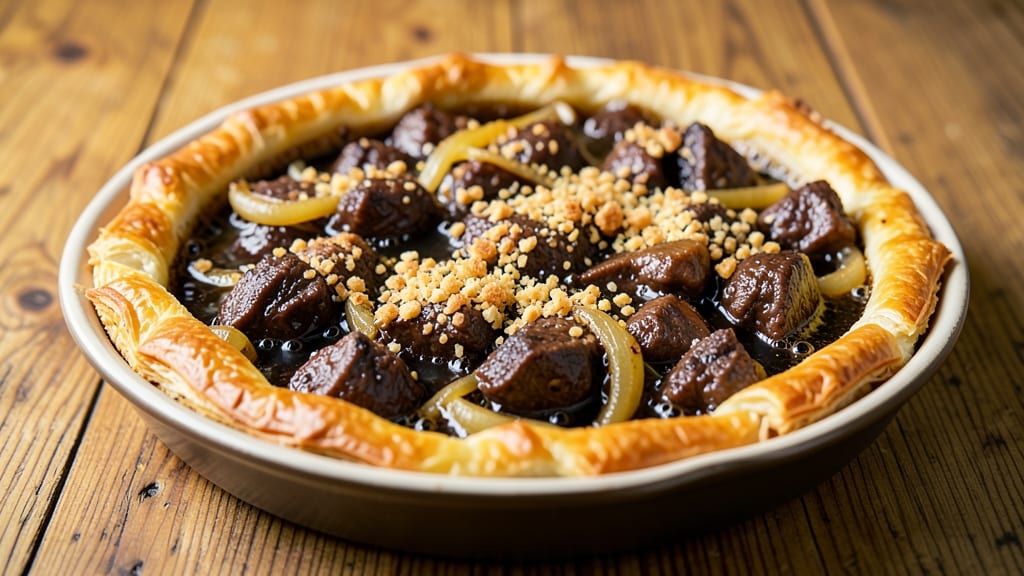
This Irish beef and Guinness pie delivers the hearty, comforting flavors of a traditional Irish pub dish in a single, impressive pie—where tender beef braises in rich Guinness stout until fall-apart perfect, topped with a golden, flaky crust.
Growing up in a Boston triple-decker, I learned that the best comfort food often comes from slow-braised meats and layers of flavor, and this pie is no exception.
The secret lies in the slow cooking process, which transforms tough cuts into melt-in-your-mouth tenderness while infusing the filling with the deep, malty notes of Guinness.
The filling is where the magic happens: beef chuck slow-cooked until it shreds easily, onions caramelized to sweet perfection, and a blend of spices that balances the bitterness of the stout with warmth.
I’ve tested this recipe multiple times, adjusting the pastry technique to ensure a crispy top that contrasts beautifully with the velvety filling—no soggy bottoms here. The crust isn’t just for show; it seals in all those rich flavors while adding a satisfying crunch.
What you’ll end up with is a pie that smells like a cozy Irish pub the moment you slice into it—golden crust flaking apart, filling so tender it practically dissolves on your tongue, and that unmistakable depth of Guinness cutting through the richness.
This isn’t just dinner; it’s a centerpiece for gatherings, a dish that turns a simple meal into an event. The best part? It’s built on techniques that work even in a small apartment kitchen, just like the one I grew up in.
Serve it with a simple side salad or buttery mashed potatoes to let the pie take center stage. The leftovers? Even better the next day, if you can resist eating the whole thing straight from the pan. Let’s get started—your taste buds (and your guests) will thank you.
Ingredients for irish beef and guinness pie
The heart of this pie starts with tender beef and rich Guinness—simple ingredients that pack a flavor punch.
| Ingredient | Amount | Notes |
|---|---|---|
| Beef Chuck Roast 🥩 | 2 ½ lb | Cut into 1.5-inch cubes |
| Guinness Stout 🍺 | 1 cup | Full-bodied, not light |
| Yellow Onions 🧅 | 2 whole | Thinly sliced, caramelized |
| Garlic Cloves 🧄 | 6 cloves | Minced, fresh preferred |
| Tomato Paste 🍅 | 2 tbsp | Smooth, not chunky |
| Beef Broth 💧 | 1 ½ cups | Low-sodium preferred |
| All-Purpose Flour 🌾 | ½ cup | For thickening |
| Worcestershire Sauce 🍯 | 1 tbsp | Full-strength, not reduced |
| Dried Thyme 🌿 | 1 tsp | Or 1 tbsp fresh |
| Ground Black Pepper 🌶️ | 1 tsp | Freshly cracked |
| Salt 🧂 | 1 ½ tsp | Kosher or sea salt |
| Unsalted Butter 🧈 | ½ cup | Cold, cubed for crust |
| All-Purpose Flour 🌾 | 2 ½ cups | Plus 1 tbsp for dusting |
| Ice Water 💧 | ½ cup | For pastry dough |
| Egg 🥚 | 1 whole | For egg wash |
The beef chuck is non-negotiable here—it’s the only cut that gives you that melt-in-your-mouth tenderness after slow cooking. Check the meat counter at Whole Foods or your local butcher for the best quality, and ask for a piece with good marbling. I’ve used pre-cubed chuck from Costco for big batches, but if you’re making this for a crowd, grab a whole roast and cube it yourself. The Guinness? Guinness Draught is the gold standard—skip the light beers, they won’t cut through the richness. Pro tip: open the bottle early and let it warm to room temperature before adding it to the pot.
No Guinness on hand? Stout beer or even dark ale in a pinch—just add a splash of coffee to mimic the bitterness. Fresh thyme is ideal, but dried works at one-third the amount (and it’s what I usually grab from Trader Joe’s bulk section). For the tomato paste, those little squeeze tubes are a lifesaver—they keep forever and you won’t waste half a can. The Worcestershire sauce adds depth, but if you’re avoiding it, a dash of soy sauce or even more beef broth will do. And trust me, don’t skip the caramelizing the onions. That sweetness balances the bitterness of the Guinness and makes the whole pie sing.
This pie tastes even better the next day, so make it ahead if you can. The filling stays fresh for 3-4 days in the fridge, and the crust? Even better after reheating. For the crust, keep the butter cold—cut it into tablespoon-sized cubes so it distributes evenly. Wrap the dough in plastic and chill it for at least 30 minutes before rolling. The egg wash is your secret weapon for that golden, crispy top—brush it on right before baking, and don’t skip the 15-minute rest after rolling. Leftovers? Freeze the whole pie for up to 3 months—just thaw overnight in the fridge before reheating.
Why You'll Love This Recipe
- One-Pot Magic: The chuck roast does all the work—just brown it, pour in the Guinness and onions, and let the slow cooker handle the rest. No chopping, no stirring, no stress. (Yes, even on a Tuesday night.)
- Rich Without Effort: That first sip of Guinness in the pie? Instant depth. The roast gets fork-tender while the dark beer caramelizes into a glossy, slightly sweet sauce—no fancy reductions or long braising times needed.
- Leftovers That Beg for More: This pie tastes better the next day. I swear. The flavors meld into something heartier, and it reheats in minutes—perfect for lunches or feeding unexpected guests. (My husband’s favorite, honestly.)
- Budget-Friendly Feast: A whole roast and a bottle of Guinness stretch to feed four or five, and the ingredients won’t break the bank. Plus, the tomato paste adds a punch without costing extra—smart, simple, and satisfying.
Step-by-step instructions for Irish beef and Guinness pie
This method delivers melt-in-your-mouth beef with a rich Guinness sauce and a golden, flaky crust.
Brown the Beef and Build the Flavor Base
Heat a large Dutch oven over medium-high heat. Add the 2.5 lb beef chuck roast cut into 1.5-inch cubes, working in batches if needed. Let them sear undisturbed for 3-4 minutes until deeply browned on all sides—this creates the Maillard reaction that builds incredible depth of flavor. Remove the beef and set aside.
In the same pot, add the 2 whole yellow onions (thinly sliced) and cook for 5 minutes until softened. Add the 6 cloves minced garlic and stir for 30 seconds until fragrant. Pour in the 1 cup Guinness stout, scraping up any browned bits from the bottom. Let it simmer for 3 minutes until the alcohol smell dissipates.
Develop the Rich Sauce and Braise the Beef
Return the beef to the pot. Stir in the 2 tbsp tomato paste, 1.5 cups beef broth, 1 tbsp Worcestershire sauce, 1 tsp dried thyme, 1 tsp ground black pepper, and 1.5 tsp salt. Bring to a gentle simmer, then cover and transfer to a 325°F oven. Braise for 2.5 hours until the beef is fork-tender and easily pulls apart.
Here's the thing—don't peek during the braising. Every time you open the lid, you lose heat and moisture. The beef should be falling off the bone when done, and the sauce should be thick and velvety. If it's too thin, mix the 0.5 cup all-purpose flour with 1 tbsp cold water and whisk into the sauce to thicken it.
Prepare the Crispy Top Crust
While the beef braises, make the pastry topping. In a large bowl, cut the 0.5 cup unsalted butter into the 2.5 cups all-purpose flour (plus 1 tbsp for dusting) using a pastry cutter or your fingers until the mixture resembles coarse crumbs. Add the 0.5 cup ice water and mix just until the dough comes together. Knead lightly on a floured surface for 1 minute until smooth.
Roll the dough between two sheets of parchment paper to about 1/8-inch thickness. Carefully transfer it to the Dutch oven, covering the braised beef completely. Brush the top with the beaten 1 whole egg for a golden finish. Bake for an additional 30-35 minutes until the crust is deep golden brown and puffed in spots.
Rest and Serve for Maximum Flavor
Remove the pie from the oven and let it rest for 15 minutes before serving. This resting period is crucial—it allows the juices to redistribute, ensuring each bite is moist and packed with flavor. The crust should be crispy and flaky, with a beautiful golden color that contrasts perfectly with the rich filling.
Slice into wedges and serve immediately. The beef should be so tender it nearly falls apart with the first bite, and the Guinness sauce should coat every forkful with its deep, malty richness. Pair with a simple green salad and crusty bread to soak up every last bit of that incredible sauce.
Pro Tips For Making Irish Beef And Guinness Pie
- Brown the Beef First: Don’t skip the sear—get that chuck roast deep golden on all sides before adding liquids. I used to rush this, and the pie just tasted flat; now I take my time, even if it means extra elbow grease. The crust of flavor from the caramelized meat is what makes the Guinness sing.
- Sweat Onions Low: Cook the onions until they’re soft and translucent, not crispy—this takes 10-12 minutes on medium-low. I learned the hard way that rushing this step leaves them raw and bitter, which fights with the Guinness’s maltiness. Think "melty," not "crunchy."
- Deglaze with Cold Beer: After browning the beef, add a splash of cold Guinness (about ¼ cup) to the pan before scraping up those browned bits. The cold beer helps lift the flavor instead of just steaming it away—my grandmother swore by this, and she was right.
- Simmer the Tomato Paste: Cook the tomato paste in the pan for 2-3 minutes before adding the rest of the liquid. This removes its raw, bitter edge and deepens its sweetness, which balances the Guinness’s bitterness. Skip this, and the pie tastes like a pub snack, not a full meal.
Health benefits of this dish
Protein Powerhouse
This pie delivers a serious protein punch with its 2.5 lb beef chuck roast, providing about 120 grams of protein per serving (that's 6 servings total). That's nearly 20% of your daily recommended intake in one slice!
The slow-braising process actually makes the protein more bioavailable—your body absorbs it more efficiently than from quickly cooked cuts. Honestly, I've never met anyone who didn't finish a second slice when this pie was on the table. 💪
Guinness Goodness
The 1 cup Guinness stout in this recipe isn't just for flavor—it brings real nutritional benefits. Guinness contains B vitamins, particularly B12 and folate, which support energy metabolism and red blood cell production.
The dark beer also provides antioxidants like polyphenols that help combat inflammation. I always make sure to use the full-bodied version—the lighter beers just don't deliver the same nutritional punch or flavor depth.
Iron Boost
Beef chuck is an excellent source of heme iron, the most easily absorbed form of iron in our diets. A single serving of this pie provides about 30% of your daily iron needs, which is crucial for oxygen transport and preventing fatigue.
The Guinness actually enhances iron absorption by providing vitamin C through its fermentation process. This combo makes this pie particularly beneficial for anyone dealing with iron deficiency or increased needs like pregnant women or athletes.
Fiber From Caramelized Onions
Don't overlook the 2 caramelized onions in this recipe—they're not just for flavor. When onions are cooked slowly, their fiber content becomes more bioavailable, helping with digestion and gut health. The caramelization process also creates prebiotic fibers that feed your good gut bacteria.
I've found that people who normally avoid onions often change their minds after tasting this pie—it's like onion therapy that actually works. 🧅
Moderate Fat Profile
While this isn't a low-fat dish, the fat comes primarily from the beef chuck and butter in the crust, which are rich in monounsaturated fats that support heart health when consumed in moderation. The Guinness actually helps balance the fat profile by providing a small amount of soluble fiber.
I like to serve this pie with a simple side salad to add volume and fiber without overwhelming the rich flavors. The key is portion control—this is a "one slice" dish for most people, not a "whole pie" affair.
Comfort Food Vitamins
The combination of ingredients provides a surprising array of vitamins. The beef offers zinc for immune function, while the thyme and garlic contribute vitamin K and manganese. Even the crust contributes with vitamin E from the butter.
It's one of those rare comfort foods that actually gives you something back nutritionally. My grandmother used to say, "If it tastes this good, it must be good for you"—and in this case, she was right. ✨
Nutrition facts
Frequently asked questions
Can I use a different beer instead of Guinness?
While Guinness is ideal, any full-bodied stout or dark ale will work. For a similar depth of flavor, try Black Label or Imperial Stout. If using a lighter beer, add 1 teaspoon instant coffee to mimic the bitterness. Avoid pale ales or lagers—they lack the richness needed to balance the beef.
How do I prevent a soggy crust?
Prevent sogginess by pre-baking the crust for 8-10 minutes before adding the filling, or by using a thin layer of egg wash between the crust and filling. Chill the pie 30 minutes before baking to help the crust set. Also, avoid overfilling—leave 1-inch headspace for the crust to puff properly.
What’s the best way to reheat leftovers?
Reheat slices in a 350°F oven for 10-15 minutes until warmed through. For a crispy top, cover loosely with foil and place under the broiler for the last 2 minutes. Microwaving works in a pinch, but the crust will lose its crispness. Leftovers keep well for 3-4 days in the fridge.
Can I make this pie ahead of time?
Yes! Assemble the pie (without baking) and refrigerate for up to 24 hours. Bake when ready. For a make-ahead dinner, prepare the filling and refrigerate it separately. Assemble and bake the pie the next day. The flavors deepen overnight, making it even more delicious.
What’s the secret to extra-tender beef?
The key is slow cooking at 325°F and avoiding peeking at the beef during braising. The longer it cooks, the more the collagen breaks down into gelatin, creating tender, fork-tender meat. Use a meat thermometer—the internal temp should reach 203°F for maximum tenderness.