
Desserts
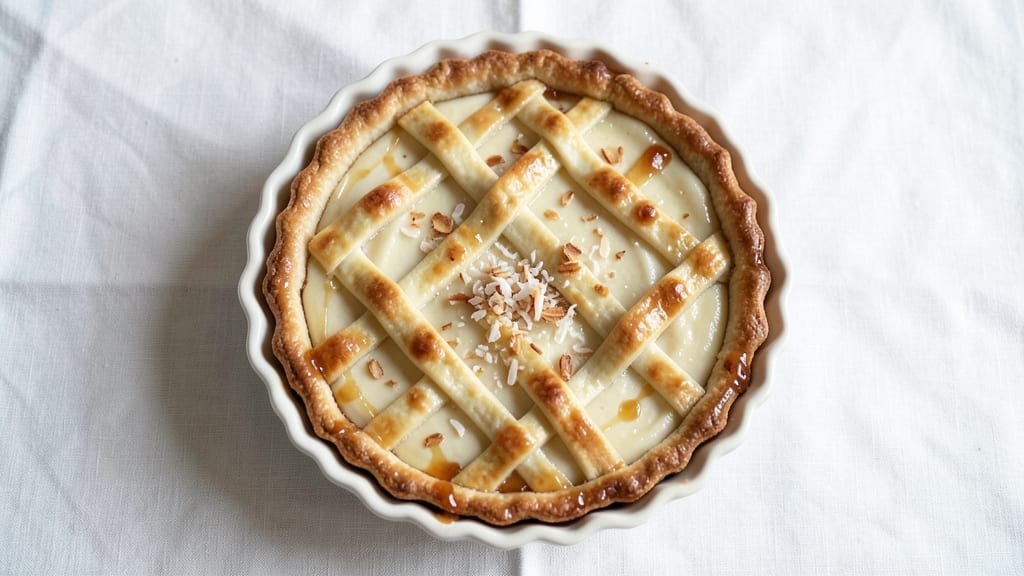
This old-fashioned coconut custard pie delivers the perfect balance of creamy custard and toasted coconut crunch that brings back childhood dessert memories.
The secret lies in a buttery, flaky crust paired with a velvety filling that sets just right, topped with a layer of sweetened coconut that becomes irresistibly crisp at the edges. I've perfected this recipe over years of baking, ensuring every slice delivers that nostalgic comfort without sacrificing modern precision.
The foundation begins with a classic pie crust that's rolled out to the perfect thickness—thin enough to create a delicate base, yet sturdy enough to hold the rich custard filling.
What sets this apart is the custard mixture, where cornstarch creates that signature creamy texture while vanilla and cinnamon add warmth. The real magic happens with the toasted coconut topping, which we'll bake until golden brown for that satisfying crunch in every bite.
What you'll end up with is a pie that's visually stunning with its golden crust and caramelized coconut, while the custard remains silky smooth with just a hint of tang. The contrast between the creamy filling and crisp coconut topping makes each slice a perfect balance of textures and flavors.
This dessert is ideal for family gatherings, holiday dinners, or simply treating yourself to a classic comfort.
Once baked, the pie should sit at room temperature for at least 2 hours before serving—this allows the filling to fully set and develop its rich custard consistency. Serve slices warm with a dollop of whipped cream or a scoop of vanilla ice cream for the ultimate indulgence.
The leftovers keep beautifully in the refrigerator for up to 3 days, though I doubt they'll last that long in your home.
Ingredients for old fashioned coconut custard pie
Classic crust, velvety custard, and golden toasted coconut—this nostalgic pie needs just 13 ingredients for pure comfort.
| Ingredient | Amount | Notes |
|---|---|---|
| All-Purpose Flour 🌾 | 2 ½ cups | For pie crust, sifted |
| Unsalted Butter 🧈 | 1 cup | Cold, cubed, for flaky crust |
| Ice Water 💧 | ½ cup | Plus extra as needed |
| Salt 🧂 | ½ tsp | Fine sea salt |
| Granulated Sugar 🍚 | 1 ½ cups | For filling, divided |
| Cornstarch 🌾 | ¼ cup | For creamy texture |
| Large Eggs 🥚 | 4 whole | Room temperature |
| Pure Vanilla Extract 🍯 | 2 tsp | High quality preferred |
| Ground Cinnamon 🌿 | 1 tsp | Freshly ground |
| Shredded Coconut 🥥 | 2 cups | Sweetened, unsweetened mix |
| Light Corn Syrup 🍯 | ¼ cup | For coconut topping |
| Heavy Cream 🥛 | 1 cup | Full-fat for richness |
| Brown Sugar 🍯 | ¼ cup | Packed, for coconut layer |
The crust is where it all begins. Crisco or butter? Butter wins for flavor, but Crisco makes it flakier—I do half butter, half Crisco for the best of both. Grab King Arthur flour if you can, but any all-purpose works. Chill your butter cubes for at least 30 minutes before mixing—this is non-negotiable for that perfect flaky texture. The secret? Cut the butter into the flour quickly using a pastry cutter or your fingers until it resembles coarse crumbs. Don't overwork it! I've made this crust with store-bought pie crust mix in a pinch, but trust me, homemade is worth the extra 10 minutes.
No sweetened coconut? Mix 1 cup unsweetened with 1 tbsp sugar—it's a game-changer. Running low on corn syrup? Honey or maple syrup works 1:1, though it'll be slightly less sticky. The custard needs to be thick but pourable—if it's too thin, simmer it longer; if too thick, whisk in a splash of milk. Vanilla bean paste adds depth if you're feeling fancy, but extract is fine. For the cinnamon, I always toast mine lightly in a dry pan first—30 seconds until fragrant. That warm spice flavor takes this pie from good to unforgettable. And if you're out of brown sugar? White sugar plus 1 tsp molasses does the trick.
This pie tastes even better the next day as the filling sets and the coconut gets extra crispy. Store it at room temperature for up to 2 days—no need to refrigerate. For longer storage, wrap tightly with plastic and keep in the fridge for up to 5 days. The coconut topping stays crispy for about 3 days if you keep it sealed. To reheat, pop slices in a 350°F oven for 5-10 minutes. Pro tip: Brush the coconut layer with melted butter before baking—it gets extra golden and crispy that way. Leftovers? Freeze individual slices wrapped in parchment for up to 3 months—perfect for last-minute dessert emergencies.
Why You'll Love This Recipe
- No-Fuss Crust: I swear by this pie crust—just flour, butter, ice water, and a pinch of salt. You don’t even need a food processor; a fork and your hands work just fine. The flaky layers melt in your mouth, and honestly? It’s the kind of crust that makes you feel like a baking pro without the fuss.
- Velvet Coconut Magic: That creamy custard? It’s where the real magic happens—rich, velvety, and just sweet enough. The coconut flavor isn’t overpowering; it’s subtle, like a warm hug in dessert form. And the sugar caramelizes just enough to give it that perfect balance—smooth but with a whisper of depth.
- Weeknight or Celebration: This pie is my secret weapon for lazy Sundays and holiday tables. Serve it warm with a scoop of vanilla ice cream for a casual treat, or dust it with powdered sugar for a showstopper at a potluck. Between us? It’s the one dessert that never feels like too much effort for too little reward.
- Leftovers That Don’t Suck: Let’s be real—most pies turn into sad, dry relics by day two. Not this one. The custard stays luscious for days, and the crust? Still crisp if you reheat it right. Plus, it’s budget-friendly—you’re not drowning in exotic ingredients, just good old basics that stretch your dollar. (Yes, even on a Tuesday night.)
Step-by-step instructions for old fashioned coconut custard pie
Here's how to create layers of creamy custard and toasted coconut perfection—every slice will be a taste of nostalgia.
Make the Classic Pie Crust
In a large bowl, combine the 2.5 cups all-purpose flour and 0.5 teaspoon salt. Cut in the 1 cup cold unsalted butter using a pastry cutter or your fingers until the mixture resembles coarse crumbs with pea-sized butter pieces. Gradually add the 0.5 cup ice water, 1 tablespoon at a time, mixing gently until the dough just comes together. Avoid overworking it—this keeps the crust flaky.
Shape the dough into a disk, wrap in plastic, and refrigerate for at least 1 hour. This chilling step is crucial for preventing shrinking when baked. While it rests, preheat your oven to 375°F. Roll out the dough on a floured surface to fit a 9-inch pie dish, then transfer it carefully. Trim and crimp the edges, then blind-bake for 15 minutes using pie weights or dried beans. Remove the weights and bake 5 more minutes until lightly golden.
Prepare the Creamy Custard Filling
In a medium saucepan, whisk together 1 cup granulated sugar, 0.25 cup cornstarch, and 1 teaspoon ground cinnamon. Gradually whisk in the 1 cup heavy cream and 4 whole large eggs until completely smooth. Cook over medium heat, stirring constantly with a wooden spoon, until the mixture thickens to a pudding-like consistency—about 5-7 minutes. You'll know it's ready when it coats the back of the spoon and leaves a clear path when you run your finger through it.
Remove from heat and stir in the 2 teaspoons pure vanilla extract. Let the custard cool to room temperature, then pour it into the pre-baked crust. Smooth the top with a spatula, then sprinkle 1 cup shredded coconut evenly over the surface. Bake at 350°F for 30-35 minutes until the filling is set but still slightly jiggly in the center. This ensures a creamy texture when sliced.
Create the Toasted Coconut Topping
While the pie bakes, prepare the coconut topping by combining 1 cup shredded coconut, 0.25 cup brown sugar, and 0.25 cup light corn syrup in a small bowl. Spread the mixture evenly over a parchment-lined baking sheet. Bake at 325°F for 8-10 minutes, stirring once halfway through, until the coconut is golden brown and fragrant. Watch closely—it burns quickly! Let it cool completely before sprinkling over the custard pie.
This topping is the star of the show—its caramelized sweetness contrasts beautifully with the creamy custard. For extra crunch, you can toast the coconut in a dry skillet over medium heat instead, but the oven method gives more even browning. Once cooled, gently press the toasted coconut onto the custard layer, covering it completely. Let the pie cool to room temperature before slicing.
Chill and Serve for Perfect Texture
Refrigerate the pie for at least 4 hours, preferably overnight. This chilling time is non-negotiable—it allows the custard to fully set and develop its signature velvety texture. When ready to serve, run a knife around the edges to loosen it from the dish, then slide it onto a plate. The contrast between the creamy custard and crispy coconut topping is what makes this pie legendary.
Slice into wedges and serve chilled. Each bite should deliver that perfect balance of creamy, sweet custard with a satisfying crunch from the toasted coconut. For an extra-special touch, garnish each slice with a sprinkle of additional toasted coconut before serving. This pie tastes even better the next day, so make it ahead when you can!
Pro Tips For Making Old Fashioned Coconut Custard Pie
- Chill the Butter First: Take that cold butter straight from the fridge—no softening needed. I learned this the hard way when my crust turned greasy and tough after mixing it with barely-cooled butter. Cold cubes cut into the flour better and create flakier layers, even when you’re working with ice water later.
- Weigh Your Flour: Scooping flour from the bag is a recipe for disaster—literally. Use a kitchen scale for the crust and custard fillings to guarantee consistent measurements. I used to eyeball it, and my pies either fell flat or turned out dense. A gram here or there makes a difference when you’re balancing butter and sugar.
- Don’t Overmix the Custard: Stir just until the sugar dissolves and the cornstarch (if used) is smooth—no need to beat it like a smoothie. Overmixing introduces air, which can cause the custard to break or weep later. I’ve ruined more than one pie by turning it into a lumpy mess, so keep those strokes gentle.
- Blind-Bake the Crust: Pop the crust into the oven with pie weights or dried beans for 10–12 minutes before adding the custard. This prevents a soggy bottom when the filling steams during baking. I skipped this once and ended up with a crust that tasted like dessert soup—never again.
Essential equipment for this recipe
Pie Crust Essentials
Your pie crust starts with the right tools. I swear by a 9-inch glass pie dish—it conducts heat evenly and prevents soggy bottoms. For rolling, use a floured marble rolling pin (or a wooden one) to avoid sticking.
A pastry brush comes in handy for brushing melted butter on the crust before baking—this creates that golden, flaky finish. Don’t skip the pie weights or dried beans for blind baking; they prevent the crust from puffing up. 🧑🍳
Custard Thickening Tools
A medium saucepan with sloped sides makes whisking the custard easier, and a wooden spoon prevents scratching nonstick surfaces. For testing doneness, keep a small bowl of ice water nearby—drop a spoonful of custard into it; if it jiggles but holds shape, it’s ready.
A fine-mesh sieve helps strain any lumps from the cornstarch mixture for ultra-smooth custard. And trust me, a digital kitchen scale ensures precise measurements for the custard’s sugar-to-cornstarch ratio. ⚡
Coconut Crispy Perfection
Toasted coconut needs a parchment-lined baking sheet to prevent sticking, and a small offset spatula helps spread the mixture evenly. For even browning, use a light-colored metal baking pan—it reflects heat better than dark pans.
A fine-mesh sifter makes it easy to dust the cooled coconut over the pie for an even layer. Pro tip: Keep a small bowl of water nearby to dampen your fingers if the coconut sticks while handling. 🥥
Temperature Control
Accurate temperature matters most for this pie. Invest in an oven thermometer—many home ovens run hot or cold. For the custard, a candy or instant-read thermometer helps track the perfect 170°F internal temperature.
A cooling rack speeds up the custard’s cooling process, preventing skin formation. And for chilling, a large wire rack keeps air circulating around the pie for even setting. 🌡️
Serving with Style
Presentation elevates this classic dessert. Use a sharp chef’s knife with a pie server for clean slices. A small pastry bag with a star tip lets you pipe whipped cream or extra toasted coconut for garnish.
For serving, a wooden pie board adds rustic charm, while a clear glass plate lets guests admire the golden crust. And don’t forget a small bowl of vanilla ice cream on the side—it’s the perfect pairing. ✨
Nutrition facts
Frequently asked questions
Why does my coconut custard pie filling look grainy?
Graininess usually means the cornstarch wasn't fully dissolved or the custard cooled too quickly. Always whisk the cornstarch into cold milk first, then heat gradually. For extra smoothness, strain through a fine-mesh sieve before pouring into the crust. And never rush the cooling process—let it sit at room temperature for 30 minutes before refrigerating.
Can I make this pie without a pie dish?
Yes, but expect slightly different proportions. Use a 9-inch springform pan for easy removal, or a deep oven-safe skillet lined with parchment. The crust may need 10-15 minutes extra baking time to fully set, and you'll want to chill the pie 6 hours instead of 4 to compensate for the different heat distribution.
How do I prevent the coconut topping from burning?
Toast the coconut at 325°F (never higher) and stir every 2-3 minutes. Spread it in a single layer on parchment paper—this ensures even browning. For extra insurance, use a light-colored metal pan that reflects heat better. If it starts browning too quickly, remove it from the oven immediately and let it cool before continuing.
What's the best way to reheat leftover slices?
Wrap individual slices in foil and warm at 350°F for 5-7 minutes until the coconut is crisp again. For microwave reheating, cover with a damp paper towel and heat for 10-15 seconds—just enough to soften the custard slightly while keeping the coconut crunchy. Never microwave uncovered, or the coconut will become soggy.
Can I substitute the coconut topping with something else?
For a nutty variation, try toasted pecans or walnuts mixed with brown sugar. Or for a fruit twist, use dried cranberries or chopped dates baked with the same sugar-corn syrup mixture. Just reduce baking time to 6-8 minutes—fruit burns faster than coconut. The key is maintaining that caramelized contrast with the creamy custard.