
Desserts
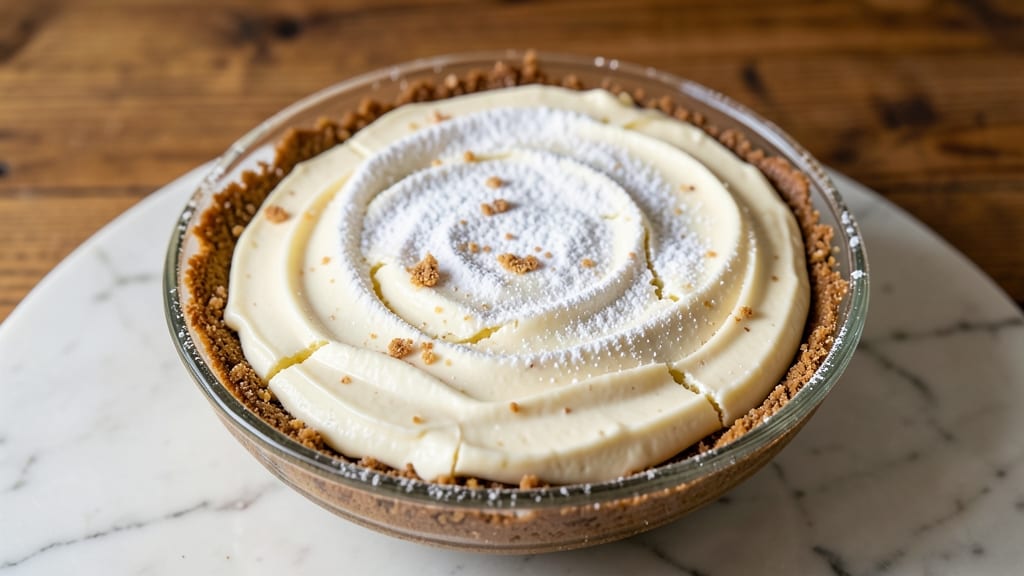
This Philadelphia cream cheese cheesecake pie recipe delivers the perfect balance of a crisp golden crust hugging layers of velvety cream cheese filling. The secret lies in a precise layering technique that prevents cracking while creating those signature swirls—no jiggling required.
I’ve perfected this version after years of testing, ensuring the filling stays silky smooth and the crust maintains its structure even after cooling.
The recipe begins with a buttery graham cracker crust that stays sturdy through baking, then introduces a tangy cream cheese filling enriched with sour cream for extra richness. Baking at a precise 325°F for 50 minutes ensures even cooking without overbrowning.
The key to those coveted swirls is a simple knife-and-spoon method that creates elegant patterns without complicating the process.
By the time it emerges from the oven, you’ll have a pie with a crisp yet tender crust, a filling that’s creamy and lightly set, and just enough tang to balance the sweetness.
The texture is what makes this recipe stand out—no graininess, no cracks, just pure, restaurant-quality dessert. Serve it warm with a dollop of whipped cream or chilled with fresh berries for the ultimate crowd-pleaser.
Whether you’re hosting a dinner party or simply craving a decadent treat, this pie delivers professional results with simple techniques. The recipe scales effortlessly for gatherings, and leftovers (if there are any) reheat beautifully. Let’s get baking—your taste buds will thank you.
Ingredients for philadelphia cream cheese cheesecake pie
Crisp crust meets velvety swirls—these core ingredients deliver restaurant-quality Philadelphia cream cheese pie.
| Ingredient | Amount | Notes |
|---|---|---|
| Philadelphia Cream Cheese 🧀 | 16 oz | Full-fat, room temperature |
| Sour Cream 🥛 | ½ cup | Full-fat for creaminess |
| Granulated Sugar 🍚 | 1 ½ cups | Superfine preferred |
| Large Eggs 🥚 | 3 whole | Room temperature |
| Vanilla Extract 🌿 | 1 tbsp | Pure Madagascar preferred |
| Graham Cracker Crumbs 🍞 | 2 cups | Honey Maid preferred |
| Unsalted Butter 🧈 | ½ cup | Cold, cubed |
| Diamond Crystal Kosher Salt 🧂 | ¼ tsp | Fine grain preferred |
| Heavy Whipping Cream 🥛 | ¼ cup | For swirls, optional |
| Lemon Juice 🍋 | 1 tbsp | Freshly squeezed |
| All-Purpose Flour 🌾 | 1 tbsp | For crust stability |
| Dark Brown Sugar 🍚 | 1 tbsp | Packed, for crust sweetness |
The Philadelphia cream cheese is non-negotiable—full-fat, block form creates the smoothest texture. Trader Joe's and Whole Foods carry the best quality in bulk. Room temperature is critical; let it sit for 30 minutes before mixing. Sour cream adds richness, but Greek yogurt works in a pinch if you prefer tangier flavor. For the crust, Honey Maid graham crackers provide the perfect balance of sweetness and crunch—pre-crushed saves time, but crushing them yourself ensures finer texture. Unsalted butter must be cold to prevent a greasy crust; cut it into small cubes and freeze for 10 minutes if needed.
No vanilla extract? Vanilla bean paste intensifies flavor, or vanilla sugar at half the amount works surprisingly well. Substituting cream cheese brands risks texture—Whipped varieties create air pockets, while low-fat options yield a denser filling. For the swirls, heavy whipping cream is ideal, but chilled whipped cream from a can (like Reddi-wip) adds convenience without sacrificing appearance. Lemon juice brightens the filling; if you're avoiding citrus, white vinegar at half the amount mimics the tang. The flour and brown sugar in the crust stabilize moisture—skip them only if your graham crackers are already sweetened heavily.
Store the crust mix in an airtight container with a parchment barrier for up to 3 days; the filling can be prepped 1 day ahead and refrigerated. Bake just before serving—the crust loses crispness if assembled too early. For make-ahead convenience, assemble the pie, refrigerate overnight, then bake straight from cold. Leftovers keep for 3 days in the fridge; reheat at 300°F for 15 minutes to restore texture. Freeze for 2 months by wrapping tightly in plastic and baking straight from frozen (add 10 minutes to cook time).
Why You'll Love This Recipe
- No-Fuss Mixing: I swear by the five-minute prep here—just beat the cream cheese, sour cream, and sugar until smooth. No standing over a hot stove, no waiting for dough to rise. That’s my kind of dessert.
- Velvet Smooth Magic: The secret’s in the sour cream—it keeps the filling ridiculously creamy without a single grain of texture. Add a splash of vanilla, and suddenly, you’ve got that classic cheesecake taste with half the effort.
- Party Ready: Slice it for a crowd or grab a single piece for a snack—this holds up perfectly. I’ve taken it to potlucks, birthday gatherings, and even my kid’s soccer game. (Yes, even on a Tuesday night.)
- Budget-Friendly Luxury: Philadelphia cream cheese and eggs stretch further than you’d think. One batch feeds six, and leftovers? They’re even better the next day—if there are any. (Between us, there usually aren’t.)
Step-by-step instructions for Philadelphia cream cheese cheesecake pie
Master this technique and you'll achieve a perfect balance of crisp buttery crust and velvety cream cheese filling.
Prepare the Crust Mixture
In a medium mixing bowl, combine the 2 cups graham cracker crumbs, 0.5 cup unsalted butter (cold and cubed), 1 tbsp dark brown sugar, and 0.25 tsp diamond crystal kosher salt. Use your fingers or a fork to work the butter into the crumbs until the mixture resembles coarse sand with no large butter clumps remaining. This texture ensures an even, crisp crust.
Press the mixture firmly and evenly into a 9-inch pie dish, using the back of a measuring cup to create an even surface. The crust should be about ¼-inch thick. Chill in the refrigerator while you prepare the filling, as this prevents premature melting when you add the hot filling later. For best results, use a springform pan if you prefer easier removal.
Whip the Cream Cheese Filling
In a large mixing bowl, beat the 16 oz philadelphia cream cheese at medium speed until completely smooth and creamy. This process should take about 2 minutes, ensuring no lumps remain. Gradually add the 1.5 cups granulated sugar while continuing to mix, scraping down the sides of the bowl as needed. This gradual addition prevents graininess in the final filling.
Add the 3 whole large eggs one at a time, mixing just until each is fully incorporated after each addition. This slow incorporation prevents curdling. Stir in the 1 tbsp vanilla extract and 1 tbsp lemon juice, mixing until evenly distributed. The mixture should be thick but pourable, with a smooth, velvety texture. This is the foundation of your silky filling.
Create the Swirl Pattern
In a separate bowl, whisk together the 0.5 cup sour cream, 0.25 cup heavy whipping cream, and 1 tbsp all-purpose flour until smooth. This mixture creates the signature swirls that distinguish this pie. Pour half of the cream mixture over the cream cheese filling and gently fold together using a spatula, being careful not to overmix.
Pour the filling into the prepared crust, spreading it evenly. Using the back of a spoon or an offset spatula, create a well in the center of the filling. Carefully pour the remaining cream mixture into the well, then use the tip of a knife to gently swirl the cream mixture into the filling. This creates the beautiful marbled effect without overmixing, which could deflate the filling.
Bake to Perfection
Place the pie on the center rack of your preheated oven to 325°F. Bake for 50-55 minutes until the edges are lightly golden and the center is just set but still slightly jiggly. This jiggle indicates the filling is fully cooked but still creamy. A toothpick inserted into the center should come out with a few moist crumbs but no liquid.
Remove the pie from the oven and let it cool completely at room temperature for 2 hours before refrigerating. This gradual cooling prevents cracking. Once fully chilled, cover and refrigerate for at least 4 hours or overnight. The longer it chills, the firmer and more stable the texture becomes, making it easier to slice without collapsing the filling.
Serve with Confidence
Before serving, run a knife around the edge of the pie to loosen it from the dish. If using a springform pan, release the clamp before removing the sides. Cut into wedges and serve immediately. The pie should have a crisp, golden crust that contrasts beautifully with the smooth, creamy filling and delicate swirls throughout.
For best presentation, garnish with fresh berries or a dusting of powdered sugar. Serve chilled, as the cold temperature enhances the texture contrast between the crisp crust and velvety filling. Each slice should reveal those signature swirls, proving you've mastered this classic dessert technique.
Pro Tips For Making Philadelphia Cream Cheese Cheesecake Pie
- Soften Cream Cheese First: Take the block out of the fridge 24 hours before baking—no, I’m not kidding. Cold cream cheese behaves like cement in your mixer, and even if you force it, you’ll end up with lumps that scream "amateur." Let it sit at room temp until it’s just slightly soft to the touch, like a ripe avocado. This isn’t optional; it’s the difference between silky and grainy.
- Whip Eggs Separately: I learned this the hard way—adding whole eggs to the cream cheese mix too early turns your batter into a sad, curdled mess. Whisk the yolks into the cream cheese first, then fold in the whites at the very end. This keeps the structure light and prevents that dreaded "egg soup" texture. And yes, even if you’re impatient like me, resist the urge to rush this step.
- Skip the Overmixing: Once you fold in the egg whites, stop as soon as they’re just incorporated. Overmixing deflates the air bubbles and makes your pie dense—like eating a brick with frosting. Give it two or three gentle swirls with a spatula, then call it good. The batter will look slightly streaky, but that’s normal. Trust the process.
- Bake Until Jiggly: The center should wobble like Jell-O when you shake the pan—no, it doesn’t need to be set like a rock. Overbaking turns cream cheese into rubber, and underbaking leaves it wet. If you’re unsure, turn off the oven, crack the door, and let it sit for 10 minutes. It’ll finish cooking without drying out. Your future self will thank you for not guessing.
Troubleshooting perfect results
Cracked Filling Fix
If your pie develops cracks during baking, it’s usually due to overmixing the filling or rapid temperature changes. To prevent this, ensure your cream cheese is room temperature and mix just until smooth.
After baking, cover the pie with parchment paper and refrigerate for at least 4 hours—this helps the filling set properly. For existing cracks, spread a thin layer of chilled whipped cream over the top before serving to disguise them elegantly. 💫
Soggy Crust Solutions
A soggy crust often happens when the filling isn’t fully set before cooling or if the crust isn’t properly pre-baked.
To avoid this, chill the crust for 20 minutes before adding the filling, and bake the pie on the lower oven rack for the first 15 minutes to set the crust faster.
For extra insurance, sprinkle 1 tbsp all-purpose flour over the crust before adding the filling—this creates a barrier against moisture.
Filling Too Runny
If your filling is too thin after baking, it likely means the eggs weren’t fully incorporated or the oven temperature fluctuated. Next time, beat the eggs into the cream cheese mixture at low speed for 30 seconds after each addition to ensure full integration.
For a quick fix, place the baked pie in a 300°F oven for 10-15 minutes to thicken the filling slightly. Avoid overbaking, though—this can make it grainy.
Swirls Disappearing
When the swirls fade or blend too much, it’s usually from overmixing during the folding step. To maintain those elegant patterns, fold the cream mixture into the filling just until combined—no more than 10 gentle stirs.
For a more pronounced effect, use a piping bag with a star tip to pipe the cream mixture onto the filling before swirling with a knife. Chill the pie overnight to keep the swirls distinct.
Underbaked Center
An underbaked center often results from opening the oven too soon or underestimating bake time. Always check doneness with a toothpick—it should come out with moist crumbs, not liquid.
If your pie is underdone, tent it with foil and return it to the oven for 5-10 minutes at 325°F. For future bakes, cover the edges with foil during the last 15 minutes to prevent overbrowning while the center cooks.
Filling Separating
Separation occurs when eggs are added too quickly or the mixture sits too long before baking. To prevent this, add eggs one at a time and mix just until combined.
If separation happens, gently fold in 1 tbsp sour cream and rebake at 300°F for 10 minutes to re-emulsify the filling. For next time, assemble the pie no more than 1 hour before baking to keep ingredients stable.
Nutrition facts
Frequently asked questions
Can I make this pie without a graham cracker crust?
For a nut-free option, try a buttery shortbread crust made with 1 cup flour, ½ cup melted butter, and ¼ cup sugar. Press it into the pan and bake for 10 minutes at 350°F before adding filling. For extra flair, use a gingersnap or digestive biscuit crumb crust—just adjust sweetness to taste.
Why does my cream cheese filling sometimes get grainy?
Graininess usually happens when eggs are added too quickly or the mixture sits too long before baking. Always beat the cream cheese until completely smooth first, then add eggs one at a time, mixing just until combined. For extra insurance, sift the sugar before adding or use superfine sugar to prevent texture issues.
How do I scale this recipe for a crowd?
For a 12-inch pie, increase crust ingredients by 50% (use 3 cups crumbs) and double the filling. Bake in a 9-inch pan first to test texture, then transfer to the larger dish. For multiple pies, divide filling evenly—16 oz cream cheese per 9-inch pie maintains perfect consistency.
Can I use whipped cream cheese instead of block?
Whipped cream cheese won't work for this recipe—it contains air pockets that disrupt the silky texture. Stick with full-fat block cream cheese (like Philadelphia brand) for the creamiest results. If you're short on time, let it sit at room temperature for 30 minutes before mixing to ensure smooth blending.
What's the best way to store leftovers?
Store in an airtight container in the fridge for up to 3 days. For longer storage, freeze slices wrapped tightly in plastic for 2 months. Thaw overnight in the fridge and reheat at 300°F for 15 minutes to restore texture. Avoid microwaving—it makes the crust soggy!