
Desserts
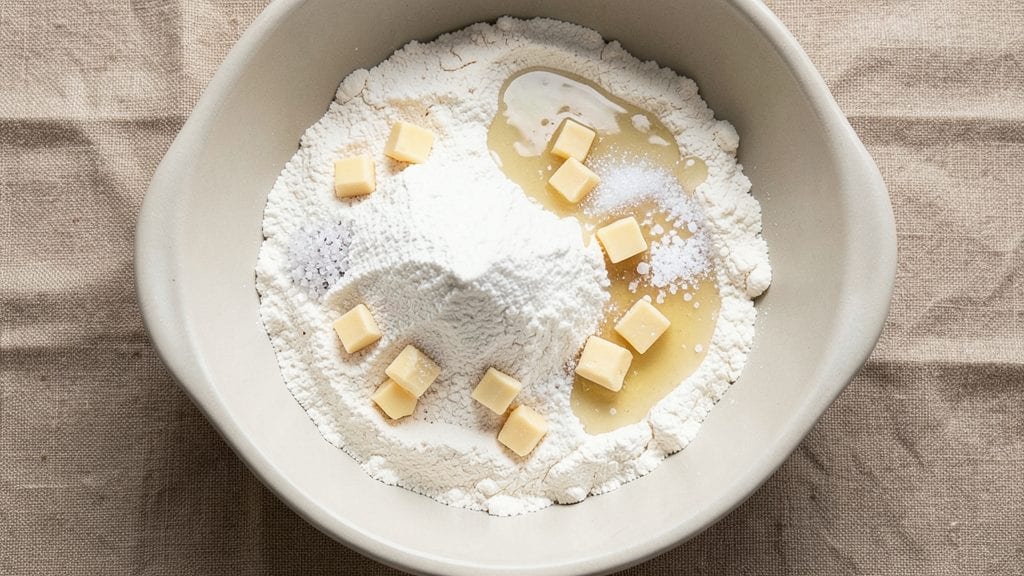
Creating flaky pie pastry dough that delivers those signature shatterable layers starts with precise technique and quality ingredients. This recipe balances butter and flour to create a dough so tender it practically melts in your mouth while maintaining structural integrity for blind-baking.
I've perfected this method over years of testing—whether you're making apple pies, savory quiches, or delicate tarts, this foundation delivers professional results every time.
The secret lies in keeping everything cold and working quickly to prevent gluten development. Cold butter creates those signature flaky layers when it melts during baking, while proper rolling and chilling techniques ensure your crust holds its shape.
This recipe uses a 3:2 ratio of flour to butter, which provides the perfect balance between flakiness and tenderness. For best results, use all-purpose flour and unsalted butter—never shortcut with margarine or vegetable shortening.
What you'll achieve is a pie crust with layers so delicate they practically dissolve on your tongue while maintaining enough structure to hold fillings without sogginess. The dough can be rolled out for traditional pies or pressed into tart pans for elegant desserts.
When blind-baked, it achieves a golden-brown color with just enough crispness at the edges. This versatile dough works equally well for sweet fruit pies and savory hand pies—proof that great pastry isn't limited to one application.
For maximum flakiness, I recommend the "book method" where butter is wrapped between dough sheets, creating hundreds of thin butter layers. Store the finished dough between parchment paper in the refrigerator for up to 3 days or freeze for longer storage.
Whether you're a beginner or experienced baker, this foolproof technique will transform your homemade pies into showstoppers. Let's get started with the step-by-step instructions that deliver restaurant-quality results at home.
Ingredients for pie pastry dough
Cold butter, sifted flour, and precise technique make this flaky pie crust foolproof.
| Ingredient | Amount | Notes |
|---|---|---|
| All-Purpose Flour 🌾 | 3 cups | Sifted for light texture |
| Unsalted Butter 🧈 | 1 ½ cups | Cold, cubed for flakiness |
| Ice Water 💧 | ½ cup | Chilled, for binding |
| Diamond Crystal Kosher Salt 🧂 | ½ tsp | Fine grain preferred |
| Granulated Sugar 🍚 | 1 tbsp | For subtle sweetness |
| White Vinegar 🍶 | 1 tsp | Balances acidity |
| Parchment Paper 📄 | 1 sheet | For rolling/chilling |
| Plastic Wrap 🎀 | 1 sheet | For sealing dough |
| Aluminum Foil 📄 | 1 sheet | For blind baking |
| Dried Ice ❄️ | 1 cup | Optional, for extra chill |
The butter is non-negotiable—European-style unsalted butter like Plugrá or Bergère gives the best flavor and texture. Buy it in 1-pound blocks and keep it frozen until ready to cube. King Arthur or Bob's Red Mill flour works best for its protein balance, but any all-purpose will do. The ice water is your secret weapon—it binds the dough without overworking it. If your kitchen's warm, add the dried ice to your water glass for an instant ice bath. For salt, Diamond Crystal kosher dissolves better than table salt, and the vinegar adds just enough tang to balance sweet fillings.
No cold butter? Freeze your cubed butter for 20 minutes—it'll work in a pinch. Short on vinegar? Lemon juice at half the amount keeps the acidity. Using whole wheat flour? Replace half the all-purpose, but expect slightly less flakiness. For extra flakiness, try the book method: roll out half the dough, spread butter, then roll again. Store-bought pie crusts? Never again—this beats them every time. The sugar is optional but adds a subtle sweetness that pairs perfectly with fruit fillings.
This dough keeps for 3 days in the fridge wrapped tightly in plastic, or 3 months frozen. For best results, chill between uses. Roll it out between parchment paper to prevent sticking, and press gently—don't force it. Blind-baked crusts stay fresh for 2 days at room temperature, perfect for filling later. Divide dough into balls before freezing to make prep day-of easier.
Why You'll Love This Recipe
- I’ll be real: this dough comes together in five minutes—no mixer, no fuss. Just cold butter cut into flour with ice water until it holds together. That’s it. No waiting for yeast, no rolling out until it screams.
- No-Fuss Assembly: I’ll be real: this dough comes together in five minutes—no mixer, no fuss. Just cold butter cut into flour with ice water until it holds together. That’s it. No waiting for yeast, no rolling out until it screams.
- Buttery Magic: That cold butter? It melts into flaky layers while baking, creating a crispy lattice or tender crust that’s ridiculously satisfying. A pinch of sugar in the dough? Trust me, it balances the salt and adds just enough sweetness to make every bite feel like a hug.
- Pie for Any Occasion: Need a last-minute dessert for guests? A handheld snack for a picnic? This dough works for everything—apple pie, chicken pot pie, even savory hand pies. I’ve made it for Thanksgiving, weeknight dinners, and lazy Sundays. It’s my secret weapon.
Step-by-step instructions for flaky pie pastry dough
Here's the method that guarantees layers so delicate they'll shatter with every bite.
Cut and Combine Cold Butter with Flour
Place the 1.5 cups unsalted butter in a large mixing bowl and cut it into ¼-inch cubes using a sharp chef's knife. This size is crucial—too large and your layers won't form properly; too small and the butter won't create enough steam during baking. Add the 3 cups all-purpose flour and the 0.5 tsp diamond crystal kosher salt to the bowl.
Using a pastry cutter or two forks, work the butter cubes into the flour until you achieve a texture resembling coarse crumbs with pea-sized butter pieces still visible. This is where the magic happens—the butter needs to stay cold to create those signature flaky layers. If your kitchen feels warm, chill the bowl in the freezer for 5 minutes before proceeding.
Add Wet Ingredients for Perfect Binding
In a separate small bowl, whisk together the 0.5 cup ice water, 1 tbsp granulated sugar, 1 tsp white vinegar, and the remaining 0.5 tsp diamond crystal kosher salt. The ice water is non-negotiable—it keeps the butter cold while providing just enough moisture to bind the dough. The vinegar acts as a tenderizer, preventing the dough from becoming tough.
With your hands or a wooden spoon, gradually sprinkle the wet mixture over the flour-butter combination, mixing gently until just combined. You'll know it's ready when the dough forms a shaggy mass that holds together when pressed. Avoid overmixing—this develops gluten and ruins the flaky texture. If the dough feels too dry, add 1 teaspoon ice water; if too sticky, add 1 tablespoon flour.
Chill and Rest for Maximum Flakiness
Shape the dough into a disk, wrap it tightly in the plastic wrap, and refrigerate for at least 2 hours (overnight is ideal). This resting period allows the gluten to relax and the butter to firm up, which is essential for creating those delicate layers. Here's the thing—skipping this step or using warm dough will result in tough, dense pastry instead of the shatteringly flaky version you're after.
For an extra-chilled option (especially helpful in warm kitchens), place the wrapped dough on a tray lined with the aluminum foil and surround it with the 1 cup dried ice for 15 minutes. This creates an instant freezer effect without requiring your freezer space. The dough should feel cold but not rock-hard when you handle it.
Roll and Transfer with Precision
On a clean surface dusted with flour, roll the chilled dough into a 12-inch circle, about ⅛-inch thick. Use the parchment paper as your rolling surface—it prevents sticking and makes transferring the dough effortless. If the dough springs back when you press it, return it to the fridge for 10 minutes to firm up. The goal is to create an even thickness throughout, as uneven rolling leads to uneven baking.
Gently transfer the rolled dough to your pie dish by lifting it with the parchment paper. For a double-crust pie, repeat the rolling process with the remaining dough. The key here is patience—rushing causes the dough to shrink during baking, ruining that perfect fit in your pie dish. If you're making a lattice top, roll one sheet and cut it into strips while it's still on the parchment paper for clean edges.
Pro Tips For Making Pie Pastry Dough
- Cut Butter Cold: Take your butter straight from the fridge—no thawing—and slice it into ½-inch cubes. I learned this the hard way: room-temperature butter melts too fast, and suddenly you’re fighting greasy dough instead of flaky layers. Keep those cubes uniform too; jagged pieces melt unevenly.
- Use Ice Water Sparingly: Start with ¼ cup of ice water, then add more 1 tablespoon at a time until the dough just holds together. Too much water makes the crust tough, and I’ve ruined more batches than I’ll admit by overdoing it. The dough should clump when pressed, not stick like wet sand.
- Rest Before Rolling: Wrap the dough in plastic and let it rest in the fridge for at least 30 minutes—yes, even if you’re in a hurry. Skipping this step means the gluten tightens up, and your crust will shrink in the oven. It’s not just about flakiness; it’s about control.
- Salt the Butter Too: Mix ¼ teaspoon of kosher salt directly into the butter before cutting it into the flour. The dough recipe already calls for salt, but this extra pinch makes the flavor pop. I was skeptical until I tried it—now I can’t go back.
Dietary considerations for these flavors
Gluten-Free Adaptation
For a gluten-free version, replace the 3 cups all-purpose flour with a 1:1 gluten-free flour blend like King Arthur Measure for Measure. Add ½ tsp xanthan gum to improve binding, and reduce ice water by 2 tbsp since gluten-free flours absorb less moisture.
Chill the dough an extra 30 minutes to prevent cracking during rolling. The texture will be slightly less flaky but still sturdy enough for blind baking.
Dairy-Free Options
Swap the 1.5 cups unsalted butter for 1.5 cups dairy-free margarine or vegan butter like Miyoko's, which mimics butter's fat content. For extra flakiness, use coconut oil chilled to 35°F—it creates steam like butter but with a neutral flavor.
Keep all other ingredients identical, including the ice water, which helps compensate for the reduced fat cohesion.
Low-Carb/Keto Version
Create a keto-friendly crust by replacing flour with 4 cups almond flour and ½ cup coconut flour. Add 2 large egg yolks to bind and reduce ice water to 2 tbsp.
The dough will be denser but holds shape well for savory pies. For sweet applications, add 2 tbsp erythritol to the wet ingredients. Blind-bake at 375°F for 15 minutes to prevent browning.
Nut-Free Allergy-Friendly
Use a 1:1 oat flour blend (like Bob's Red Mill) instead of almond flour for nut-free keto dough. For gluten-free + nut-free, combine 2 cups gluten-free oat flour with 1 cup tapioca starch.
The texture will be more crumbly, so press it firmly into the pie dish before baking. Add 1 tbsp psyllium husk powder to improve structure if needed.
Vegan Binding Boost
For vegan dough, add 1 tbsp ground flaxseed mixed with 3 tbsp water to replace eggs. Let it sit for 5 minutes to thicken before combining with wet ingredients.
The flax "egg" adds binding without altering flavor. Use vegan butter and ensure all tools (rolling pins, pie dishes) are oil-free to prevent sticking.
Sugar-Free Sweet Crust
Omit the 1 tbsp granulated sugar entirely and replace with 1 tbsp monk fruit sweetener or 2 tbsp erythritol. For a caramelized edge, brush the baked crust with 1 tbsp melted vegan butter before adding filling.
The crust will still hold its shape but with zero added sugar—ideal for diabetic-friendly fruit pies.
Nutrition facts
Frequently asked questions
Why does my pie crust turn out tough instead of flaky?
Overworking the dough develops gluten, which creates toughness. Keep everything cold, work quickly, and avoid excessive mixing. The butter should remain in pea-sized pieces when combined with flour—never press it all together. Also, never skip the 2-hour chill time before rolling.
Can I use this dough for savory pies like quiche?
This recipe works perfectly for savory applications. For extra flavor, add ½ teaspoon onion powder or ¼ teaspoon garlic powder to the dry ingredients. The buttery richness complements eggs and cheese beautifully while maintaining that signature flaky texture.
How do I prevent my crust from shrinking during baking?
Chill the dough thoroughly before rolling, and handle it gently when transferring to the pie dish. Use parchment paper as a rolling surface to prevent sticking, and avoid over-stretching. For extra insurance, dock the crust with a fork before blind-baking to ensure even shrinking.
What's the best way to store leftover dough?
Wrap the dough tightly in plastic wrap and refrigerate for up to 3 days. For longer storage, divide it into portions, wrap each in parchment, then place in a freezer bag. Frozen dough keeps for 3 months. Thaw in the fridge overnight before using—never at room temperature.
Can I make this dough without a food processor?
Yes! Use two forks or your fingers to cut cold butter into flour until you get coarse crumbs with pea-sized butter pieces. The key is to work quickly and keep everything cold. A pastry cutter works too—just press down firmly to cut the butter without overmixing.