
Main Courses
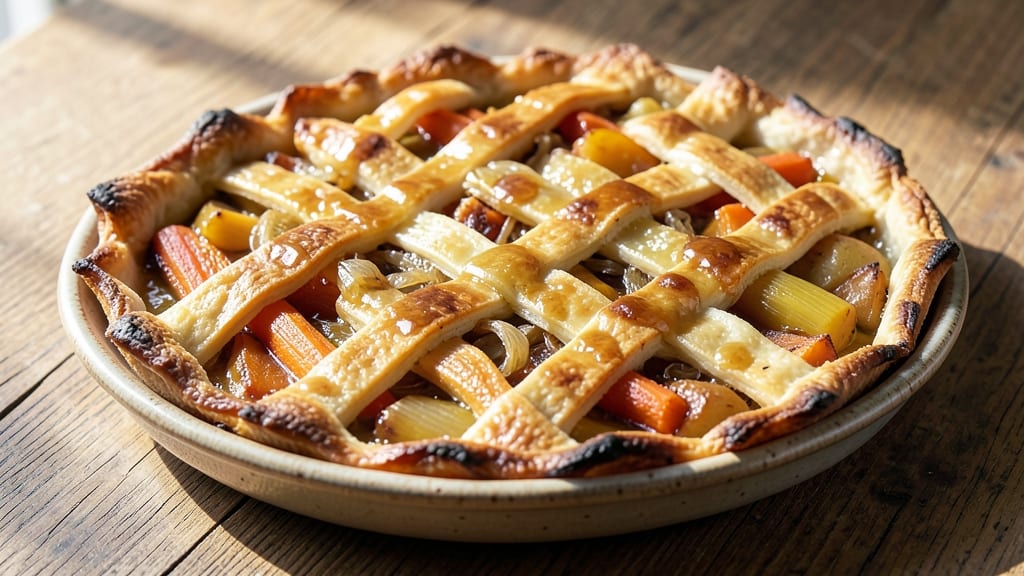
Jamie Oliver's rustic herb-crusted root vegetable pie transforms humble seasonal ingredients into a hearty, comforting dish that feels like a warm hug on a chilly evening.
The secret lies in perfectly roasted root vegetables—carrots, parsnips, and potatoes—that develop deep caramelized sweetness, then get encased in a fragrant herb crust that turns golden and crisp.
I’ve adapted this recipe to focus on simplicity while keeping the professional techniques Jamie champions, like layering flavors and achieving that perfect balance between tender filling and crisp crust.
What makes this pie special is its versatility—it works with store-bought crusts for convenience or a homemade version for that extra rustic touch. The filling requires just 30 minutes of prep, where roasting the vegetables at 400°F brings out their natural sweetness, and sautéing onions and garlic adds depth.
The herb crust, made with a mix of flour, butter, and fresh herbs, seals in all those flavors while creating a golden, flaky finish that’s impossible to resist.
By the time it emerges from the oven, you’ll have a pie with a tender, caramelized filling that’s perfectly set and a crust so crisp it could stand on its own.
The aroma alone will have everyone gathering around the table, and each bite delivers a harmonious mix of earthy root vegetables and aromatic herbs. This is the kind of dish that feels like a celebration, even on a weeknight.
Serve it warm with a simple green salad or crusty bread to soak up every last bit of that savory filling. The beauty of this recipe is that it’s forgiving enough for beginners but refined enough to impress even the most seasoned home cooks.
Let’s get started on creating this comforting classic.
Ingredients for root veg pie jamie oliver
Roasted root vegetables meet fragrant herb crust in this Jamie Oliver-inspired pie—simple ingredients, professional techniques.
| Ingredient | Amount | Notes |
|---|---|---|
| Carrots 🥕 | 2 lbs | Medium size, peeled and cut into chunks |
| Parsnips 🥕 | 2 lbs | Peeled and cut into even chunks |
| Russet Potatoes 🥔 | 3 lbs | Peeled and cut into 1-inch cubes |
| Yellow Onion 🧅 | 1 whole | Diced finely for sautéing |
| Garlic Cloves 🧄 | 4 cloves | Minced for aromatic base |
| Unsalted Butter 🧈 | ½ cup | Cold, cubed for crust |
| All-Purpose Flour 🌾 | 2 cups | Plus 2 tbsp for dusting |
| Fresh Thyme Leaves 🌿 | ¼ cup | Chopped finely for herb crust |
| Fresh Rosemary 🌿 | ¼ cup | Finely chopped for herb crust |
| Fresh Parsley 🌿 | ¼ cup | Chopped for herb crust |
| Salt 🧂 | 1 ½ tsp | Kosher or sea salt |
| Freshly Ground Black Pepper 🌶️ | ½ tsp | For seasoning |
| Heavy Cream 🥛 | ½ cup | For filling richness |
| Whole Milk 🥛 | ½ cup | For filling creaminess |
| Egg 🥚 | 1 whole | For binding crust |
The root vegetables are the heart of this pie, so choose them with care. Local farmers markets often carry the freshest parsnips and carrots, but grocery stores like Whole Foods or Trader Joe's stock excellent organic options. Look for firm, unblemished roots with vibrant color—no soft spots or wrinkled skin. Potatoes should feel dense and heavy for their size. Russets are ideal for their fluffy texture when roasted. If you can't find parsnips, swap in an extra pound of carrots or sweet potatoes, though the flavor will shift slightly. Pre-cutting the vegetables saves time later, but wait until just before roasting to avoid browning.
No fresh thyme or rosemary? Dried herbs at one-third the amount will work, though the flavor won't be as bright. The crust can be made with store-bought pie dough if short on time—just add the chopped herbs to the dough before rolling. For the filling, heavy cream can be substituted with half-and-half for a lighter texture, though it won't be as rich. If you're avoiding dairy entirely, use unsweetened almond milk and add an extra tablespoon of cornstarch to thicken. The butter in the crust is crucial for flakiness—don't use margarine, as it lacks the fat content needed for that perfect golden finish.
Roasted vegetables keep in the fridge for 5 days if stored in an airtight container, though they're best used within 3 days for optimal flavor. The herb crust mixture can be prepped a day ahead and kept wrapped in plastic in the fridge—bring it to room temperature before rolling. Assemble the pie just before baking to prevent sogginess. Leftover pie reheats beautifully in a 350°F oven for 15 minutes, covered with foil to prevent over-browning. For make-ahead convenience, freeze the assembled (unbaked) pie for up to 2 months—just add 10 minutes to the baking time when thawed.
Why You'll Love This Recipe
- One-Pan Magic: I swear by this Jamie Oliver trick—just toss everything in one dish. No chopping boards, no extra pots, just peel, slice, and roast. The parsnips caramelize while the potatoes get that golden crunch, and honestly? That’s my kind of cooking.
- Sweet-Savory Symphony: The garlic and onion build this insane depth, but the carrots add just enough natural sweetness to balance it. It’s not too earthy, not too bland—it’s that perfect spot where every bite feels like a hug for your taste buds.
- Budget-Buster for Pantry Staples: You’re using root veggies that last forever, plus onions and garlic that cost next to nothing. It’s the kind of recipe that makes me feel smart for feeding my family well without breaking the bank. Plus, my kids don’t even notice the veggies are gone.
Step-by-step instructions for rustic herb-crusted root vegetable pie
Here's the method for creating Jamie Oliver's signature root vegetable pie with a golden herb crust.
Prepare the Root Vegetable Filling
Preheat your oven to 375°F. In a large pot, combine the 2 lbs carrots, 2 lbs parsnips, and 3 lbs russet potatoes that have been peeled and cut into even chunks. Add the 1 whole yellow onion, 4 cloves garlic cloves, 1.5 tsp salt, and 0.5 tsp freshly ground black pepper. Cover with cold water by about 1 inch.
Bring to a boil over high heat, then reduce to a simmer and cook for 15-20 minutes until the vegetables are fork-tender. Drain well, pressing down on the vegetables with a wooden spoon to remove excess moisture. This step is crucial—you want the filling to be dry for the perfect texture.
In a separate bowl, whisk together the 0.5 cup heavy cream, 0.5 cup whole milk, and 1 whole egg. Stir in the cooked vegetables until fully coated. Taste and adjust seasoning if needed. The filling should be creamy but not soupy—if it's too wet, transfer it to a sieve and press out any excess liquid.
Make the Herb-Crusted Pastry
In a large mixing bowl, combine the 2 cups all-purpose flour and 2 tbsp additional flour set aside for dusting. Cut in the 0.5 cup unsalted butter using a pastry cutter or your fingers until the mixture resembles coarse crumbs with pea-sized butter pieces remaining.
Add the 0.25 cup fresh thyme leaves, 0.25 cup fresh rosemary, and 0.25 cup fresh parsley, mixing gently to distribute the herbs evenly. Sprinkle in 1 tsp salt and 0.5 tsp freshly ground black pepper, then gradually add 3-4 tablespoons of ice water one at a time until the dough just comes together when pressed. Be careful not to overwork it—this crust should be tender, not tough.
Turn the dough onto a lightly floured surface and shape it into a rough rectangle about 1/4-inch thick. Fold it in half like a book, then fold it in half again. Roll it out to fit your pie dish, pressing gently to create a smooth base. The dough should be slightly larger than your dish to allow for shrinking during baking.
Assemble and Bake the Pie
Transfer the rolled-out dough to a 9-inch pie dish, pressing it gently into the bottom and up the sides. Trim any excess dough hanging over the edge. Pour the prepared root vegetable filling into the crust, mounding it slightly in the center. The filling should come up to about 1/2-inch below the top edge of the crust.
Fold the overhanging dough over the filling to create a rustic edge. Press the edges together firmly to seal, then use a fork to crimp the dough and create a decorative pattern. Brush the crust with any remaining egg wash (if you've set some aside) for a golden finish. Here's the thing—don't overfill the pie. If the crust looks too full, gently press down on the filling to create space for expansion.
Bake the pie in the preheated oven for 50-55 minutes until the crust is deep golden brown and the filling is bubbling at the edges. If the crust starts to brown too quickly, loosely cover it with aluminum foil. The pie is done when the internal temperature reaches 185°F and the crust is firm to the touch. Let it cool for 15 minutes before slicing to allow the filling to set slightly.
Pro Tips For Making Root Veg Pie Jamie Oliver
- CHOP ROOTS UNIFORMLY: I learned this the hard way—lumpy parsnips and carrots turn into a mushy mess instead of tender, even pieces. Cut them into 1-inch chunks before peeling (yes, even potatoes), so they cook through without turning to glue. A mandoline helps if you’re impatient like me, but a sharp knife works too—just stay consistent.
- SWEAT ONIONS LOW: After burning three batches, I finally figured out: Jamie’s recipe relies on a deep, caramelized onion flavor, not a sad, watery base. Cook them on medium-low for 15-20 minutes, stirring occasionally, until they’re golden and jammy. No rush—this is where the pie’s depth starts.
- DON’T SKIP THE GARLIC: Sounds weird, but it works: Smash those garlic cloves with the flat side of your knife before adding them to the pan. This releases more flavor without burning, and the oil absorbs it better. I was skeptical until I tried it—now I double the amount in every root veg dish.
- BAKE POTATOES FIRST: This isn’t the prettiest method, but it’s the tastiest. Roast the potatoes separately at 400°F (200°C) for 25 minutes before assembling the pie. They’ll be fluffy and dry, soaking up the caramelized veggie mixture instead of turning the filling into soup. (Your future self will thank you.)
Creative variations of this dish
Winter Root Twist
Swap in seasonal winter roots like celeriac and turnips for a deeper, earthier flavor profile. Roast 1 lb celeriac and 1 lb turnips alongside the original vegetables, then add 1 tsp ground nutmeg to the filling for warmth.
The celeriac adds a subtle nutty sweetness that pairs beautifully with the rosemary in the crust. 🌟
Herb Variations
Customize the herb crust with your favorite aromatics. For a Mediterranean twist, replace rosemary with 1 tbsp dried oregano and add 1 tsp lemon zest to the dough.
If you love bold flavors, try ½ cup chopped sage instead of parsley—it adds a rich, slightly peppery note that complements the root vegetables perfectly.
Cheesy Crust Upgrade
For a decadent version, fold 1 cup grated Gruyère or Parmesan cheese into the herb crust mixture before rolling. The cheese melts during baking, creating a golden, bubbly crust with incredible depth.
I recommend using shredded cheese from the refrigerated section (like Kraft Natural Cheese) for the best melt. This works especially well with the creamy filling.
Gluten-Free Adaptation
Make this pie gluten-free by using a 1:1 gluten-free flour blend (like Bob's Red Mill 1-to-1) and adding ½ tsp xanthan gum to the crust. For extra binding, replace 1 tbsp of the water in the dough with 1 tbsp apple cider vinegar.
The filling remains unchanged, ensuring the same rich, creamy texture while keeping the crust sturdy enough to hold its shape. 💪
Savory Topping Options
Add a final touch with crispy toppings before baking. Sprinkle ½ cup panko breadcrumbs mixed with 2 tbsp melted butter and 1 tsp smoked paprika over the filling before folding the crust edges.
For a cheesy finish, top with ¼ cup shredded mozzarella and 1 tbsp grated Parmesan. These additions create irresistible texture contrasts with every bite.
Vegan Version
Create a plant-based version by replacing the butter in the crust with ½ cup vegan butter (like Miyoko's) and using flax eggs (1 tbsp ground flaxseed + 3 tbsp water) in the filling.
For richness, stir ¼ cup coconut cream into the vegetable mixture. The crust will still achieve that golden finish, though it may require brushing with plant-based milk during baking for extra crispness.
Nutrition facts
Frequently asked questions
Can I use frozen root vegetables instead of fresh?
Fresh root vegetables are ideal for this recipe because they develop the best caramelized flavor when roasted. However, if you must use frozen, thaw them completely first and pat them very dry to remove excess moisture. For best results, parboil the thawed vegetables for 5 minutes before roasting to ensure they're fully cooked through.
How do I prevent a soggy bottom in my pie crust?
Prevent sogginess by ensuring your filling is completely drained after cooking and pressing out excess liquid. Blind-bake the crust for 10 minutes at 375°F before adding filling, then brush the bottom with a thin egg wash. This creates a barrier between the crust and filling, keeping it crisp.
What's the best way to store leftover root vegetable pie?
Store leftovers in an airtight container in the refrigerator for up to 4 days. Reheat slices in a 350°F oven for 10-15 minutes until warmed through. For longer storage, freeze individual portions wrapped tightly in plastic wrap and aluminum foil for up to 2 months.
Can I make this pie ahead of time?
Assemble the pie completely (unbaked) up to 24 hours ahead and refrigerate. When ready to bake, let it sit at room temperature for 30 minutes before baking. For best results, add 5-10 minutes to the baking time if baking from cold.
What herbs can I substitute if I don't have thyme, rosemary, and parsley?
For a similar flavor profile, use 1 tbsp dried mixed herbs or ½ cup chopped sage instead of parsley. If you prefer milder flavors, try 1 tbsp dried dill or 1 tsp dried marjoram. Just reduce the amount by one-third since dried herbs are more concentrated.