Desserts
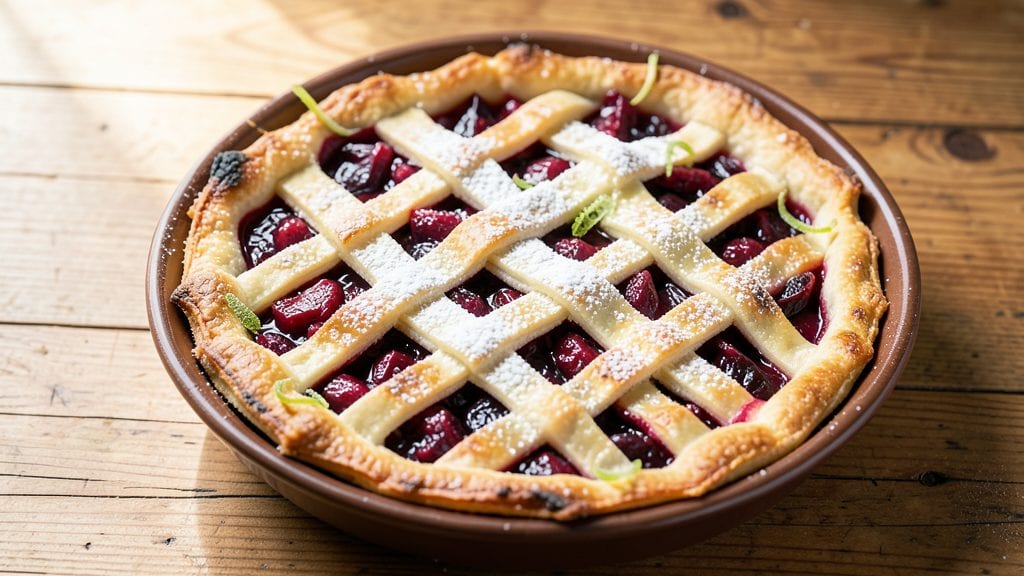
This rubarb pie recipe delivers the perfect balance of tartness and sweetness, with a buttery lattice crust that transforms a simple dessert into something truly special.
The secret lies in the filling—where the natural tang of fresh rubarb meets just enough sugar to create a filling that’s both vibrant and rich. I’ve baked this pie for years, and it’s always the centerpiece of summer gatherings, especially when the rubarb is at its peak.
The recipe starts with a classic double-crust pie, but the real magic happens with the lattice top—those delicate strips of dough create a beautiful pattern while keeping the filling tender and the edges crisp.
Baking at 375°F ensures the crust stays golden and flaky, while the filling thickens just enough to hold its shape. The result? A pie that’s as visually stunning as it is delicious, with a texture that’s neither too runny nor too dry.
What makes this recipe stand out is its versatility—whether you serve it warm with a scoop of vanilla ice cream or chilled with a drizzle of homemade caramel sauce, it’s always a crowd-pleaser.
The lattice crust adds an elegant touch without requiring advanced baking skills, making it ideal for both beginners and seasoned bakers. The filling’s tart-sweet balance ensures every slice is memorable, and the buttery crust ties it all together.
For those who love modern twists, consider adding a splash of bourbon to the filling or topping it with a sprinkle of flaky sea salt before serving. The possibilities are endless, but the foundation—juicy rubarb, buttery crust, and that perfect lattice—remains the same. Let’s get baking!
Ingredients for rubarb pie
Six cups of tart rubarb, buttery crust, and a lattice that steals the show. Simple ingredients, showstopping dessert.
| Ingredient | Amount | Notes |
|---|---|---|
| Fresh Rubarb 🍓 | 6 cups | Trimmed, cut into 1-inch pieces |
| Granulated Sugar 🍚 | 1 ½ cups | Light brown sugar for depth |
| All-Purpose Flour 🌾 | ½ cup | For thickening filling |
| Lemon Juice 🍋 | 2 tbsp | Freshly squeezed, brightens tartness |
| Unsalted Butter 🧈 | 1 cup | Cold, cubed for crust |
| All-Purpose Flour 🌾 | 2 ½ cups | Plus 1 tbsp for lattice |
| Ice Water 💧 | ½ cup | For pie dough |
| Salt 🧂 | 1 tsp | Fine sea salt |
| Vanilla Ice Cream 🍦 | 1 ½ cups | For serving (optional) |
| Flaky Sea Salt 🧂 | 1 tsp | For garnish (optional) |
| Bourbon 🥃 | 1 tbsp | Optional for filling depth |
Rubarb's the star here—look for vibrant red stems and firm, bright green leaves at the market. Local farmers markets usually have the freshest in summer, but grocery stores work too. If you can't find fresh, frozen rubarb (thawed) is a decent backup, though texture suffers. The sugar amount is key: too much kills the tartness, too little makes it mealy. I always use light brown sugar for that caramel depth, but white works if that's what you've got. And grab extra—you'll want seconds.
No bourbon? Skip it—filling's still delicious. Fresh lemon juice is ideal, but bottled works in a pinch. The lattice crust is where magic happens—cut strips of dough at half-inch width for that perfect crisscross. Short on time? Use pre-cut lattice strips (like Pillsbury or Trader Joe's brands). For the crust, chilled butter is non-negotiable—cold butter = flaky layers. Pre-shredded cheese? Nope. Freshly grated Parmesan makes all the difference in other recipes, but here? Stick to the basics—this pie's about the rubarb.
Assemble the pie up to 24 hours ahead—flavor develops beautifully. Bake it the morning you serve, though. The filling thickens as it cools, so reheat slices at 350°F for 5-10 minutes if serving cold. Store leftovers in an airtight container for 3-4 days. Freezes well for 2 months—just thaw overnight in the fridge. I always make a double batch. One for now, one for next week's potluck.
Why You'll Love This Recipe
- I swear by this method: just chop the rhubarb into even chunks—no fancy dicing—and toss it straight into the pot with sugar and lemon juice. The butter seals in that bright tang while you’re still stirring, so the filling’s ready before you’ve even rolled out the crust.
- No-Fuss Filling: I swear by this method: just chop the rhubarb into even chunks—no fancy dicing—and toss it straight into the pot with sugar and lemon juice. The butter seals in that bright tang while you’re still stirring, so the filling’s ready before you’ve even rolled out the crust.
- Tart-Sweet Magic: That first bite? The rhubarb’s sharpness softens into something almost honeyed, especially when it’s baked just until the edges caramelize. Honestly, the lemon juice is the secret—it cuts through the sugar and makes the whole thing taste fresh, like a summer morning in a bowl.
- Weekend or Weeknight: Between us, this pie is my go-to for potlucks and lazy Sundays. The dough’s simple (flour, butter, ice water—no fuss), and the filling cooks fast. I’ve served it warm with vanilla ice cream or even cold the next day—still delicious, honestly.
Step-by-step instructions for rubarb pie recipe
Here's how to build a perfect tart-sweet rubarb pie with a buttery lattice crust.
Prepare the Rubarb Filling
In a large bowl, combine the 6 cups fresh rubarb (cut into 1-inch pieces) with the 1.5 cups granulated sugar and 0.5 cup all-purpose flour. Stir gently but thoroughly to coat each piece evenly. This prevents a gummy filling later.
Add the 2 tbsp lemon juice and 1 tbsp bourbon (if using) to brighten the tartness and add depth. The lemon juice will help balance the rubarb's natural acidity while the bourbon adds a subtle complexity. Mix again until everything is well incorporated.
Transfer the mixture to a 9-inch pie dish and press down lightly to create an even layer. This helps the filling cook uniformly and prevents a runny center. The filling should look like a compact, slightly messy bed of rubarb ready for baking.
Make the Pie Crust Dough
In a large mixing bowl, combine the 2.5 cups all-purpose flour and 1 tsp salt. Cut in the 1 cup unsalted butter (cold and cubed) using a pastry cutter or your fingers until the mixture resembles coarse crumbs with pea-sized butter pieces remaining.
Slowly add the 0.5 cup ice water, one tablespoon at a time, mixing gently with a fork. Stop adding water when the dough just comes together—it should hold when pressed but still feel slightly crumbly. Overmixing develops gluten, which makes the crust tough.
Divide the dough into two equal parts. Shape each into a disk, wrap in plastic wrap, and refrigerate for at least 30 minutes. Chilled dough is easier to roll out and less likely to shrink during baking.
Assemble the Pie
Preheat your oven to 375°F. Roll out one disk of dough on a floured surface to fit a 9-inch pie dish, about 1/8-inch thick. Line the dish with the dough, trim any excess, and crimp the edges with a fork or your fingers for a decorative finish.
Pour the prepared rubarb filling into the crust, spreading it evenly. Roll out the second disk of dough and cut it into 1-inch wide strips for the lattice pattern. Arrange the strips in a crisscross pattern over the filling, leaving a 1/2-inch border around the edges.
Brush the lattice strips with a bit of melted butter to create a golden, flaky finish. This step is what gives the pie its signature buttery look and crisp texture. Bake for 50-55 minutes until the crust is golden brown and the filling bubbles around the edges.
Finish and Serve
Remove the pie from the oven and let it cool for at least 2 hours before slicing. This resting time allows the filling to set and the crust to firm up, making it easier to slice cleanly.
Serve warm or at room temperature with 1.5 cups vanilla ice cream for the ultimate experience. Sprinkle with 1 tsp flaky sea salt just before serving to enhance the sweet-tart balance. The contrast between the warm pie and cold ice cream is what makes this dessert truly special.
Store any leftovers in the refrigerator for up to 3 days, though I doubt it will last that long!
Pro Tips For Making Rubarb Pie
- STEAM THE RHUBARB FIRST: I learned this the hard way—dumping raw rhubarb into sugar makes a mushy, watery mess. Simmer the chopped rhubarb with 2 tablespoons of water for 5 minutes before adding sugar. This softens it just enough to thicken properly without turning to mush.
- USE LEMON JUICE SPARINGLY: Too much lemon juice and your pie filling gets tart and unbalanced. Start with 1 tablespoon and taste after cooking—you can always add more, but you can’t take it out. (Yes, even if the recipe says 2.)
- CHILL THE FILLING: Pouring warm filling into a cold crust = soggy bottom. Let the filling cool completely before assembling—at least 30 minutes, or overnight if you’re planning ahead. Trust me, your crust will stay crisp.
- SUGAR IN STAGES: Dumping all the sugar at once makes the filling cloyingly sweet. Mix in half the sugar with the rhubarb, then add the rest after it’s cooked. This lets the natural tartness shine through without overwhelming it. (Your pie will thank you.)
Regional styles of this dish
New England Classic
In the Northeast, rubarb pie is a summer staple, often made with local, early-season rubarb that's sweeter and more tender.
The filling here uses white sugar instead of brown to highlight the natural sweetness, and the crust gets a touch of cornmeal (about 2 tbsp) mixed into the dough for extra crunch. Serve with whipped cream instead of ice cream for a lighter finish—this was my grandmother's tradition. 🍓
Southern Bourbon Twist
Down South, rubarb pie gets a boozy upgrade with ¼ cup bourbon in the filling (double the original amount) and a sprinkle of pecans on top before baking. The bourbon caramelizes beautifully, creating a rich, almost custard-like texture.
I like to add 1 tsp cinnamon to the filling for warmth, and a drizzle of honey after baking ties everything together. 🥃
Pacific Northwest Tart
Washington and Oregon's cool climates produce some of the tartest rubarb in the country, so their pies lean into that acidity with less sugar (1 cup instead of 1.5) and more lemon zest (1 tbsp) in the filling.
The lattice crust here is often brushed with egg wash for extra shine, and a dusting of powdered sugar after baking adds a delicate sweetness. This version pairs perfectly with blackberry jam on the side. 🌿
Midwest Rustic Style
In the heartland, rubarb pie is all about simplicity and heartiness. The filling uses cornstarch (2 tbsp) instead of flour for thickening, and the crust is often a single, thick bottom layer with no lattice—just a simple top crust cut into decorative shapes.
A common touch is adding ½ tsp ground ginger to the filling for a subtle spice. Serve with vanilla pudding for a comforting contrast. 🏡
Modern Fusion Twist
For a contemporary take, try a chocolate-dipped crust—melt ½ cup dark chocolate and brush it over the baked lattice before cooling. The chocolate adds depth that complements the rubarb's tartness.
Another trendy option is a matcha-infused filling: whisk 1 tsp matcha powder into the sugar before mixing with rubarb. Garnish with edible gold leaf for a showstopper dessert. ✨
Nutrition facts
Frequently asked questions
Why does my rubarb pie filling turn out too runny?
The most common cause is undercooked filling or too much liquid. Always bake until the filling bubbles vigorously around the edges and the crust is golden brown. For extra insurance, mix 1 extra tablespoon of cornstarch with the flour in the filling. Also ensure your rubarb pieces are evenly coated with sugar and flour before baking.
Can I make this pie without a lattice crust?
Use a full top crust instead—just cut decorative slits or a crisscross pattern before baking. For extra flair, brush the top crust with egg wash or melted butter before baking. The filling will still shine, though the lattice adds that signature visual appeal.
How do I know when fresh rubarb is ripe for pie?
Look for bright red stems and deep green leaves—these indicate peak ripeness. The stalks should snap easily when bent, not bend gradually. Avoid rubarb with yellow leaves or mushy spots. For the best flavor, use rubarb within 2 days of purchase or freeze it for later use.
Can I substitute frozen rubarb in this recipe?
Yes, but thaw it completely first and drain excess liquid. Frozen rubarb works best when used in smaller batches (like a 4-cup filling) since it releases more moisture. For a 9-inch pie, reduce the sugar slightly (1 cup instead of 1.5) to balance the extra liquid.
What's the best way to reheat slices of rubarb pie?
Preheat oven to 350°F and warm slices for 5-10 minutes on a baking sheet. Cover loosely with foil if the crust browns too quickly. For microwave reheating, use 10-15 seconds on medium power—just enough to soften the filling without making it soggy.