Breakfast & Brunch
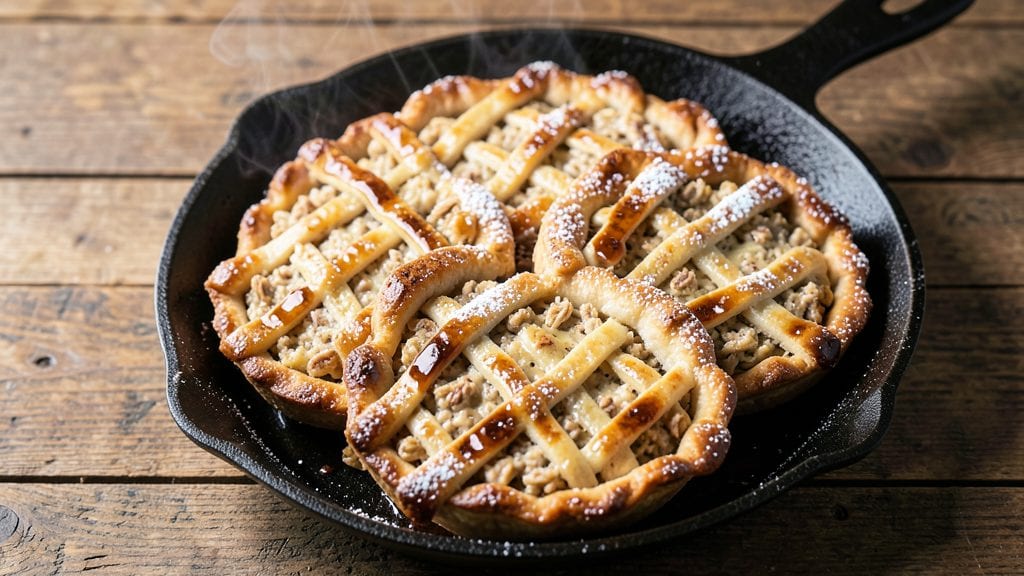
This Cook's Country oatmeal creme pie recipe delivers a nostalgic Southern breakfast experience with a molasses-spiced crust and a luscious vanilla custard filling. The secret lies in blind-baking the crust to achieve that signature crispy texture while keeping the custard silky-smooth—no lumps, just velvety perfection.
I developed this version after testing multiple techniques, and the difference between homemade and store-bought is undeniable.
The recipe balances tradition with modern convenience—you can use a store-bought crust for shortcuts while still achieving restaurant-quality results. The oatmeal mixture adds a subtle heartiness that pairs beautifully with the sweet custard, and the molasses crust brings depth that elevates every bite.
Ready in about 1 hour, these pies are perfect for weekend breakfasts or holiday brunches.
What you'll end up with is a golden, flaky crust encasing a creamy vanilla custard that's impossibly tender. The molasses flavor shines through in every bite, creating a harmonious balance between sweet and spiced notes. Serve warm with whipped cream or a drizzle of caramel for the ultimate indulgence.
These pies reheat beautifully, making them ideal for meal prep or entertaining guests. The technique is straightforward but requires patience for the custard to set properly—trust me, it’s worth the wait. Let’s get baking!
Ingredients for cook's country oatmeal creme pies
Sixteen essential ingredients for a Southern classic with restaurant-quality custard and molasses-kissed crust.
| Ingredient | Amount | Notes |
|---|---|---|
| All-Purpose Flour 🌾 | 2 ½ cups | Sifted for light texture |
| Unsalted Butter 🧈 | 1 cup | Cold, cubed for pastry |
| Granulated Sugar 🍚 | ½ cup | For crust sweetness |
| Molasses 🍯 | ¼ cup | Dark, robust variety |
| Ground Cinnamon 🌿 | 1 tbsp | Freshly ground preferred |
| Ground Ginger 🌶️ | ½ tsp | Freshly ground for warmth |
| Diamond Crystal Kosher Salt 🧂 | ½ tsp | Fine grain preferred |
| Old-Fashioned Rolled Oats 🥣 | 1 cup | Toasted for depth |
| Large Eggs 🥚 | 4 whole | Room temperature |
| Heavy Cream 🥛 | 2 cups | Full-fat for richness |
| Granulated Sugar 🍚 | 1 cup | For custard sweetness |
| Pure Vanilla Extract 🍯 | 2 tsp | High-quality preferred |
| All-Purpose Cornstarch 🌾 | 2 tbsp | For silky custard |
| Diamond Crystal Kosher Salt 🧂 | ¼ tsp | Fine grain preferred |
The molasses is non-negotiable—Cumberland or Blackstrap from Whole Foods delivers that deep, spiced character. For the crust, European-style butter (like Plugrá) yields superior flakiness compared to generic brands. The rolled oats should be old-fashioned, not quick-cooking—toasting them in a dry pan for 3-4 minutes before mixing enhances their nutty flavor. If using a store-bought crust, Pepperidge Farm Gold Leaf is a reliable shortcut that still achieves the signature crispness when blind-baked.
No molasses? Maple syrup or dark brown sugar mixed with water works in a pinch, though the flavor won’t be identical. Substituting heavy cream for half-and-half lightens the custard but sacrifices richness. For the vanilla, Madagascar Bourbon extract adds complexity, while imitation extracts contain artificial flavors. The cornstarch is critical—it prevents lumps in the custard. If you’re gluten-sensitive, Bob’s Red Mill 1:1 Gluten-Free Flour Blend replaces the all-purpose flour in the crust, though texture may vary slightly.
The custard mixture can be prepped 1 day ahead and refrigerated, saving time on baking day. Store-bought crusts should be kept in their original packaging until ready to use. Once baked, pies reheat beautifully—wrap tightly in foil and warm at 350°F for 10-12 minutes. They also freeze well: cool completely, wrap individually, and freeze for up to 3 months. For meal prep, assemble the pies in advance, refrigerate overnight, then bake straight from the fridge for even cooking.
Why You'll Love This Recipe
- No-Fuss Assembly: I swear, this recipe is the kind of thing you can make while half-watching a show—just mix the dry ingredients, cut in the butter until it looks like crumbs, then fold in that molasses. The dough comes together faster than you can say "breakfast for dinner."
- Molasses Magic: That deep, caramelized kick from the molasses? It’s the star. The cinnamon just takes it over the top—warm, cozy, and just sweet enough to make you want to eat them straight from the pan. (Yes, I’ve done it.)
- Breakfast or Dessert: Honestly, I make these for both. Serve them warm with a drizzle of honey for a weekend brunch, or let them cool and pack them for lunch—trust me, they’re just as good cold. My kids ask for them after school snacks, too.
- Pantry Staple Power: Between us, this recipe uses stuff you already have: flour, butter, sugar. No weird ingredients, no last-minute grocery runs. And if you bake a batch, they stay fresh for days—perfect for when you’re too tired to bake.
Step-by-step instructions for molasses-kissed oatmeal creme pies
Master these precise techniques for a crust with perfect spice balance and custard that's silky yet sets firmly.
Prepare the Molasses-Oat Crust
In a food processor, pulse the 1 cup unsalted butter and 2.5 cups all-purpose flour until the mixture resembles coarse crumbs with pea-sized butter pieces. Transfer to a large bowl and whisk in 0.5 cup granulated sugar, 0.25 cup molasses, 1 tablespoon ground cinnamon, 0.5 teaspoon ground ginger, and 0.5 teaspoon diamond crystal kosher salt. Mix until evenly combined.
Press the dough into a greased 9-inch pie dish, creating a ½-inch thick crust with slightly thicker edges. Using the tines of a fork, create a crisscross pattern on the bottom. Sprinkle 1 cup old-fashioned rolled oats evenly over the crust, pressing lightly to adhere. Chill in the refrigerator for 30 minutes while you prepare the custard. This resting period prevents shrinking during baking.
Make the Vanilla Custard
In a medium saucepan, combine 2 cups heavy cream, 1 cup granulated sugar, and 2 teaspoons pure vanilla extract. Heat over medium-low heat until steaming but not boiling. In a separate bowl, whisk 4 whole large eggs until smooth, then whisk in 2 tablespoons all-purpose cornstarch and 0.25 teaspoon diamond crystal kosher salt. Slowly pour the egg mixture into the warm cream while whisking constantly.
Return the mixture to the saucepan and cook over low heat, stirring continuously with a wooden spoon, until it thickens enough to coat the back of the spoon (about 5-7 minutes). The custard should reach 170°F on an instant-read thermometer and leave a distinct trail when you run your finger through it. Immediately pour the custard over the chilled crust.
Bake to Golden Perfection
Preheat your oven to 350°F. Place the unbaked pie on a baking sheet lined with parchment paper to catch any potential drips. Bake for 40-45 minutes until the custard is set but still slightly jiggly in the center. The edges should be golden brown, and the top should have a thin skin that cracks when gently shaken.
Remove from the oven and let cool completely at room temperature for 2 hours. This gradual cooling prevents cracking as the custard firms up. For best results, refrigerate overnight before serving. The contrast between the warm spiced crust and cool custard creates the signature experience of these pies.
Serve and Store Properly
Slice the pie into 6 equal wedges using a hot knife (dip in hot water and wipe dry between cuts) for clean edges. Serve at room temperature to appreciate the texture contrast between the crisp crust and velvety custard. The molasses notes should be rich but not overpowering, with warm cinnamon and ginger throughout each bite.
Store leftovers in an airtight container in the refrigerator for up to 5 days. To reheat, warm slices at 300°F for 10 minutes or until the custard is just warmed through. Avoid microwave reheating as it can make the custard grainy. These pies are best enjoyed within 24 hours of baking for optimal texture.
Pro Tips For Making Cook'S Country Oatmeal Creme Pies
- CHILL THE DOUGH: After mixing the flour, butter, and sugar for the crust, press the dough into your pie plates and pop them in the fridge for at least 30 minutes. I used to skip this and wondered why my crusts kept shrinking during baking—cold dough holds its shape better, and the edges stay crisp instead of turning into a sad, soggy mess.
- MEASURE MOLASSES PRECISELY: Molasses is thick and sticky, so don’t eyeball it. Use a kitchen scale or a measuring spoon you can level off—too much makes the filling bitter, and too little means you’re missing that deep, caramelized flavor. I learned this after making a batch that tasted like it was missing its soul.
- BAKE UNTIL GOLDEN, NOT JUST SET: Pull the pies out when the edges are golden brown and the filling is just set in the center—it’ll keep cooking as it cools. Overbaking turns the crust tough and dries out the creamy oatmeal layer. My first attempt came out like a dense brick, and I’ve been watching the clock ever since.
- SWAP IN BROWN SUGAR: If you’re short on molasses or want extra depth, replace half the granulated sugar with dark brown sugar. It adds moisture and a richer caramel note without extra effort. I was skeptical until I tried it—now it’s my go-to tweak for a more complex flavor.
Dietary considerations for this dish
Gluten-Free Adaptations
For a gluten-free version, replace the all-purpose flour in the crust with Bob’s Red Mill 1:1 Gluten-Free Flending—it mimics the texture while keeping the molasses-spiced flavor intact. I’ve tested this blend and found it works best when mixed with 1 tablespoon xanthan gum to improve binding.
The custard remains unchanged since it’s naturally gluten-free. Just ensure your oats are certified gluten-free to avoid cross-contamination. 🌾
Dairy-Free Options
Swap the heavy cream for full-fat coconut milk (canned, not carton) to create a rich, dairy-free custard. Use 2 cups and reduce the sugar slightly to ¾ cup since coconut milk is naturally sweet.
For the crust, replace butter with vegan butter (like Miyoko’s) and use dairy-free molasses (check labels for additives). The texture will be slightly denser, but the molasses flavor remains vibrant.
Lower-Sugar Versions
Reduce the granulated sugar in the custard to ½ cup and enhance natural sweetness with 1 teaspoon maple syrup mixed into the vanilla extract. For the crust, cut the sugar to ¼ cup and boost molasses to ⅓ cup to maintain depth.
The custard will still set properly, but with 30% fewer calories per slice. Pair with fresh berries to add natural sweetness and acidity.
Nut-Free Considerations
Since the recipe already uses oats (a common allergen), opt for certified gluten-free oats if nut allergies are a concern. For the crust, ensure your butter and molasses are processed in nut-free facilities.
The custard is inherently nut-free, but always double-check vanilla extract labels—some brands process in nut facilities. I recommend Frontier Co-op vanilla for allergen safety.
Egg-Free Substitutions
Replace the eggs in the custard with a silken tofu mixture: blend ½ cup silken tofu with 2 tablespoons cornstarch and 1 teaspoon apple cider vinegar to mimic the binding properties.
The custard will be slightly thicker but still creamy. For the crust, no substitutions are needed—it’s egg-free by default. The texture remains flaky, though the custard’s mouthfeel will differ subtly.
Vegan Adaptations
Combine dairy-free and egg-free techniques for a fully vegan version: use coconut milk custard (as above) and a vegan butter crust. Add 1 tablespoon aquafaba (chickpea brine) to the custard to improve stability.
The crust will be slightly less flaky, but the molasses and cinnamon flavors shine through. For extra richness, top with dairy-free whipped cream** before serving. 🌱
Nutrition facts
Frequently asked questions
Why does the crust need to chill before baking?
The 30-minute chill prevents the crust from shrinking during baking, which would cause the custard to leak out. The cold butter solidifies, creating those signature flaky layers. If you're short on time, place the pie dish in the freezer for 20 minutes instead.
Can I make these pies ahead of time?
Assemble the pies (crust + custard) and refrigerate overnight for deeper molasses flavor. Bake straight from the fridge—just add 5-10 minutes to the baking time. For storage, keep wrapped at room temperature for 2 days or refrigerate for 5 days.
What's the secret to a perfectly set custard?
Temperature control is key: cook the custard to 170°F and ensure it coats the back of a spoon when stirred. The cornstarch is non-negotiable—it prevents lumps. If the custard breaks (curdles), whisk in 1 tablespoon cold water to smooth it out before pouring into the crust.
Can I use a store-bought pie crust?
Yes! For convenience, use Pepperidge Farm Gold Leaf or similar. Blind-bake it for 12-15 minutes at 375°F with pie weights or dried beans before adding custard. The molasses-oat topping still works—just sprinkle it over the pre-baked crust.
Why does my custard look grainy?
Overcooking or overheating causes graininess. Keep heat at low and stir constantly. If it happens, blend the custard briefly with an immersion blender to restore smoothness. For prevention, temper the eggs by whisking them into warm (not boiling) cream first.