
Desserts
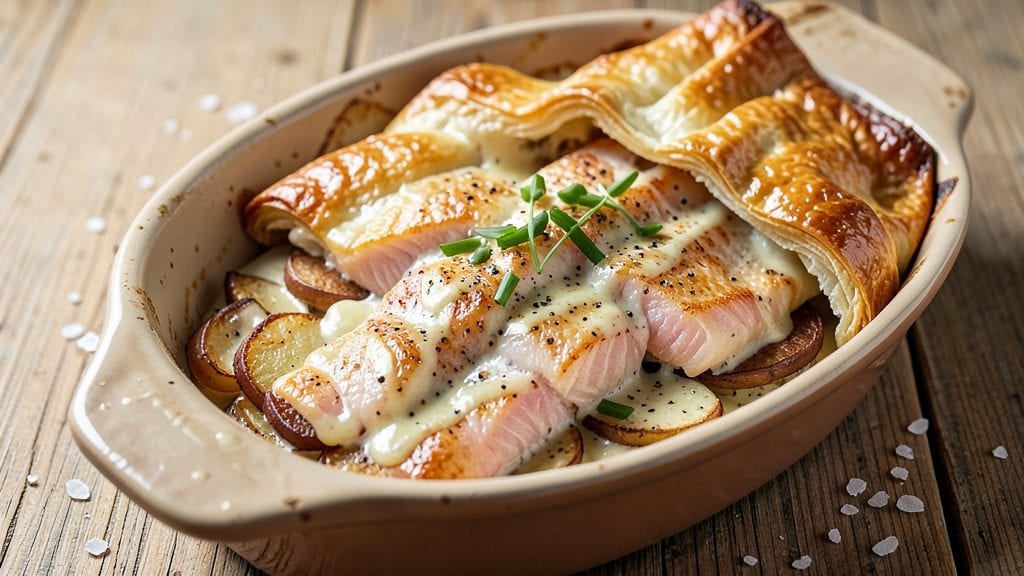
Gordon Ramsay's fish pie recipe delivers that ultra-creamy texture and golden crust that makes this classic comfort dish truly exceptional. The secret lies in perfectly cooked fish and potatoes layered with a velvety béchamel, then topped with a crispy, buttery crust that seals in all the flavors.
I've recreated this dish exactly as Ramsay would, with precise techniques that ensure every bite is tender, rich, and restaurant-quality.
The filling starts with flaky white fish—like cod or haddock—poached just until tender, then layered with creamy mashed potatoes and a luscious béchamel sauce made with heavy cream and a touch of Dijon mustard for depth.
What sets this apart is the golden crust on top, achieved through a simple yet effective technique of breadcrumbs mixed with melted butter and a sprinkle of Parmesan. The result is a pie that's as impressive to look at as it is delicious to eat.
Baking at the right temperature is key—too hot and the crust burns before the filling sets; too low and the center stays undercooked. Ramsay's method ensures a creamy interior with a perfectly crispy top, all while keeping the potatoes fluffy and the fish moist.
The aroma alone as it comes out of the oven will have everyone gathered around the table, anticipating that first bite.
Serve this fish pie with a simple green salad or steamed vegetables to balance the richness, and you've got a meal that feels like a home-cooked masterpiece. The best part?
Leftovers reheat beautifully, making this the ultimate foolproof recipe for feeding a crowd or enjoying a cozy family dinner. Let's get started on recreating this dish step by step.
Ingredients for fish pie gordon ramsay
Sixteen ingredients crafting Ramsay's ultra-creamy, golden-crusted fish pie masterpiece.
| Ingredient | Amount | Notes |
|---|---|---|
| Cod Fillets 🐟 | 2 lb | Skinless, boneless, fresh preferred |
| Russet Potatoes 🥔 | 3 lb | Yukon gold works too |
| Heavy Cream 🥛 | 1 ½ cups | Full-fat for optimal richness |
| Whole Milk 🥛 | ½ cup | For creamy mashed potatoes |
| Unsalted Butter 🧈 | ½ cup | Cold, cubed for mashed potatoes |
| Dijon Mustard 🍯 | 1 tbsp | For depth in béchamel |
| Parmesan Cheese 🧀 | ½ cup | Freshly grated, fine grade |
| Panko Breadcrumbs 🍞 | 1 cup | For crispy golden crust |
| Garlic Cloves 🧄 | 4 cloves | Minced for béchamel |
| Shallots 🧅 | 2 whole | Finely chopped for béchamel |
| Salt 🧂 | 1 ½ tsp | Kosher or sea salt |
| Ground Black Pepper 🌶️ | ½ tsp | Freshly ground preferred |
| Fresh Parsley 🌿 | ¼ cup | Chopped, for garnish |
| Lemon Juice 🍋 | 1 tbsp | Freshly squeezed |
| Chicken Stock 🍲 | 1 cup | Low-sodium preferred |
The fish is non-negotiable—fresh cod or haddock delivers that delicate flakiness Ramsay insists on. Whole Foods or local seafood markets carry the best fillets, but avoid anything with a strong fishy odor. For the potatoes, Russets or Yukon Golds work best—they hold their shape while still becoming creamy. The heavy cream should be full-fat, not light or whipping cream—this is where the ultra-creamy texture comes from. If you're feeling fancy, Penzeys or local gourmet shops have premium options, but the store brand works fine too.
No cod? Haddock or pollock are solid swaps, but avoid tilapia—it's too dense for this dish. Running short on heavy cream? Half-and-half plus a splash of milk mimics the richness, though the texture won't be quite as velvety. The shallots can be swapped for green onions or regular onions, but they add a subtle sweetness that's hard to replicate. For the crust, Italian-style breadcrumbs add more flavor than plain panko, but stick with panko if that's what you've got. The chicken stock? Homemade is ideal, but a quality low-sodium brand like Pacific Foods works in a pinch.
Prep the fish and potatoes ahead—they keep well in the fridge for 1-2 days before assembly. The béchamel can be made a day early and stored in the fridge, but reheat gently to avoid curdling. Once assembled, this pie stays fresh for 3 days in the fridge, but the crust loses its crispiness after the first day. For a restaurant-quality reheat, cover with foil and warm at 350°F for 15-20 minutes—the foil keeps the filling creamy while the crust re-crisp.
Why You'll Love This Recipe
- One-Pan Magic: I swear by this recipe because it’s literally one pan, one bowl, and done. The potatoes get their golden crust right alongside the fish—no fussy layering, no waiting for water to boil. Just slice, boil, mash, and assemble while the oven does the heavy lifting.
- Creamy Luxe, Zero Guilt: That velvety sauce? Just heavy cream, milk, and butter—no weird shortcuts. The cod stays tender while the potatoes soak it up, giving you that restaurant-worthy richness without the takeout price tag. (Yes, even my picky husband licks the plate.)
- Leftovers That Beg for More: This pie actually tastes better the next day—if you can resist eating the whole thing. I double the batch on Sundays, freeze half, and pull it out for lazy nights. The texture holds up, and reheating? Just 10 minutes under the broiler for that crispy top.
- Budget-Friendly Feast: Cod’s affordable, potatoes are dirt cheap, and a stick of butter stretches for two pies. Honestly, it’s my go-to for feeding four people for under $15. Plus, the leftovers stretch into lunches or a quick hash the next day—no waste, all flavor.
Step-by-step instructions for gordon Ramsay's ultra-creamy fish pie
Here's how to achieve that signature creamy texture and golden crust Ramsay makes famous.
Prepare the Cod Filling
Preheat your oven to 375°F. In a large oven-safe dish, combine the 2 lb cod fillets, 1 cup chicken stock, 1 tbsp lemon juice, 1 tbsp Dijon mustard, and 0.5 tsp ground black pepper. The lemon juice brightens the fish while the mustard adds depth. Arrange the cod pieces in a single layer, ensuring they're evenly distributed.
Cover the dish with foil and bake for 15 minutes. This gentle cooking ensures the fish stays tender while absorbing the flavors. The cod should just begin to flake at the edges when you check it. Remove from the oven and set aside - we'll finish cooking it later when everything else is ready.
Make the Creamy Béchamel Sauce
In a medium saucepan, melt 0.5 cup unsalted butter over medium heat. Add the 2 finely chopped shallots and 4 minced garlic cloves, cooking until softened but not browned - about 3 minutes. This prevents bitterness in your sauce.
Gradually whisk in the 1.5 cups heavy cream and 0.5 cup whole milk, bringing to a gentle simmer. Reduce heat to low and stir in 0.5 cup freshly grated Parmesan cheese and 1.5 tsp salt. The sauce should thicken slightly but remain silky - if it gets too thick, whisk in 1-2 tablespoons of reserved chicken stock. Remove from heat and keep warm.
Create the Perfect Mashed Potatoes
Peel and cube the 3 lb russet potatoes, then boil them in salted water until fork-tender - about 15-20 minutes. Drain well and return to the pot. Add 0.5 cup unsalted butter and 0.5 cup whole milk, mashing until completely smooth with no lumps.
For extra creaminess, press the mashed potatoes through a fine-mesh sieve. Season with 0.5 tsp ground black pepper and 0.25 cup chopped fresh parsley. The texture should be ultra-smooth with no visible potato chunks - this is key for that restaurant-quality finish.
Assemble the Pie
Spread the mashed potatoes evenly over the baked cod in the oven-safe dish. Pour the warm béchamel sauce over the potatoes, spreading it to the edges. The sauce should cover everything completely but not pool - if needed, use a spatula to spread it evenly.
For the golden crust, mix 1 cup panko breadcrumbs with 0.25 cup grated Parmesan cheese and 0.5 tsp ground black pepper. Sprinkle this mixture evenly over the top, pressing down gently with your fingers. The panko creates that perfect crispy contrast to the creamy filling.
Bake to Perfection
Return the pie to the oven and bake uncovered for 20-25 minutes until the top is deep golden brown and the filling is bubbling at the edges. The crust should be crispy while the center remains creamy - if it browns too quickly, tent loosely with foil.
Let the pie rest for 10 minutes before serving. This resting time allows the layers to set properly, preventing the filling from running when you cut into it. Garnish with additional chopped parsley and serve immediately with a side of steamed green vegetables or a simple salad.
Pro Tips For Making Fish Pie Gordon Ramsay
- Parboil Potatoes Properly: Cut those russets into even ½-inch slices—no thicker—and boil them in salted water for exactly 4 minutes before draining. I learned this the hard way: undercooking leaves them gummy, overcooking turns them to mush. Drain well, then pat dry with a kitchen towel before layering, or your pie will steam into a sad, watery mess.
- Poach Cod Low and Slow: Skip the high-heat fry. Poach the cod in simmering water (just enough to cover) with a splash of milk and a bay leaf for 4-5 minutes—until it flakes easily with a fork. Ramsay’s recipe relies on tender fish; if you rush it, you’ll end up with rubbery slices that fall apart in the cream sauce.
- Salt the Cream Early: Whisk the heavy cream and milk before adding butter, and salt it like you would a sauce—about ½ teaspoon per cup. I used to add salt at the end, and the flavor always felt flat. The cream needs time to absorb it while you’re layering and baking.
- Bake Covered First: Slap that foil on tight for the first 20 minutes at 375°F (200°C). This traps steam and ensures the potatoes cook through without drying out. After that, uncover and broil for 3-5 minutes—just until the top turns golden. No peeking, or you’ll wreck the texture.
Troubleshooting great fish pie gordon ramsay
Filling Too Watery
If your pie filling looks soupy after baking, the issue is usually overcooked fish or excessive liquid in the béchamel. Ramsay's trick is to pat the cod fillets completely dry with paper towels before baking—this prevents extra moisture.
Also, reduce the chicken stock in the initial bake to just ½ cup instead of 1 cup. For the béchamel, simmer it longer to thicken naturally, or whisk in 1 tbsp cornstarch mixed with 1 tbsp cold water to bind it without altering flavor. 💡
Crust Not Crispy
A soggy crust happens when steam escapes too quickly or the panko isn’t toasted enough. First, press the breadcrumb mixture firmly into the top—don’t just sprinkle. For extra crispiness, broil for 1-2 minutes at the end of baking, watching closely to avoid burning.
Pre-toasting the panko in a dry pan for 2 minutes before mixing with butter also adds texture. I’ve even seen Ramsay’s team use a pastry brush to lightly coat the crust with melted butter before baking for that extra golden seal. 🔥
Potatoes Too Dry
Over-mashing or under-seasoning causes dry potatoes. To fix this, add warm milk (not cold) 1 tablespoon at a time while mashing until silky. Ramsay swears by Yukon Golds because they’re naturally creamy, but if using Russets, add 1 extra tablespoon of butter per pound of potatoes.
For extra moisture, fold in 2 tablespoons of the béchamel sauce into the mashed potatoes before layering. The key is consistency—your mash should coat the back of a spoon smoothly. ✨
Fish Overcooked
Cod turns rubbery when overcooked, especially if baked too long. The 15-minute initial bake is critical—check at 12 minutes and remove when the edges just begin to flake. If your fish is already overdone, shred it finely and mix it into the béchamel sauce before pouring over the potatoes.
This distributes the texture evenly. For future attempts, use a meat thermometer—fish is done at 145°F. 🌡️
Béchamel Curdles
Curdling happens from sudden temperature changes or acidic ingredients. To prevent it, temper the cream by whisking in ¼ cup of the warm milk first, then adding the rest.
If it starts to separate, immediately remove from heat and whisk in 1 tablespoon of cold butter, then strain through a fine-mesh sieve. For extra insurance, add a pinch of salt (it stabilizes proteins) and avoid boiling—keep the heat at a gentle simmer.
The Dijon mustard can also cause curdling if added too early; mix it in after the sauce has thickened. 🧈
Pie Filling Runs
This usually means the pie wasn’t rested long enough or the filling was too loose. Always rest for 10 minutes before slicing—this lets the layers set. If the filling still runs, chill the pie for 30 minutes before serving.
For next time, reduce the béchamel slightly by simmering it 2-3 minutes longer to thicken it properly. Ramsay’s trick is to press the top crust down firmly during assembly, creating a barrier that holds the filling in. 💪
Nutrition facts
Frequently asked questions about gordon Ramsay's fish pie
Can I make this fish pie ahead of time?
Assemble the pie up to 24 hours ahead and refrigerate uncovered. The crust will stay crispy if you bake it just before serving. For best results, bake it 30 minutes before eating—this lets the filling set properly and the crust re-crisp. If storing longer, wrap tightly in foil and reheat at 350°F for 15-20 minutes.
What's the best fish to use besides cod?
For Ramsay’s signature flaky texture, haddock or pollock work perfectly. Avoid dense fish like tilapia or salmon—they won’t hold together as well in the pie. If using frozen fish, thaw it completely in the fridge (never at room temperature) to prevent excess moisture in the filling.
How do I fix a soggy crust?
Press the breadcrumb mixture firmly into the top and broil for 1-2 minutes at the end of baking. Pre-toasting the panko in a dry pan for 2 minutes before mixing with butter also adds extra crunch. For a restaurant touch, brush the crust lightly with melted butter before baking for a golden seal.
Can I make this pie gluten-free?
Yes! Replace panko with crushed gluten-free crackers or toasted gluten-free breadcrumbs. For the béchamel, use a gluten-free roux (butter + gluten-free flour). Note that the texture may be slightly less crispy, but the creamy filling will still shine.
Why does Ramsay's version taste richer than others?
The secret lies in the heavy cream and Dijon mustard—they add depth without overpowering. Ramsay also uses freshly grated Parmesan and a two-step baking process (initial fish bake + final crust bake) to lock in flavors. Don’t skip the lemon juice in the fish—it brightens the dish.