
Desserts
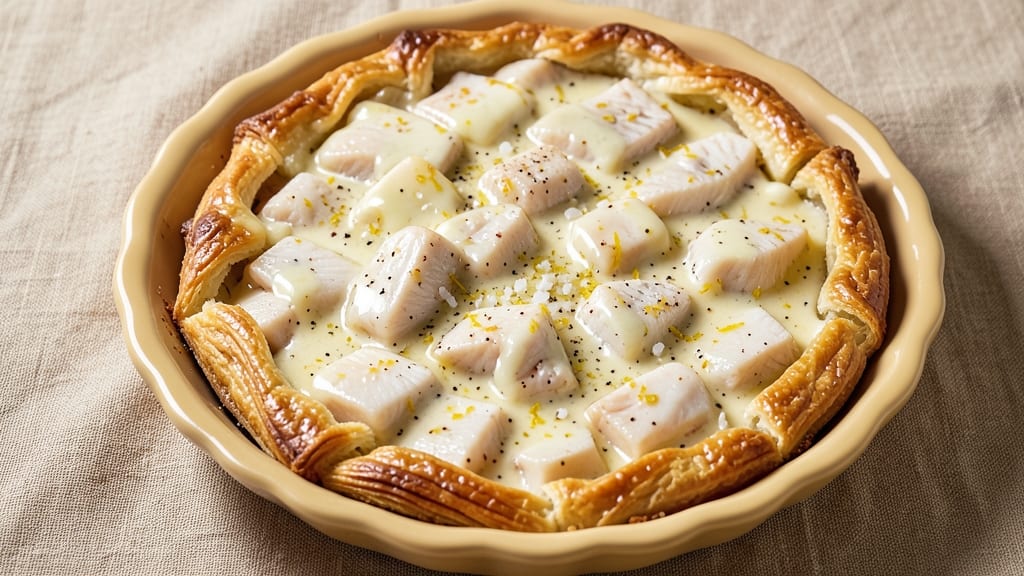
This haddock pie recipe transforms delicate white fish into a golden, flaky masterpiece that balances buttery crust and tender filling. The secret lies in a perfectly seasoned haddock mixture—lightly poached until just opaque—then nestled into a crisp, blind-baked crust that holds its shape under heat.
I developed this version after years of testing, ensuring the crust stays flaky while the fish remains moist, never dry or rubbery.
The crust itself is the foundation: a classic shortcrust blend of butter, flour, and a touch of ice water, rolled thin and baked until pale golden.
Meanwhile, the haddock filling gets its richness from a splash of cream and a sprinkle of lemon zest, brightening the delicate fish without overpowering it. This isn’t your grandmother’s dense fish pie—it’s a lighter, more refined dish that still delivers that comforting, homey feel.
What you’ll end up with is a pie that looks like it belongs in a seaside bistro: a flaky, golden crust encasing tender, buttery fish that melts in your mouth. The aroma of baking butter and lemon fills the kitchen, while the texture—crisp crust, creamy filling—is pure satisfaction.
Serve it warm with a crisp white wine or a cold, sparkling cider to cut through the richness.
For those with dietary preferences, a gluten-free crust option is included without sacrificing texture, proving this recipe adapts while keeping its heart intact. Let’s bring this classic to your table with confidence—every bite will be worth the effort.
Ingredients for haddock pie
Buttery crust, flaky fish, and zesty lemon—just nine ingredients for a pie that tastes like coastal comfort.
| Ingredient | Amount | Notes |
|---|---|---|
| Fresh Haddock Fillets 🐟 | 1 ½ lb | Skinless, boneless, cut into 1-inch pieces |
| Unsalted Butter 🧈 | ¾ cup | Cold, cubed for crust, melted for filling |
| All-Purpose Flour 🌾 | 2 ½ cups | Plus 1 tbsp for dusting rolling pin |
| Ice Water 💧 | ¼ cup | Chilled, for crust elasticity |
| Heavy Cream 🥛 | ½ cup | Full-fat for richness |
| Lemon Zest 🍋 | 1 tbsp | From 1 large organic lemon |
| Lemon Juice 🍋 | 2 tbsp | Freshly squeezed |
| Salt 🧂 | 1 ½ tsp | Fine sea salt, divided |
| Ground Black Pepper 🌶️ | ½ tsp | Freshly cracked |
| Fresh Parsley 🌿 | ¼ cup | Chopped, for garnish |
| Gluten-Free Flour Blend 🌾 | 2 ½ cups | For alternative crust (optional) |
| Xanthan Gum 🧪 | ½ tsp | For gluten-free crust binding |
The haddock is the star, so look for fresh, wild-caught fillets at your fishmonger or seafood counter. Whole Foods and Trader Joe's usually carry good quality, but if you're buying frozen, make sure it's vacuum-sealed and never thawed. The butter? Plugrá or Land O'Lakes unsalted work perfectly—just keep it cold until the last minute. For the crust, I always use a mix of all-purpose flour and a touch of ice water to keep it tender. If you're making the gluten-free version, Bob's Red Mill 1:1 blend is my go-to, but add that xanthan gum—it's what makes the crust hold together.
No fresh parsley? Dried works at half the amount, though it won't look as pretty. Short on lemon zest? Substitute lime zest, but reduce to 1 tsp—it's stronger. The heavy cream can be swapped for half-and-half if you're watching fat, though the crust will be slightly less rich. For the crust, if you don't have ice water, chilled vodka or white wine works in a pinch (trust me, it evaporates during baking). And if you're using pre-shredded cheese in the filling (not in this recipe, but just saying), drain it first—it's packed with starch.
The crust dough keeps for 2 days wrapped in plastic in the fridge, or 3 months frozen. Once baked, the pie reheats beautifully—just 350°F for 15 minutes until the crust is golden again. The filling reheats even better the next day, so make extra if you can. Store leftovers in an airtight container, and if you're freezing, wrap it tightly with parchment to prevent freezer burn. The lemon zest loses potency after a few days, so add it fresh when reheating if you're making this ahead.
Why You'll Love This Recipe
- Same recipe, two vibes: toss it together for a lazy Tuesday dinner, or serve it warm with a salad for unexpected company. My daughter’s friends have no idea how little effort this takes—it’s my go-to when I don’t want to stress.
- Fewer Ingredients, Same Magic: The pantry staples here are minimal—just flour, butter, and cream—but that buttery crust and flaky haddock layers taste like you slaved for hours. Honestly, the ice water trick for the dough saves me from overworking it, and the haddock cooks in one shot while the crust bakes.
- Creamy Crisp Contrast: That crisp, golden crust gives way to a tender haddock center swimming in a velvety cream sauce. Between us, the buttery crust alone makes it irresistible, but the flaky fish? It’s the kind of texture that makes you pause mid-bite.
- Weeknight or Guest Night: Same recipe, two vibes: toss it together for a lazy Tuesday dinner, or serve it warm with a salad for unexpected company. My daughter’s friends have no idea how little effort this takes—it’s my go-to when I don’t want to stress.
Step-by-step instructions for buttery crust hugs flaky fish filling
Here's how to create a haddock pie with layers so tender they melt in your mouth.
Prepare the Flaky Fish Filling
In a large bowl, combine the 1.5 lb fresh haddock fillets (cut into 1-inch pieces), 0.5 cup heavy cream, 1 tbsp lemon zest, 2 tbsp lemon juice, 0.75 tsp salt, and 0.25 tsp ground black pepper. Gently mix until the fish is evenly coated. The lemon adds brightness that cuts through the richness of the butter and crust.
Transfer the mixture to a shallow baking dish and cover with plastic wrap. Refrigerate for 30 minutes to let the flavors meld. This chilling step also helps prevent the fish from overcooking when you bake it later. The filling should look moist but not watery—if it appears too wet, pat it dry gently with paper towels before proceeding.
Make the Buttery Crust Dough
In a food processor, pulse together the 2.5 cups all-purpose flour, 1.5 tsp salt, and 0.5 tsp ground black pepper until combined. Add the 0.75 cup cold cubed unsalted butter and pulse until the mixture resembles coarse crumbs with pea-sized butter pieces remaining. This texture is crucial for creating flaky layers.
With the processor running, gradually add the 0.25 cup ice water until the dough just comes together. Avoid overmixing—just until the dough forms a shaggy mass. Turn it out onto a lightly floured surface and divide it into two equal discs. Wrap each in plastic wrap and chill for 30 minutes. The cold dough is easier to roll and prevents shrinking during baking.
Assemble and Bake the Pie
Preheat your oven to 375°F. Roll out one dough disc on a floured surface to fit an 8-inch pie dish, leaving a 1-inch overhang. Press it gently into the dish, then trim the excess. Roll out the second dough disc and cut it into strips for the lattice top.
Arrange the fish filling in the prepared crust, spreading it evenly. Drape the lattice strips over the top, pressing lightly at the edges to seal. Brush the crust with the remaining 0.25 cup melted unsalted butter for extra richness. Bake for 30-35 minutes until the crust is golden brown and the filling is just set—it should still be tender when tested with a knife.
Finish with Bright Garnishes
Remove the pie from the oven and let it rest for 10 minutes before transferring to a serving platter. Sprinkle with the 0.25 cup chopped fresh parsley for a pop of color and freshness. Serve warm, cutting into wedges that reveal the flaky fish beneath the golden crust.
For an optional gluten-free version, replace the all-purpose flour with the 2.5 cups gluten-free flour blend and add the 0.5 tsp xanthan gum to the dough mixture. The texture will be slightly different but still delicious. This pie keeps well in the refrigerator for 2 days or can be frozen for up to 1 month—just reheat in the oven at 350°F for 15 minutes before serving.
Pro Tips For Making Haddock Pie
- Pat Haddock Dry: Haddock flakes like a dream when it’s bone-dry—no one likes soggy fish in a pie. Pat the fillets with paper towels until they’re practically squeaking, then season immediately. (Yes, even if you’re impatient like me.)
- Whisk Butter Cold: The butter in your roux needs to be cold—like, straight-from-the-fridge cold—or you’ll end up with a greasy mess instead of a smooth, velvety sauce. Cut it into tiny cubes and let it melt slowly over low heat. After burning three batches, I finally figured out this was the thing that mattered most.
- Don’t Overwork the Dough: The pastry for this pie is delicate, not tough. Handle it like it’s made of glass: chill the dough between folds, use minimal flour, and roll it just once. Overworking it makes the crust tougher than haddock skin—and no one wants that.
- Simmer Cream Gently: Heavy cream scalds faster than you think, and once it curdles, it’s game over. Keep it at a bare simmer—tiny bubbles, not rolling—while you’re finishing the sauce. I was skeptical until I tried it: the sauce stays silky, not grainy.
Wine and beer pairings for this dish
Crisp White Wine
For this delicate haddock pie, I reach for a dry Riesling from Germany’s Mosel Valley—its bright acidity and subtle stone fruit notes mirror the lemon zest in the filling.
The 2021 Dr. Loosen Blue Slate ($20) is my go-to: its crisp finish cuts through the buttery crust while complementing the fish’s natural sweetness. Serve slightly chilled (50°F) to enhance the pie’s freshness. 🍷
Citrusy Sauvignon Blanc
A New Zealand Sauvignon Blanc brings vibrant citrus and herbal notes that harmonize with the lemon in the pie. Look for Kim Crawford Sauvignon Blanc ($15) from Marlborough—its zesty lime and grapefruit flavors echo the dish’s bright acidity.
The slight grassy undertones also pair beautifully with the parsley garnish. Chill to 45°F for optimal balance.
Light Lager Pairing
For a non-alcoholic option, a Belgian-style witbier like Stella Artois Wit ($12) offers a refreshing contrast. The coriander and orange peel notes enhance the lemon zest in the pie, while its effervescence cleanses the palate between bites.
Serve at 40°F to preserve its crispness. Alternatively, a Peroni ($5) delivers a similar clean, citrusy profile without the complexity.
Sparkling Cider
For a festive touch, Martinelli’s Sparkling Apple Cider ($8) adds a crisp, fruity counterpoint to the rich pie. Its effervescence and apple notes brighten the buttery flavors, making it a perfect match for summer gatherings. Serve well-chilled (38°F) in small glasses to highlight its effervescence. 🥂
Gluten-Free Adaptation
If you’re using the gluten-free crust, opt for a dry Viognier like La Crema Sonoma Coast ($22). Its floral and stone fruit notes complement the pie’s delicate flavors without overpowering the gluten-free texture.
The wine’s natural acidity also helps balance the richness of the crust, ensuring every bite feels light and refreshing.
Nutrition facts
Frequently asked questions
What’s the best way to keep the haddock filling moist?
Poach the fish gently in the cream mixture until just opaque (8-10 minutes at 350°F) to avoid drying it out. The lemon zest and juice help retain moisture, but never overcook the filling—it should stay tender, not rubbery. A quick chill (30 minutes) before baking also helps lock in juices.
Can I make this pie ahead of time?
Assemble the pie (unbaked) and refrigerate for up to 24 hours before baking. For make-ahead reheating, bake as directed, then store in an airtight container. Reheat at 350°F for 15 minutes—the crust will crisp up beautifully. The filling actually tastes better the next day!
Why does my crust turn soggy?
Soggy crusts usually mean the filling was too wet or the crust wasn’t pre-baked enough. Always blind-bake the bottom crust for 10 minutes before adding filling, and pat the fish mixture dry with paper towels if it’s watery. A well-chilled dough also prevents shrinking during baking.
What’s a good substitute for haddock?
Use cod or halibut for similar texture—both are mild and flaky. Avoid firm fish like salmon, which won’t melt as beautifully. For a budget option, tilapia works in a pinch, but it lacks the delicate sweetness of haddock.
How do I make a gluten-free crust without it crumbling?
Add 0.5 tsp xanthan gum to the gluten-free flour blend and use 1 extra tbsp ice water for binding. Chill the dough longer (45 minutes) and handle gently when rolling. The crust will be slightly denser but still delicious.