
Desserts
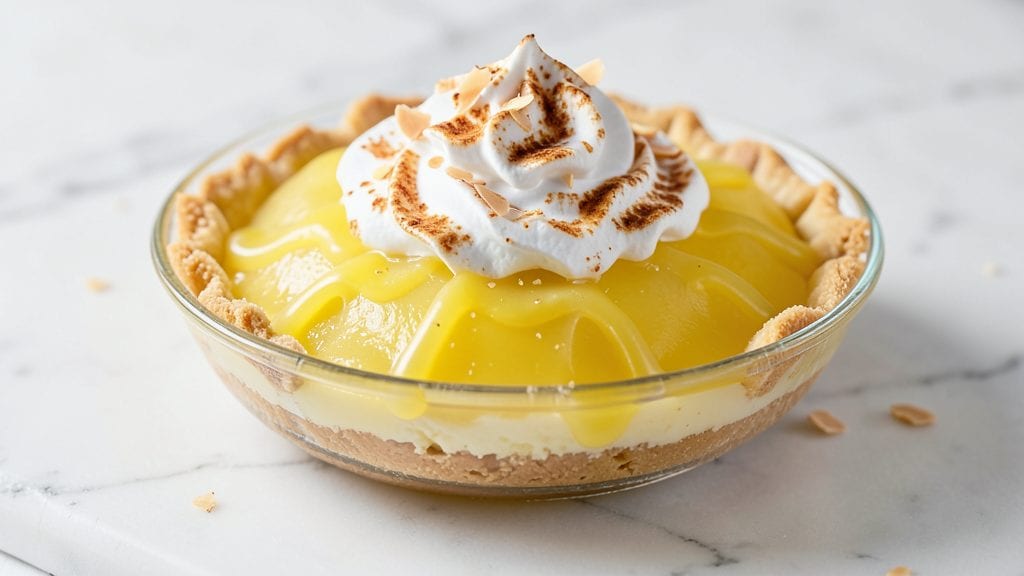
A jello pudding lemon meringue pie combines the best of two iconic desserts into one showstopping citrus masterpiece—where tangy lemon curd meets velvety pudding and crispy meringue.
This recipe builds layers of texture and flavor, starting with a buttery crust, then a vibrant jello-lemon pudding filling, and finally a toasted meringue top that crackles with every bite. The secret lies in precise layering and baking techniques that ensure each component shines without overpowering the others.
The foundation begins with a classic pie crust, baked to a golden, crispy finish that sets the stage for the creamy filling. Between two layers of jello-infused pudding and lemon curd lies the magic: the jello adds a subtle wobble, while the pudding delivers that signature smoothness.
What makes this pie truly special is the meringue topping, baked until it’s golden and crispy—just enough to hold its shape while still yielding to a spoonful of the bright, citrusy filling beneath.
By the time you slice into this pie, you’ll uncover a symphony of textures: the buttery crunch of the crust, the cool jello flecks suspended in pudding, the tangy burst of lemon, and the airy crispness of the meringue.
It’s the kind of dessert that feels indulgent yet balanced, perfect for summer gatherings or as a showstopper for any dinner party. The key is patience—letting each layer set properly ensures clean slices and maximum flavor in every bite.
This recipe delivers restaurant-quality results with straightforward techniques, making it achievable for home bakers. Whether you’re a seasoned pie maker or trying your hand at layered desserts, the step-by-step instructions will guide you through every stage—from crust to final presentation.
Serve it chilled for the best texture, and prepare to be asked for seconds.
Ingredients for jello pudding lemon meringue pie
Pantry staples meet summer vibes in this layered citrus pie—crisp crust, jello-pudding magic, and meringue that cracks with every bite.
| Ingredient | Amount | Notes |
|---|---|---|
| All-Purpose Flour 🌾 | 2 ½ cups | Sifted for light texture |
| Unsalted Butter 🧈 | 1 cup | Cold, cubed for crust |
| Granulated Sugar 🍚 | ¼ cup | Plus 1 tbsp for sprinkling |
| Ice Water 💧 | ½ cup | Chilled for crust |
| Lemon Juice 🍋 | 1 cup | Freshly squeezed, strained |
| Unflavored Gelatin 🍬 | 2 tbsp | Powdered, not sheet |
| Instant Vanilla Pudding Mix 🍮 | 1 box | Lemon flavor preferred |
| Milk 🥛 | 2 ½ cups | Whole milk for creaminess |
| Lemon Curd 🍋 | 1 cup | Store-bought or homemade |
| Large Egg Whites 🥚 | 5 whole | Room temperature, no yolk |
| Fine Granulated Sugar 🍚 | 1 cup | For meringue, super fine |
| Kosher Salt 🧂 | ¼ tsp | For meringue stability |
| Lemon Zest 🍋 | 1 tbsp | Freshly grated, vibrant |
The crust is your foundation, so butter matters here. Grab European-style butter if you can—it's higher in fat and gives that flaky perfection. Whole Foods or Trader Joe's carry great options, but regular unsalted works too. Chill your butter cubes and flour mix for at least 30 minutes before rolling—this keeps it from sticking. For the jello-pudding filling, lemon juice needs to be fresh—bottled stuff lacks that bright punch. Strain it to avoid pulp in your layers. The gelatin? Great Lakes or Knox brands dissolve perfectly—no clumping if you sprinkle it over cold milk first.
No lemon curd? Homemade is worth it—just eggs, sugar, butter, and lemon juice, cooked low and slow. Running short on egg whites? Pasteurized liquid egg whites work in a pinch, but room temperature is key. For the gelatin, if you're avoiding it, agar-agar at half the amount gives a similar set. The meringue sugar should be super fine—pulse regular sugar in a food processor if needed. And trust me, don't rush the chilling between layers. Patience here means clean slices later.
This pie is a chiller—keep it refrigerated for up to 5 days, though it's best within 2. The meringue? Bake it the day you serve—it loses crispness fast. Store leftovers covered loosely with plastic wrap. For make-ahead genius, assemble the pie (without meringue) 24 hours early. The flavors meld beautifully overnight. And if you're prepping for a crowd, double the crust recipe—it's always the first to disappear.
Why You'll Love This Recipe
- No-Fuss Layers: I swear by the ice water trick—just toss in the flour, butter, and sugar, then pour in the ice water until it’s thick enough to roll. No food processor, no fuss, and the crust comes out tender every time.
- Zesty Magic: That lemon juice? It’s the star. The tang cuts through the creamy jello pudding filling like a bright summer breeze, and the meringue topping caramelizes into little pockets of sweetness—like biting into sunshine.
- Picnic or Party: Pack it for a beach day, slice it for a potluck, or serve it at a brunch—this pie travels well and impresses without trying too hard. Honestly, I’ve taken it to BBQs, and no one’s ever asked for the recipe.
- Budget Buster: Flour, butter, sugar, and a splash of lemon juice? You’re already stocked. The leftovers? Even better cold the next day, and it’s the kind of dessert that makes you look like a pro without breaking the bank.
Step-by-step instructions for jello pudding lemon meringue pie
Here's how to assemble this showstopping dessert with perfect layers and that signature crispy top.
Create the Crispy Crust
Preheat your oven to 375°F and line a 9-inch pie dish with parchment paper. In a food processor, combine the 2.5 cups all-purpose flour and 0.25 cup granulated sugar plus the 1 tablespoon extra sugar for sprinkling. Pulse until blended but not fully ground.
Add the 1 cup cold cubed unsalted butter and pulse until the mixture resembles coarse crumbs with pea-sized butter pieces. Drizzle in the 0.5 cup ice water and pulse until the dough just begins to come together. Avoid over-processing or the crust will become tough.
Press the dough evenly into the prepared pie dish, creating a thin, even layer up the sides. Prick the bottom all over with a fork to prevent air pockets. Bake for 18-20 minutes until the edges are light golden brown and the crust feels firm to the touch. Remove from oven and let cool for 5 minutes before filling.
Prepare the Lemon Pudding Layer
In a medium saucepan, combine the 2.5 cups milk, 1 cup lemon juice, and 1 cup lemon curd. Whisk over medium heat until the mixture reaches 180°F and begins to simmer gently. Remove from heat and sprinkle the 2 tablespoons unflavored gelatin evenly over the surface.
Let the gelatin bloom for 2 minutes without stirring. Then whisk vigorously until completely dissolved and the mixture is smooth. Stir in the 1 box instant vanilla pudding mix until fully incorporated. Pour the warm pudding mixture into the cooled crust, spreading it evenly.
Refrigerate the filled crust for at least 2 hours or until the pudding layer is completely set and firm to the touch. This chilling step is crucial for creating clean layers when you add the meringue later.
Make the Lemon Meringue Topping
While the pudding chills, prepare the meringue by whisking the 5 large egg whites in a clean, grease-free bowl until soft peaks form. Gradually add the 1 cup fine granulated sugar and 0.25 teaspoon kosher salt, whisking constantly until the meringue is glossy and holds stiff peaks.
Gently fold in the 1 tablespoon lemon zest using a spatula, being careful not to deflate the meringue. The vibrant lemon flavor will complement the pudding perfectly while adding beautiful color contrast. Spread the meringue evenly over the set pudding layer, creating a smooth, slightly peaked surface.
Bake to Crispy Perfection
Place the pie on a baking sheet to catch any potential drips. Bake at 350°F for 12-15 minutes, watching carefully as the meringue transforms from pale to golden brown. The meringue should be fully set but still slightly soft to the touch.
Here's the key moment: increase the oven temperature to 450°F and continue baking for 3-4 minutes until the meringue develops a beautiful deep golden brown color and crisp texture. The center should still be slightly soft but firm to the touch.
Remove from the oven and let cool completely before slicing. The contrast between the creamy lemon pudding and crisp meringue topping will make every bite unforgettable. Serve chilled for the best texture experience.
Pro Tips For Making Jello Pudding Lemon Meringue Pie
- Chill the Crust First: Pop the pie crust into the freezer for 15 minutes before adding the filling—this prevents a soggy bottom when the warm pudding hits it. I learned this the hard way after serving a pie where the crust turned to mush halfway through.
- Use Cold Butter: Cut that unsalted butter into tiny cubes and keep it in the fridge until the last minute—mixing it into the flour at room temperature makes the crust greasy and hard to handle. Cold butter = flaky layers, every time.
- Whisk the Lemon Juice: Strain the lemon juice through a fine-mesh sieve before adding it to the pudding mix—this removes seeds and pulp that can make the jello layer grainy. My first batch had weird texture spots until I did this.
- Microwave the Meringue: Spread the meringue in a thick layer and microwave it for 10 seconds at half power before torching—this helps it set faster and prevents it from collapsing when you add the heat. (Yes, even if you’re impatient like me.)
Troubleshooting your jello pudding lemon meringue pie
Crust Too Crumbly?
If your crust falls apart when pressing it into the dish, your butter might not be cold enough. Chill both the butter and flour mixture for at least 30 minutes before handling. I recommend using a Lodge pie dish—its thick base helps support the dough better.
Work quickly but gently, pressing the dough evenly with your fingers rather than a rolling pin to avoid tearing. For extra stability, sprinkle 1 tablespoon cornstarch between the dough and parchment paper before baking.
Pudding Not Setting
The gelatin needs proper blooming time—don’t skip the 2-minute wait after sprinkling it over the hot milk. If your pudding still won’t set, your oven might be too warm. The mixture should reach 180°F but not boil.
For a firmer texture, add 1 extra teaspoon gelatin (total 3 tbsp) and chill the pie for 3-4 hours instead of 2.
Store-bought lemon curd can sometimes be too runny—if so, mix 1 tbsp cornstarch with 1 tbsp cold water, stir into the curd, and cook for 2 minutes to thicken it.
Meringue Collapsing
Grease or yolk residue in your bowl is the #1 cause of deflated meringue. Use a spotlessly clean, dry bowl—no soap traces! Room-temperature egg whites whip better, but if yours are cold, let them sit for 30 minutes first.
For extra stability, add ½ teaspoon cream of tartar to the egg whites before whipping. Spread the meringue quickly and smoothly—don’t overwork it after sugar is added.
If it starts collapsing, place the pie back in the oven at 350°F for 2-3 minutes to help it set before the final high-heat crisp.
Lemon Flavor Fading
Fresh lemon juice is non-negotiable—bottled juice lacks the bright acidity. Strain it through a fine-mesh sieve to remove pulp, which can make the pudding grainy. For extra zing, add 1 teaspoon lemon extract to the pudding mixture.
If your pie tastes flat, it might need more acid. Taste the pudding before pouring it into the crust—if it’s too sweet, add 1-2 tablespoons extra lemon juice. The meringue’s lemon zest should be freshly grated; dried zest loses potency.
For a pro touch, brush the cooled meringue with 1 teaspoon lemon syrup (equal parts sugar and water, heated and cooled) before serving.
Soggy Bottom Crust
This happens when the pudding layer isn’t fully set before adding meringue. Always chill the pie for the full 2 hours—no shortcuts! If your crust still feels damp, blind-bake it for 5 extra minutes before adding filling.
For a foolproof barrier, sprinkle 1 tablespoon crushed cornflakes between the crust and pudding layer. The meringue’s heat during baking can also steam the crust, so after the initial 350°F bake, let it cool for 10 minutes before the final 450°F crisp.
Serve the pie chilled to maintain the crust’s crispness.
Meringue Not Browning
Your oven might not be hot enough for the final crisp. Preheat thoroughly and use an oven thermometer to confirm it’s at 450°F. For even browning, place a baking sheet under the pie to reflect heat.
If your meringue stays pale, brush it with 1 tablespoon apricot jam or lemon glaze (equal parts powdered sugar and lemon juice) before the final bake—this helps caramelize the surface. For a golden finish, broil for 1-2 minutes at the very end, watching closely to avoid burning.
A kitchen torch can also add dramatic color if you’re feeling fancy!
Nutrition facts
Frequently asked questions
Can I make this pie without gelatin?
Yes! Replace the gelatin with 1 ½ teaspoons agar-agar powder mixed with 2 tablespoons cold water (heated to dissolve). For a firmer texture, use 1 extra teaspoon agar-agar and increase chilling time to 3-4 hours. The flavor remains identical, but the set will be slightly firmer.
How do I prevent the meringue from cracking?
Work quickly when spreading the meringue—don't over-smooth it after adding sugar. Use a spatula to create a slight peak in the center, which helps distribute heat evenly during baking. If small cracks appear, they're normal and won't affect taste!
Can I use store-bought lemon curd?
Store-bought curd works perfectly, but check for added thickeners. If it's too runny, mix 1 tbsp cornstarch with 1 tbsp cold water, stir into the curd, and heat for 2 minutes to thicken it before using.
How long can I store this pie?
Store the assembled pie (without meringue) in the fridge for up to 24 hours before baking the topping. Once fully baked, keep it refrigerated for 3-4 days. For best texture, bake the meringue fresh each time—it loses crispness when reheated.
What's the secret to a perfectly crisp crust?
Chill your butter and flour mixture for at least 30 minutes before pressing. Use a 9-inch pie dish and blind-bake the crust for 18-20 minutes at 375°F until golden. Let it cool completely before adding filling to prevent sogginess.