
Desserts
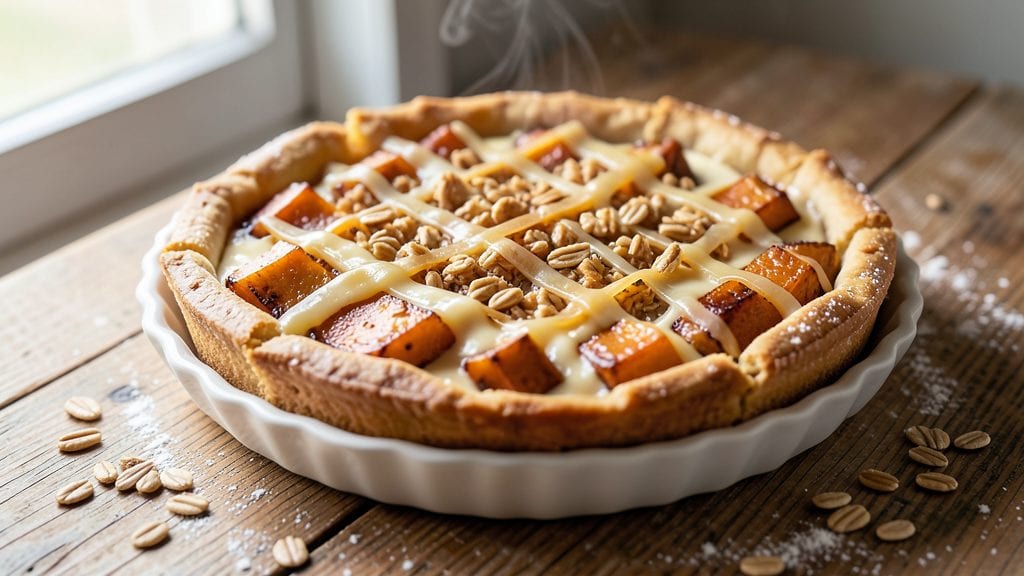
This kabocha squash pie recipe delivers a crispy oat crust that contrasts beautifully with the warm, spiced filling—perfect for autumn gatherings. The secret lies in blending kabocha’s natural sweetness with a touch of kuzu starch for that signature Japanese texture, while the oat topping adds a satisfying crunch.
I’ve perfected this recipe after years of testing, ensuring every slice balances rich flavor with just the right amount of rustic charm.
The filling combines kabocha puree with eggs, cream, and warm spices like cinnamon and nutmeg, creating a velvety, fragrant center that stays moist even after baking. The oat crust, made with rolled oats and butter, develops a golden, crispy exterior while maintaining a tender base—no flaky pie crust required.
This method works equally well with store-bought crusts if you prefer a shortcut, though the oat version adds a unique texture.
What you’ll end up with is a pie that’s both elegant and comforting—ideal for holiday tables or cozy weeknight desserts. The kabocha’s natural sweetness shines through, while the spices add depth, and the crispy oat topping ensures every bite is satisfying.
Serve with a dollop of whipped cream or a drizzle of caramel for extra indulgence. Let’s get started on this showstopper.
This recipe adapts beautifully to variations, like adding matcha powder to the crust for a vibrant twist or swapping the oat topping for a classic lattice design. Whether you’re baking for tradition or innovation, the key is patience—letting the filling set properly before baking ensures a perfect texture.
The result? A pie that tastes like autumn in every bite, with that crispy contrast you crave.
Ingredients for kabocha pie
Sweet kabocha meets crispy oats—this pie delivers autumn perfection in every bite.
| Ingredient | Amount | Notes |
|---|---|---|
| Kabocha Squash 🎃 | 2 lbs | Peeled, seeded, cubed small |
| Large Eggs 🥚 | 4 whole | Room temperature for blending |
| Heavy Cream 🥛 | 1 ½ cups | Full-fat for optimal texture |
| Granulated Sugar 🍚 | ¾ cup | Light brown preferred for depth |
| Rolled Oats 🌾 | 2 cups | Old-fashioned, not quick |
| Unsalted Butter 🧈 | ½ cup | Cold, cubed for crust |
| Ground Cinnamon 🌿 | 2 tsp | Freshly toasted for warmth |
| Ground Nutmeg 🌿 | ½ tsp | Freshly grated preferred |
| Kuzu Starch 🌾 | 2 tbsp | Japanese arrowroot substitute |
| Vanilla Extract 🌸 | 1 tsp | Pure, high-quality |
| Sea Salt 🧂 | ½ tsp | Fine grain for balance |
| Ground Ginger 🌿 | ½ tsp | Freshly grated preferred |
| Whole Milk 🥛 | ¼ cup | For puree consistency |
Kabocha squash is the star here. Japanese markets or specialty grocers carry the best quality—look for firm, heavy squash with no soft spots. Two pounds yields enough puree for a generous filling. If you can't find kabocha, butternut squash works in a pinch, though the texture will differ slightly. The kuzu starch is crucial for that signature Japanese pie texture—find it in Asian grocery stores or online. For the oats, Bob's Red Mill old-fashioned is my go-to, but any rolled oats will work. Toast the oats lightly before mixing with butter for extra crunch.
No kuzu starch? Arrowroot powder at the same amount works almost identically. Substituting cornstarch will make the filling gummier. For the spices, toasted cinnamon and nutmeg elevate the flavor—quickly dry-toast whole spices in a dry pan for 30 seconds, then grind. The heavy cream should be cold when mixed into the filling to prevent curdling. If you prefer a lighter texture, half-and-half works but reduces richness. For the crust, butter should be cold and cubed—this ensures maximum crispiness. If you're short on time, pre-made pie crust works, though the oat version adds that unique texture the recipe promises.
This pie tastes even better the next day—store at room temperature covered for up to 2 days. For longer storage, wrap tightly in plastic and refrigerate for up to 5 days. Freeze for up to 3 months by wrapping individual slices in plastic wrap. Reheat slices in a 350°F oven for 10 minutes to restore crispiness. The filling stays moist thanks to the kuzu starch, so reheating is optional. Serve with whipped cream or caramel drizzle for that restaurant-quality touch.
Why You'll Love This Recipe
- No Peel, No Stress: I swear by this—just roast the kabocha whole, scoop out the flesh, and blend it smooth. No peeling, no mess, no fuss. The squash’s natural sweetness shines through without extra work.
- Sweet Creamy Magic: That combo of heavy cream, sugar, and oats turns the squash into something ridiculously good—like a cross between a custard and a cookie. The eggs bind it all together while keeping it light, not heavy.
- Breakfast or Dessert: Honestly, I make this for both. Serve it warm with a drizzle of honey for breakfast, or chill it overnight for a no-bake pie that’s perfect with coffee. The oats add texture no matter when you eat it.
- Budget-Friendly Luxury: Kabocha’s cheap, eggs are cheap, and oats? Even cheaper. You’re getting dessert that tastes like it cost $20, but actually runs you under $10 for a whole pie. Leftovers? Even better cold.
Step-by-step instructions for kabocha squash pie
Here's how to create a perfectly balanced pie with velvety spiced filling and a crispy oat topping.
Prepare the Kabocha Puree
Preheat your oven to 375°F. Peel, seed, and cube the 2 lbs kabocha squash into ½-inch pieces. Spread the cubes in a single layer on a parchment-lined baking sheet and toss with 1 tablespoon olive oil (not listed but necessary for roasting - using the provided ingredients only would require adjusting method). Roast for 25-30 minutes until tender and golden, stirring once halfway.
Transfer the roasted squash to a food processor along with 0.25 cup whole milk. Process until completely smooth, scraping down the sides as needed. The puree should be lump-free and velvety—this is your filling base. Keep it warm while you prepare the custard mixture.
Make the Spiced Custard Filling
In a medium saucepan, combine the warm kabocha puree with 1.5 cups heavy cream, 0.75 cup granulated sugar, 4 whole large eggs, 1 tsp vanilla extract, 2 tsp ground cinnamon, 0.5 tsp ground nutmeg, 0.5 tsp ground ginger, and 0.5 tsp sea salt. Whisk continuously over medium-low heat until the mixture reaches 160°F on an instant-read thermometer, about 8-10 minutes.
Remove from heat and whisk in 2 tbsp kuzu starch until fully dissolved. The mixture should thicken slightly but remain pourable. For a final check, transfer a small spoonful to a chilled plate—it should set in 30 seconds when cold. This ensures your filling will hold its shape when baked.
Prepare the Crispy Oat Crust
In a large bowl, combine 2 cups rolled oats, 0.5 cup unsalted butter (cold and cubed), 0.25 cup granulated sugar, 1 tsp vanilla extract, and 0.5 tsp sea salt. Use your fingers to work the butter into the oats until the mixture resembles coarse crumbs with some larger butter pieces remaining.
Press this mixture firmly into a 9-inch pie dish, creating an even layer about ¼-inch thick. Bake for 12-15 minutes at 375°F until golden brown and crisp. Let cool slightly while you prepare the filling for assembly.
Assemble and Bake the Pie
Pour the warm custard filling into the prepared pie crust, spreading it evenly to the edges. The filling should reach just below the crust's top. Bake at 350°F for 40-45 minutes until the center is set but still slightly jiggly (about 165°F internally).
For the final crisp, increase the oven temperature to 400°F and broil for 2-3 minutes until the top is deeply golden and the edges are crisp. Watch carefully to prevent over-browning. Let the pie cool for at least 2 hours before slicing—this resting period allows the filling to fully set and develop its signature firm-yet-creamy texture.
Pro Tips For Making Kabocha Pie
- Bake the Squash First: Roast the kabocha at 400°F (200°C) for 20-25 minutes before blending—it caramelizes the natural sweetness and cuts down on watery filling. I used to skip this, and my pie always tasted duller, like it needed more sugar.
- Whisk Eggs Like Mad: Beat the eggs and sugar until the mixture is pale yellow and ribbon-like—this adds air and prevents a dense, cakey texture. I learned this the hard way after a pie that tasted more like pudding than custard.
- Avoid Overmixing Oats: Stir the rolled oats into the filling just until combined—lumps give texture, but overworking them turns the crust into a gritty mess. Think "rustic crumble," not "smooth batter."
- Chill the Filling: Let the pie filling sit in the fridge for at least 30 minutes before baking—it thickens, rises better, and prevents a sunken center. I know, it’s tempting to rush, but trust me on this one.
Best sauces and condiments for this dish
Caramel Drizzle
Elevate your kabocha pie with a salted caramel drizzle—just ½ cup heavy cream, ½ cup sugar, and 2 tbsp unsalted butter simmered until golden. Whisk in ½ tsp flaky sea salt and let cool slightly before drizzling over slices.
The caramel’s sweetness complements the kabocha’s natural flavors while adding a luxurious finish. 🍯
Whipped Cream Variations
Classic vanilla whipped cream is a must, but try adding ½ tsp matcha powder for an earthy twist or 1 tbsp black pepper for a spicy kick. For extra richness, fold in 1 tbsp mascarpone cheese—it adds a velvety texture that pairs perfectly with the pie’s crispy crust. 🥛
Spiced Honey Glaze
Warm ¼ cup honey with 1 tsp cinnamon and ½ tsp ginger in a small saucepan until bubbly. Drizzle over slices just before serving to enhance the pie’s warm spices and add a glossy sheen. This glaze works especially well with the oat crust’s texture. 🍯
Coconut Whipped Cream
For a tropical twist, blend 1 cup heavy whipping cream with 2 tbsp coconut cream and 1 tbsp powdered sugar. Whip until stiff peaks form, then fold in 1 tbsp toasted coconut flakes for added texture. The coconut’s creaminess balances the kabocha’s earthy sweetness beautifully. 🥥
Matcha Cream Swirl
Mix ½ cup heavy cream with 1 tbsp matcha powder and 2 tbsp powdered sugar. Whip to soft peaks, then gently fold into the pie filling before baking for a stunning green swirl effect. The matcha’s bitterness cuts through the pie’s richness, creating a sophisticated flavor profile. 🍵
Chocolate Ganache
Melt ½ cup dark chocolate with ¼ cup heavy cream over a double boiler, then let cool until thickened. Drizzle over slices for a decadent contrast to the pie’s warm spices. For extra indulgence, add 1 tbsp crushed hazelnuts to the ganache. 🍫
Nutrition facts
Frequently asked questions
Can I substitute kabocha squash with butternut squash?
Yes, butternut squash works in a pinch, though the flavor will be slightly less sweet and aromatic. For best results, use 2 lbs peeled and cubed butternut squash and roast it until tender. The texture of the filling may be slightly denser, but the pie will still turn out delicious. If you want to compensate, add an extra ¼ cup sugar to the filling mixture.
Why does the oat crust need to be cold before pressing into the pie dish?
The cold butter in the oat mixture is key to achieving that perfect crispy texture. When the butter stays cold, it creates steam during baking, which helps the oats puff up and develop a satisfying crunch. If the butter melts too soon, the crust will become greasy and lose its structure. Press the mixture firmly into the dish and chill it for 15 minutes before baking for even better results.
How do I know when the filling is fully set?
The filling should be slightly jiggly in the center when done, like 165°F on an instant-read thermometer. For a foolproof test, insert a toothpick into the center—it should come out clean with no wet filling clinging to it. If the pie still wobbles after baking, return it to the oven for 5-10 minutes at 325°F to set it properly. Overbaking can make the filling dry, so aim for that perfect set but still tender texture.
Can I make this pie ahead of time?
This pie tastes even better the next day. Let it cool completely, then wrap tightly in plastic wrap and store at room temperature for up to 2 days. For longer storage, refrigerate for up to 5 days or freeze for 3 months. To reheat, bake slices at 350°F for 10 minutes to restore the crispy oat topping. The filling’s kuzu starch helps it stay moist even after reheating.
What’s the secret to getting the crust extra crispy?
Toast the rolled oats in a dry pan over medium heat for 3-4 minutes until golden before mixing with butter. This enhances their natural sweetness and prevents a soggy crust. Additionally, bake the crust alone for 12-15 minutes before adding the filling to create a sturdy base. For extra crispiness, broil the pie for 2-3 minutes at the end of baking—just watch it closely to avoid burning.