
Desserts
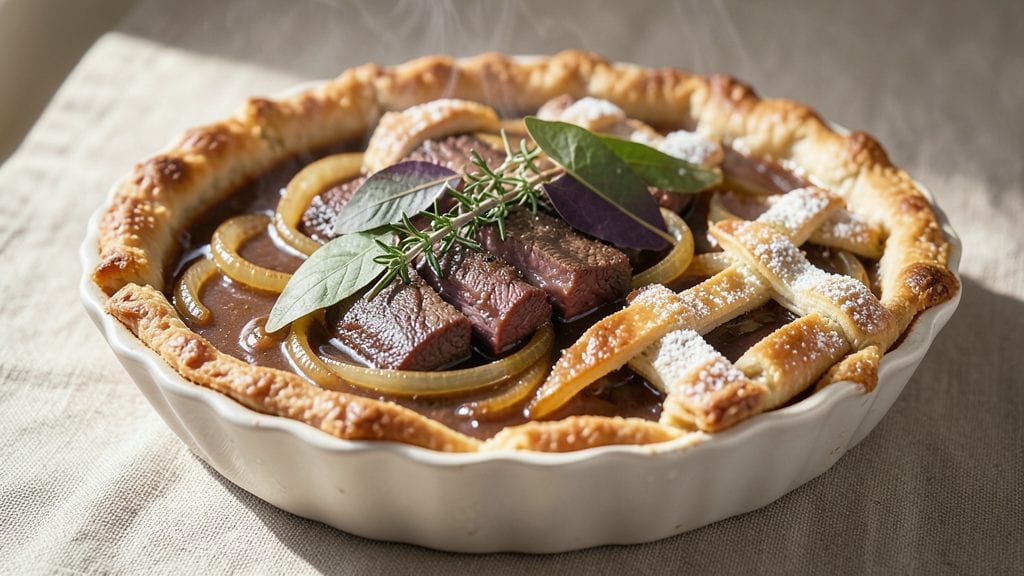
This liver pie recipe delivers a rich, savory harmony of perfectly seasoned liver filling encased in a golden, flaky crust—traditional British comfort food with a modern twist. The secret lies in slow-cooked onions and herbs that infuse the liver with deep, aromatic flavors while keeping the crust crisp and inviting.
I developed this version after years of perfecting the balance between tender meat and buttery pastry, ensuring every bite is both hearty and refined.
The filling begins with liver simmered in onions, thyme, and bay until just tender—never overcooked, which guarantees a moist, flavorful center. A well-built gravy binds everything together, while the pastry crust achieves that signature golden brown finish with a crisp edge and tender interior.
This recipe bridges tradition and ease, making it approachable for home cooks while delivering restaurant-quality results.
What sets this liver pie apart is the harmony of textures: silky liver filling contrasts beautifully with the buttery, flaky crust, creating a satisfying mouthfeel in every bite. The aroma alone—warm spices mingling with caramelized onions—transforms an ordinary meal into something special.
Whether served with a crisp green salad or crusty bread, this pie is a centerpiece that commands attention.
For those new to liver pies, don’t let the name intimidate you—the filling is surprisingly mild when prepared correctly, and the crust provides the perfect balance. Traditional versions often include sweet elements like currants, but this recipe focuses on the savory essence for a cleaner, more elegant profile.
Let’s bring this classic to your table with confidence.
Ingredients for liver pie
Sixteen ingredients transform into a masterful liver pie with tender filling and golden crust.
| Ingredient | Amount | Notes |
|---|---|---|
| Beef Liver 🥩 | 1 ½ lb | Fresh, trimmed of connective tissue |
| Yellow Onions 🧅 | 2 whole | Medium size, thinly sliced |
| Unsalted Butter 🧈 | ¾ cup | Cold, cubed for browning |
| Fresh Thyme Leaves 🌿 | ½ cup | Packed, finely chopped |
| Bay Leaves 🍃 | 2 whole | Dried, standard size |
| All-Purpose Flour 🌾 | ½ cup | For gravy thickening |
| Beef Stock 💧 | 1 ½ cups | Homemade or high-quality |
| Red Wine 🍷 | ½ cup | Dry, full-bodied variety |
| Diamond Crystal Kosher Salt 🧂 | 1 ½ tsp | Fine grain preferred |
| Freshly Ground Black Pepper 🌶️ | ½ tsp | Coarsely ground |
| Store-Bought Pie Crust 🥧 | 1 sheet | Double-crust, thawed |
| Large Egg 🥚 | 1 whole | For egg wash |
| Granulated Sugar 🍚 | 1 tbsp | For crust brushing |
The liver quality is non-negotiable—opt for grass-fed beef liver from specialty butchers like Whole Foods or D'Artagnan for optimal tenderness. Trim all connective tissue before slicing, as it remains chewy even after cooking. Yellow onions should be fresh, firm, and vibrant—avoid any with sprouting or soft spots. For the thyme, farmers market bundles offer superior freshness compared to grocery store bunches. The bay leaves should be dried and aromatic, not brittle or crumbling. Pre-sliced liver from the grocery store works in a pinch, but trimming and slicing yourself yields the best texture. The pie crust requires a high-fat, all-butter crust like Pillsbury Classic or homemade for optimal flakiness.
No beef liver? Chicken liver can substitute at equal weight, but the flavor profile shifts noticeably. Substituting red wine with beef stock plus 1 tbsp balsamic vinegar maintains depth without alcohol. Fresh thyme unavailable? Dried thyme at one-third the quantity suffices, though fresh imparts superior aroma. For the pie crust, pre-made refrigerated dough works if thawed properly, but avoid frozen crusts—they yield a less tender final product. The onions can be caramelized ahead of time and refrigerated for up to 3 days, saving active cooking time. If using store-bought pie crust, ensure it contains at least 20% fat content for proper flakiness.
The liver filling keeps 3 days refrigerated in an airtight container before baking, though fresh preparation yields superior texture. Once baked, the pie maintains quality for 4 days refrigerated or 3 months frozen. For reheating, bake at 375°F (190°C) until warmed through—microwaving risks a soggy crust. The egg wash and sugar mixture for brushing should be prepared just before baking to prevent the crust from becoming tough. Store any unused pie crust between parchment paper in the fridge for up to 3 days or freeze for 3 months.
Why You'll Love This Recipe
- One-Pot Magic: I swear by this recipe when I’m too tired to dirty multiple pans. Sear the liver in butter, toss in onions and herbs, then bake it all in one dish—no fuss, no stress. The crust forms right in the oven, so you’re not scrambling to find pie dough.
- Rich & Earthy: That beef liver? When cooked just right with onions and thyme, it’s ridiculously good—deep, savory, and slightly sweet. The bay leaves add this subtle warmth that makes it feel fancy, even though it’s basically a weeknight meal.
- Leftovers? Yes, Please: This pie reheats like a dream, so I always make extra. Slice it up for sandwiches the next day or pack it for lunch—it’s hearty enough to keep you full, but the flavors don’t get tired. (Between us, I’ve had it cold three times and still loved it.)
- Budget-Friendly Protein: Liver’s one of those ingredients that’s cheap but packs a punch. A single pie feeds four, and the onions and butter stretch the cost even further. Honestly, it’s my go-to when I need a filling, nourishing meal without breaking the bank.
Step-by-step instructions for savory liver pie
Master this classic technique for tender liver filling and a perfectly flaky crust.
Sear the Beef Liver for Perfect Texture
Pat the 1.5 lb beef liver completely dry with paper towels—this ensures maximum browning. Heat 0.5 cup unsalted butter in a large skillet over medium-high heat until foaming. Add the liver in a single layer and cook undisturbed for 2-3 minutes per side until the exterior develops a deep golden crust.
Remove the liver and set aside, reserving the rendered butter in the pan. The liver should be cooked just until it releases easily from the pan but remains slightly pink in the center—overcooking will make it tough. Season immediately with 1.5 tsp diamond crystal kosher salt and 0.5 tsp freshly ground black pepper while still warm.
Build the Rich Gravy Base
Return the skillet to medium heat and add the 2 whole yellow onions, sliced thinly. Cook for 8-10 minutes until softened and golden, stirring occasionally. Add the 0.5 cup finely chopped fresh thyme leaves and 2 whole bay leaves, cooking for another 1 minute until fragrant.
Pour in the 0.5 cup red wine and scrape up any browned bits from the bottom of the pan. Let it simmer for 3-4 minutes until reduced by half. Gradually whisk in the 0.5 cup all-purpose flour to create a smooth roux, cooking for 1-2 minutes until lightly golden.
Combine and Thicken the Filling
Return the liver to the skillet and pour in the 1.5 cups beef stock. Stir gently to combine, then bring to a simmer. Cook for 5-7 minutes until the liver is heated through and the sauce has thickened slightly. Remove from heat and let cool for 10 minutes—this prevents the crust from becoming soggy.
Assemble and Bake the Pie
Preheat your oven to 375°F. Roll out the 1 sheet store-bought pie crust and line a 9-inch pie dish, crimping the edges. Pour the liver filling into the crust, spreading it evenly. Top with the second crust sheet, sealing the edges with a fork.
Brush the top crust with a beaten 1 whole large egg mixed with 1 tbsp granulated sugar for a golden finish. Cut a few slits in the top crust for steam to escape. Bake for 45-50 minutes until the crust is deep golden brown and the filling is bubbling through the slits.
Rest and Serve for Maximum Flavor
Remove the pie from the oven and let it rest for 15-20 minutes before slicing. This allows the filling to set slightly and the juices to redistribute, ensuring each bite is rich and cohesive. Serve warm with a side of crusty bread to soak up the savory gravy.
Pro Tips For Making Liver Pie
- Sear the Liver First: Hit the liver with high heat in a dry pan for 30 seconds per side before adding onions—it tightens the meat so it stays tender later. I used to skip this, and my pie filling always turned mushy.
- Soak Onions in Cold Water: Toss sliced onions in ice water for 10 minutes to mellow their sharpness. Drain well before cooking—this cuts the bitterness without losing texture. (Yes, it sounds weird, but it works.)
- Don’t Overfill the Crust: Fill the pie shell only ¾ full, or the butter will bubble over and make a mess. I learned this after cleaning butter off my oven door twice—trust me, it’s not fun.
- Use Cold Butter for Layers: Cut unsalted butter into small cubes and layer them cold over the liver mixture. As it bakes, they melt into the filling, creating a silky texture. Warm butter just disappears.
Pro cooking tips for great liver pie
Liver Searing Secrets
Liver cooks fast—too fast if you're not careful. Pat the liver completely dry with paper towels before searing to ensure maximum browning. Use cold butter (not melted) in a heavy skillet like All-Clad Stainless or Lodge cast iron to create a deep golden crust.
Cook undisturbed for 2-3 minutes per side—this builds flavor through the Maillard reaction. The liver should release easily from the pan but remain slightly pink in the center—overcooking turns it tough and dry. 🔥
Onion Caramelization
Don’t rush the onions—they’re the flavor foundation. Cook them over medium heat for 8-10 minutes until deeply golden and soft. Use a wide skillet (like Le Creuset) to prevent overcrowding, which steams instead of caramelizes.
Add the thyme and bay leaves just before the wine to infuse their aromatics into the base. A wooden spoon helps scrape up those precious browned bits (fond) that add depth to the gravy.
Gravy Thickening
The roux is where magic happens. Whisk in the flour gradually to avoid lumps, and cook it until lightly golden—this prevents a raw flour taste. Deglaze with red wine (not water) to add acidity and complexity.
Simmer the filling gently after adding stock to avoid breaking the liver. If the gravy thickens too much, stir in 1-2 tbsp cold water to restore balance. 💡
Crust Perfection
Prevent a soggy bottom by chilling the filling for 10 minutes before assembling. Use two crusts—one as a base, one as a lid—for maximum flakiness. Seal the edges with a fork or damp pastry brush to prevent leaks.
Brush the top crust with egg wash (1 egg + 1 tbsp sugar) for a golden finish. Bake on the lower oven rack for the first 20 minutes to encourage browning, then move to the middle for even cooking.
Avoiding Common Mistakes
Never skip the resting period after baking—this lets the filling set and the juices redistribute. If the crust puffs too much, weigh it down with pie weights or dried beans during baking. For extra insurance, blind-bake the bottom crust for 10 minutes before adding filling.
And if your liver tastes bitter? It’s likely overcooked—next time, pull it from the pan earlier and let residual heat finish cooking.
Pro Tools to Upgrade
Invest in a thermometer (like Thermoworks Smoke) to monitor the filling’s internal temp—it should reach 160°F. A pie bird (or crumpled foil) helps steam escape during baking. For a restaurant-quality crust, use Pillsbury Gold Leaf or make your own with all-butter dough.
A sharp chef’s knife** (like Wüsthof) ensures clean cuts for slicing the onions and crust edges. 💪
Nutrition facts
Frequently asked questions
Can I substitute chicken liver for beef liver in this recipe?
Chicken liver works well but yields a milder, slightly sweeter flavor. Use the same weight and adjust cooking time slightly—chicken liver cooks 1-2 minutes faster than beef. For deeper flavor, add 1 extra bay leaf and 1 tsp soy sauce to the filling.
Why does my liver pie crust turn out soggy?
Soggy crusts usually happen from steam buildup. Always pre-bake the bottom crust for 10 minutes before adding filling, and chill the filling for 10 minutes before assembling. Cut vent slits in the top crust and avoid overfilling the pie dish.
Can I make this liver pie ahead of time?
Yes! Assemble the pie 1 day ahead and refrigerate uncovered. Bake when ready—this helps the crust crisp up better. For freezing, bake first, then cool completely and freeze in an airtight container for up to 3 months. Reheat at 375°F until warmed through.
What's the best way to reheat leftover liver pie?
Slice the pie and reheat portions in a 350°F oven for 10-15 minutes until heated through. Avoid microwaving—it makes the crust rubbery. For extra crispiness, broil for 2-3 minutes at the end.
How do I make this recipe vegetarian?
Replace the liver with 1.5 lb finely chopped mushrooms (like cremini or portobello) and 1 cup cooked lentils for texture. Boost umami with 1 tbsp soy sauce and 1 tsp smoked paprika in the gravy. The crust and caramelized onions remain the same.