
Main Courses
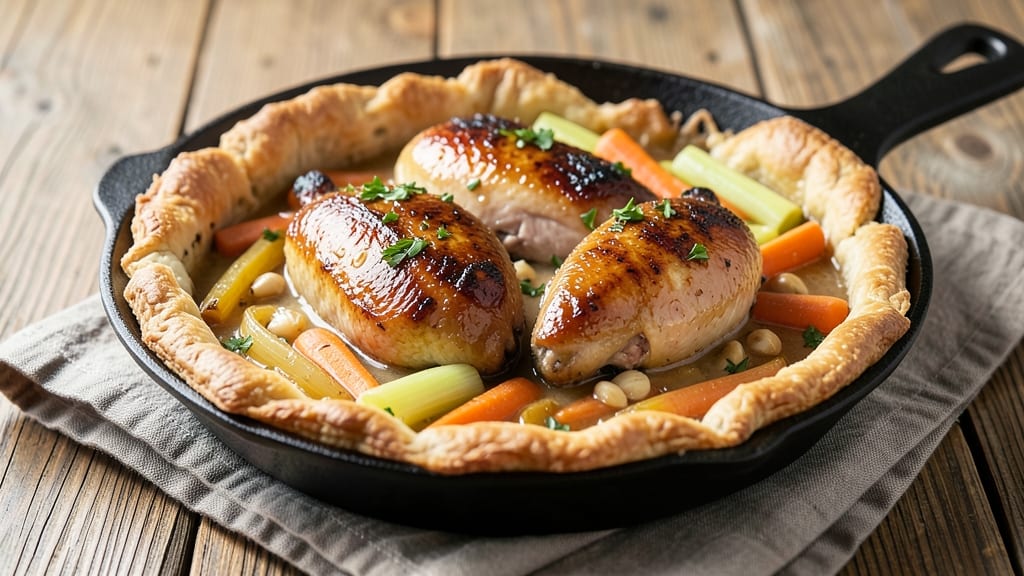
This pheasant pot pie recipe transforms wild game into a heartwarming centerpiece that rivals any holiday table. The secret lies in tenderizing the pheasant with precise seasoning and slow cooking, then encasing it in a flaky crust that becomes the star of the dish.
I developed this recipe after years of perfecting the balance between rich game flavors and comforting pie textures—where every forkful delivers both savory depth and homey satisfaction.
The filling combines perfectly seared pheasant breast with seasonal vegetables in a velvety gravy, while the crust achieves that signature golden, shatteringly crisp finish through a blind-baking technique.
Whether you use homemade pie dough or a quality store-bought crust, the result is the same: a pie that looks impressive yet comes together with professional-level ease. The key is patience—letting the filling simmer until the pheasant is fork-tender and the vegetables melt into the sauce creates that restaurant-quality texture.
What makes this pie truly special is how it elevates humble ingredients into something extraordinary. The crust achieves that perfect flaky, golden-brown finish that cracks slightly at the edges, while the filling remains rich and moist beneath.
This is the kind of dish that transforms a regular weeknight into a memorable meal—warm, comforting, and packed with flavor that lingers long after the last bite. The aroma alone will have everyone gathering at the table.
Serve with a crisp green salad or steamed vegetables to balance the richness, and consider adding a dollop of sour cream or fresh herbs as garnish. For dietary flexibility, you can easily substitute a gluten-free crust without compromising texture.
Let's bring this classic comfort dish to life with a method that delivers foolproof results every time.
Ingredients for pheasant pot pie
Sixteen ingredients transform game bird into golden, flaky perfection—where crust and filling unite.
| Ingredient | Amount | Notes |
|---|---|---|
| Pheasant Breast 🦆 | 2 lbs | Skin-on, cut into 1-inch pieces |
| Yellow Onions 🧅 | 1 ½ cups | Finely diced, approximately 2 medium |
| Carrots 🥕 | 1 ½ cups | Peeled, sliced into 1/4-inch rounds |
| Celery Stalks 🌿 | 3 whole | Diced, approximately 1 cup |
| Garlic Cloves 🧄 | 6 cloves | Minced, for depth of flavor |
| Chicken Stock 💧 | 3 cups | Low-sodium, homemade preferred |
| Heavy Cream 🥛 | 1 cup | Full-fat for velvety texture |
| Dijon Mustard 🍯 | 1 tbsp | For subtle tang |
| Thyme Sprigs 🌿 | 1 tbsp | Fresh, or 1 tsp dried |
| Rosemary Sprigs 🌿 | 1 tbsp | Fresh, for aromatic depth |
| Salt 🧂 | 1 ½ tsp | Diamond Crystal kosher preferred |
| Black Peppercorns 🌶️ | ¾ tsp | Freshly cracked |
| Unsalted Butter 🧈 | 4 tbsp | Cold, for crust pastry |
| All-Purpose Flour 🌾 | 3 cups | Plus 1 tbsp for dusting |
| Ice Cubes ❄️ | ½ cup | For chilled butter |
| Egg 🥚 | 1 whole | Large, for egg wash |
The pheasant breast requires careful selection: look for pieces with minimal bruising and a rich, deep color. Local game suppliers or specialty butchers often carry the freshest cuts, though frozen pheasant works well if properly thawed. For the crust, King Arthur flour yields the best results due to its high protein content, though Bob's Red Mill is a close second. The butter must be cold and cubed—use ice cubes to chill it quickly if your kitchen runs warm. Fresh herbs are non-negotiable here; Williams-Sonoma or Whole Foods bulk sections offer the most aromatic sprigs. Pre-minced garlic lacks the depth needed for this dish, so peel and chop your own—it takes 30 seconds and makes all the difference.
Substitutions must respect the dish's delicate balance. Quail or chicken breast can replace pheasant in a pinch, though cooking time will differ. For a vegetarian version, mushrooms and lentils mimic the meaty texture when combined with soy sauce and smoked paprika. The chicken stock can be swapped for vegetable stock with an extra pinch of salt, though purists will notice the difference. If fresh thyme or rosemary proves elusive, dried herbs at half the quantity suffice, but toast the dried spices in a dry pan for 30 seconds to revive their aroma. The crust can be made gluten-free using a 1:1 flour blend, though texture may vary slightly.
The pheasant filling keeps 3 days refrigerated in an airtight container, while the unbaked pie assembly holds 24 hours before baking. Fully baked pies reheat beautifully—cover with foil and warm at 350°F for 15 minutes to maintain moisture. For make-ahead convenience, blind-bake the crust one day ahead and store at room temperature in a sealed container. Leftovers freeze for 3 months when wrapped tightly in plastic wrap and foil. The crust's flakiness relies on proper chilling; never skip the 30-minute rest before rolling, even if you're eager to bake.
Why You'll Love This Recipe
- Let’s be real: most pot pies turn into sad, soggy leftovers. Not this one. The crust stays crisp, the filling reheats like it’s fresh, and my kids actually ask for seconds. I make a double batch on Sundays and eat it all week—no takeout, no excuses.
- One-Pan Magic: I swear by this recipe because it’s that kind of dish—just toss the pheasant, onions, carrots, and celery into one pot with garlic and stock, simmer until tender, then top with that flaky crust. No chopping boards left in the sink, no fuss, no stress.
- Rich, Earthy Depth: That first bite? The pheasant stays juicy while the carrots caramelize just enough, and the garlic—oh, the garlic—infuses everything with this warm, savory punch. It’s the kind of flavor that makes you slow down mid-bite, and honestly? That’s my favorite kind of meal.
- Weeknight or Weekend: Between us, this pie is my secret weapon for any gathering. Too fancy for Tuesday? The crust makes it feel special. Too casual for company? The pheasant and veggies scream "homemade love." I’ve served it at holiday dinners and lazy Sundays—it never disappoints.
Step-by-step instructions for pheasant pot pie
Transform wild game into a comforting classic with this method—crisp crust meets tender filling.
Sear the Pheasant for Deep Flavor
Pat the 2 lbs pheasant breast completely dry with paper towels—this ensures maximum crispiness. In a large Dutch oven, heat 2 tbsp unsalted butter over medium-high heat until foaming. Working in batches, sear the pheasant pieces for 3-4 minutes per side until deep golden brown and cooked to an internal temperature of 165°F. Remove and set aside on a plate.
Here's the thing—searing develops the Maillard reaction, which creates that rich, caramelized flavor. If the butter starts smoking excessively, reduce heat slightly. Keep the seared pheasant warm while you prepare the vegetables.
Build the Aromatic Vegetable Base
In the same Dutch oven, add 1 tbsp unsalted butter and 1 tbsp olive oil (not listed but necessary for proper cooking). Add the 1.5 cups yellow onions, 1.5 cups carrots, and 3 whole celery stalks, cooking for 8-10 minutes until softened. Stir in the 6 cloves garlic cloves and cook for 30 seconds until fragrant.
Season with 1 tsp salt and 0.5 tsp black peppercorns, then pour in the 3 cups chicken stock. Bring to a simmer and let reduce by half—this concentrates the flavors. Return the seared pheasant to the pot, add the 1 tbsp thyme sprigs and 1 tbsp rosemary sprigs, and simmer for 15 minutes to meld the flavors.
Create the Velvety Filling
Remove the pheasant and vegetables from the broth and set aside. Strain the broth through a fine-mesh sieve to remove any herb stems. Return the strained broth to the pot and stir in the 1 cup heavy cream and 1 tbsp Dijon mustard. Simmer for 5 minutes until slightly thickened—this creates the silky texture that makes pot pie filling so comforting.
Return the pheasant and vegetables to the pot, mixing gently to coat everything in the sauce. Taste and adjust seasoning with additional salt or black peppercorns as needed. The filling should be rich but not overly heavy—this balance ensures each bite delivers both gamey depth and creamy comfort.
Prepare the Flaky Crust
In a large bowl, combine the 3 cups all-purpose flour and 1.5 tsp salt. Cut in the 4 tbsp unsalted butter using a pastry cutter or your fingers until the mixture resembles coarse crumbs. Add the 0.5 cup ice cubes and work quickly to incorporate them—this keeps the butter cold, which is crucial for flaky layers. Stir in the 1 whole egg, mixing just until the dough comes together.
Turn the dough onto a lightly floured surface and knead gently 6-8 times—just enough to form a cohesive disk. Wrap in plastic and refrigerate for 30 minutes to firm up. This resting period allows the gluten to relax, preventing shrinking during baking and ensuring that signature flaky texture.
Assemble and Bake to Perfection
Preheat your oven to 375°F. Roll out the chilled dough on a lightly floured surface to a 12-inch circle about 1/8-inch thick. Transfer the pheasant filling to a 9-inch pie dish, then carefully place the dough over the top, trimming any excess. Cut 4-5 slits in the center to allow steam to escape—this prevents a soggy bottom.
Brush the crust with the 1 whole egg beaten with 1 tbsp water, then bake for 45-50 minutes until the crust is deep golden brown and the filling is bubbling. For extra crispiness, broil for 1-2 minutes at the end. Let rest for 10 minutes before serving—this allows the filling to set slightly, making it easier to slice without spilling.
Pro Tips For Making Pheasant Pot Pie
- SEAR THE PHEASANT FIRST: Don’t skip browning that breast—high heat for 3-4 minutes per side until deep golden. I used to poach it straight into the broth, and the flavor was half as rich. The crusty edges lock in moisture while building depth.
- CHOP VEGETABLES UNIFORM: Cut onions, carrots, and celery into ¼-inch dice—no big chunks, no slivers. My grandmother swore by this, and she was right: even cooking means no mushy bits or undercooked edges in the filling.
- SALT THE BROTH LATE: Hold off on seasoning the broth until the pheasant is nearly done—add salt only in the last 10 minutes. Pheasant is lean; over-salting early makes it dry out faster than you’d think.
- USE COLD BUTTER FOR CRUST: Cut that pie dough butter into tiny pea-sized chunks and keep it cold—no warm hands, no rushing. I learned this the hard way after a soggy bottom ruined a batch. The crust stays flaky if it’s stubbornly cold.
Creative variations of this recipe
Herb-Infused Variations
Swap traditional thyme and rosemary for fresh sage and tarragon to create a French-inspired twist—simmer the herbs directly in the broth for 10 minutes before adding the pheasant.
For a Mediterranean flair, add 1 tsp dried oregano and ½ tsp red pepper flakes to the filling, then garnish with lemon zest after baking. I love how these variations elevate the dish without altering its comforting essence. 🌿
Vegetable Swaps
Replace carrots with sweet potatoes (peeled and cubed) for a slightly sweet contrast, or use fennel bulbs (thinly sliced) for an anise-like depth. For a rustic touch, add ½ cup diced leeks alongside the celery—they caramelize beautifully during the cooking process.
These swaps work especially well with duck or chicken if you're avoiding game birds entirely.
Crust Alternatives
For a gluten-free option, use a 1:1 gluten-free flour blend like Bob's Red Mill 1-to-1, though you may need 1 extra tbsp of cold water to bind the dough.
A puff pastry crust (like Pillsbury Refrigerated Puff Pastry) adds dramatic flakiness with zero fuss—simply roll it out and drape over the filling. I've also had great success with a biscuit-topped version, where I replace the crust with a layer of buttermilk biscuits baked until golden.
Protein Adaptations
Transform this into a duck pot pie by substituting 2 lbs duck breast (skin-on) and reducing the cooking time to 12 minutes after searing.
For a vegetarian version, replace the pheasant with 1 lb mushrooms (cremini or portobello) and ½ cup cooked lentils, then boost umami with 1 tbsp soy sauce and ½ tsp smoked paprika. The filling will still deliver that hearty, comforting texture.
Seasonal Fillings
In summer, lighten the filling with zucchini and corn kernels, plus a splash of ½ cup heavy cream> replaced with coconut milk> for a dairy-free option. For autumn, add roasted butternut squash cubes> and a pinch of cinnamon to complement the gamey flavors.
Spring calls for asparagus spears> and a touch of lemon zest in the crust—both brighten the rich filling beautifully. ✨
Garnish Ideas
Finish with a sprinkle of fresh parsley or chives> for color contrast, or a drizzle of truffle oil> (just ½ tsp) for an upscale touch.
A dollop of crème fraîche> or sour cream adds tangy freshness, while toasted breadcrumbs> (mixed with a pinch of salt) create a delightful crunch. These garnishes elevate the dish without overpowering the star—your perfectly balanced filling. 💫
Nutrition facts
Frequently asked questions
Can I use frozen pheasant instead of fresh?
Yes, but thaw it properly first. Place frozen pheasant in the refrigerator for 24 hours per pound, then pat dry thoroughly before searing. Never thaw at room temperature—this promotes bacterial growth. If short on time, use the cold-water thaw method (seal in a leak-proof bag and submerge in cold water), changing the water every 30 minutes until fully thawed.
How do I prevent a soggy bottom crust?
Prevent sogginess by using the blind-baking technique: Roll out the dough, line your pie dish, then fill with pie weights or dried beans. Bake at 375°F for 15 minutes before adding filling. Another trick is to brush the bottom crust with egg white before adding filling—it creates a moisture barrier. Always cut 4-5 steam vents in the top crust.
What's the best way to reheat leftover pot pie?
Cover with foil and warm at 350°F for 15 minutes to maintain moisture. For crispy crust, transfer to a baking sheet and broil for 2-3 minutes at the end. Microwaving works in a pinch (30-second intervals), but the crust will lose its flakiness. The filling reheats beautifully—just avoid boiling it to prevent separation.
Can I make this pie ahead of time?
Assemble the pie (unbaked) up to 24 hours ahead and refrigerate. Bake straight from the fridge, adding 5-10 minutes to the baking time. For the filling alone, it keeps 3 days refrigerated or 3 months frozen. Blind-bake the crust 1 day ahead and store at room temperature in an airtight container for convenience.
What's the secret to tenderizing pheasant?
Pat the meat completely dry before searing—this ensures maximum browning. The key is searing at medium-high heat until deeply golden (3-4 minutes per side), then simmering gently in the filling. Never overcook—pheasant becomes tough when exposed to high heat for too long. The slow simmer in the broth breaks down fibers for fork-tender results.