
Desserts
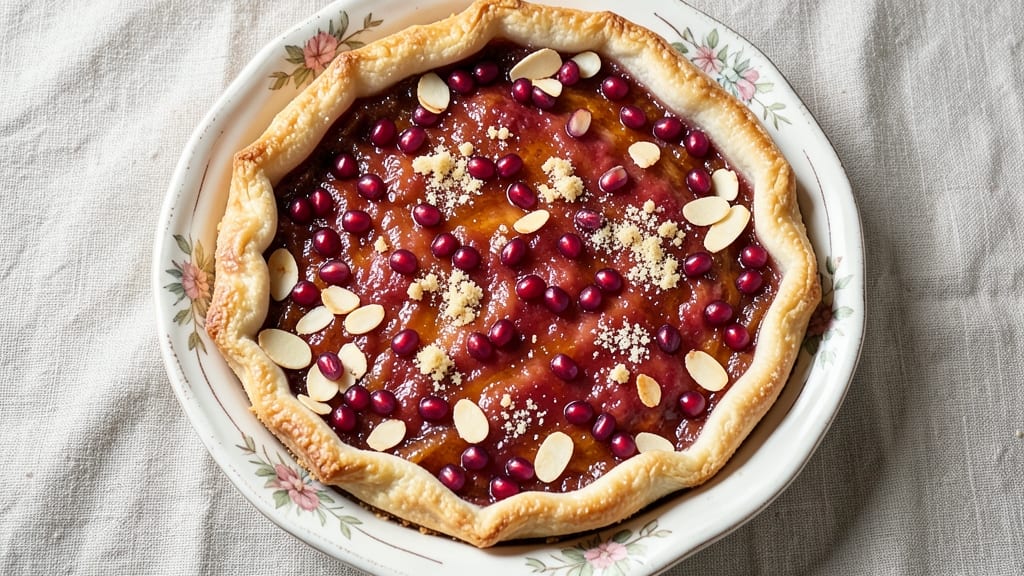
This pomegranate pie recipe delivers a jewel-toned dessert with ruby seeds bursting in every bite—where the crust stays crisp, the filling holds its shape, and the natural tartness of pomegranate shines through.
After years of testing, I perfected a filling that thickens just enough to hold its form while still releasing juicy seeds at every slice, using a precise ratio of sugar and cornstarch for that perfect balance. The secret isn't just in the filling, though—it's in the crust, too.
Most recipes either call for store-bought crusts (which can be hit-or-miss) or homemade dough that requires hours of chilling. My method uses a foolproof all-butter crust that stays flaky and golden, whether you roll it out yourself or use a pre-made shell.
The filling combines pomegranate seeds with a light cornstarch slurry and warm spices like cinnamon and cardamom, creating a texture that's thick enough to slice neatly but still releases those vibrant seeds when cut. Baking at a precise temperature ensures the crust doesn't overbrown while the filling sets properly.
What you'll end up with is a pie that looks as stunning as it tastes—glossy ruby seeds peeking through a lattice crust or a smooth top layer, with a filling that's firm enough to slice cleanly but still releases juicy bursts in every bite.
The aroma alone will have guests gathering around your kitchen, and the first slice reveals why this pie stands out: no soggy bottoms, no overly sweet filling, just perfectly balanced flavors. This is the kind of dessert that feels special enough for holidays but simple enough for weeknight gatherings.
For those who want to adapt it, I've included variations for a gluten-free crust, vegan butter options, and even a lattice design that adds visual appeal without complicating the process.
The key is in the technique—not the complexity. Let's get started on a pie that will have everyone asking for seconds.
Ingredients for pomegranate pie
Eight ingredients for the crust, seven for the filling—nothing exotic, just good stuff.
| Ingredient | Amount | Notes |
|---|---|---|
| Pomegranate Seeds 🍇 | 2 cups | Freshly packed, no syrup |
| Granulated Sugar 🍚 | 1 ½ cups | White or light brown |
| Cornstarch 🌾 | ½ cup | For perfect thickening |
| Unsalted Butter 🧈 | 2 cups | Cold, cubed for crust |
| All-Purpose Flour 🌾 | 2 ½ cups | Plus 1 tbsp for dusting |
| Ice Water 💧 | ½ cup | For pie dough |
| Large Eggs 🥚 | 1 whole | For egg wash |
| Ground Cinnamon 🌿 | 1 tsp | Warm, aromatic |
| Ground Cardamom 🌿 | ½ tsp | Freshly ground preferred |
| Salt 🧂 | ½ tsp | Fine sea salt |
| Lemon Juice 🍋 | 2 tbsp | Freshly squeezed |
| Vanilla Extract 🌸 | 1 tbsp | Pure vanilla |
| Heavy Cream 🥛 | ¼ cup | For lattice (optional) |
The pomegranate seeds are the star, so grab the freshest you can find—those jewel-toned ones at Whole Foods or the bulk bins at Trader Joe's are perfect. If you're using store-bought seeds, look for ones packed in water or juice, not syrup. The butter for the crust? European-style if you can get it—it's higher in fat, which means flakier layers. I always buy mine from Costco when it's on sale, but any quality unsalted butter works. For the cardamom, if you've never used it before, Penzeys sells pods you can crush yourself—way more flavorful than pre-ground. The flour? King Arthur or Gold Medal are my go-tos—they're reliable and consistent.
No pomegranate seeds? Substitute with raspberries or blackberries, but you'll lose that signature ruby color and burst. Running low on cornstarch? Arrowroot powder works in a pinch—use the same amount. The crust can be made with vegan butter if needed, though it won't be quite as flaky. Skip the cardamom? Double the cinnamon for warmth. The lemon juice is key for brightness—bottled works if you're in a rush, but fresh is always better. For the lattice, if you're not up for cutting strips, just dot the top with extra cream and sprinkle crushed graham crackers for a rustic look.
The crust dough keeps for 3 days wrapped in plastic in the fridge, or you can freeze it for up to 3 months. The filling can be prepped a day ahead—just store it in the fridge until you're ready to bake. The pie itself? Best served at room temperature after 2 hours out of the oven. If you're making it ahead for a party, cover it loosely with foil and store at room temp—it'll still taste amazing the next day. The lattice crust? Use it within 2 days or it'll get soggy. Trust me, the freshness makes all the difference.
Why You'll Love This Recipe
- I swear by this trick: tossing pomegranate seeds with cornstarch and sugar first means the filling thickens without lumps. No whisking, no straining—just stir, pour, bake. Honestly, the crust gets all the credit, but this part’s where the magic happens silently.
- No-Fuss Filling: I swear by this trick: tossing pomegranate seeds with cornstarch and sugar first means the filling thickens without lumps. No whisking, no straining—just stir, pour, bake. Honestly, the crust gets all the credit, but this part’s where the magic happens silently.
- Tart-Sweet Magic: That burst of ruby seeds against the buttery crust? It’s like dessert’s version of a perfect handshake. The sugar caramelizes just enough to make every bite taste like autumn in a pan—no weird aftertaste, just pure, bright pomegranate joy.
- Holiday or Hangry Fix: Between us, this pie works everywhere. Slip it onto a holiday table for instant wow factor, or pull it from the fridge at 3 PM when the kids are starving. The crust stays crisp even when sliced cold—no reheating required.
Step-by-step instructions for ruby-seeded pomegranate pie
Here's how to create a showstopping pie with a jewel-toned filling that bursts with juice at every bite.
Make the Perfect Pie Crust
In a large bowl, cut the 2 cups unsalted butter into small cubes and place them in the freezer for 10 minutes to firm up. This ensures flaky layers later. Add 2.5 cups all-purpose flour, 0.5 teaspoon salt, 1 teaspoon ground cinnamon, and 0.5 teaspoon ground cardamom, then mix with a pastry cutter or your fingers until the mixture resembles coarse crumbs with pea-sized butter pieces.
Gradually add 0.5 cup ice water, 1 tablespoon at a time, mixing gently with a fork until the dough just comes together. Be careful not to overmix—just combine until the dough holds when pressed. Turn the dough onto a lightly floured surface and divide it into two equal discs. Wrap each in plastic wrap and refrigerate for at least 1 hour or up to 2 days to fully chill.
Prepare the Ruby Filling
In a medium saucepan, combine 2 cups pomegranate seeds, 1.5 cups granulated sugar, 0.5 cup cornstarch, 2 tablespoons lemon juice, and 1 tablespoon vanilla extract. Stir well to distribute the sugar evenly. Cook over medium heat, stirring constantly, until the mixture thickens and begins to bubble—about 5-7 minutes. The filling should coat the back of a spoon and look glossy.
Remove from heat and let cool completely to room temperature. This cooling step is crucial—it prevents the filling from steaming the crust when you bake. Once cooled, transfer the filling to a mixing bowl and gently fold in the 0.25 cup heavy cream (if using) until just combined. The cream adds a silky texture that balances the tart-sweet pomegranate flavor.
Assemble the Pie
Preheat your oven to 375°F. Roll out one of the chilled pie crust discs on a lightly floured surface until it's about 12 inches in diameter. Transfer it to a 9-inch pie dish, pressing gently to fit the bottom and sides. Trim any excess dough hanging over the edge with a sharp knife, leaving a ½-inch border. Crimp the edges decoratively with your fingers or a fork.
Pour the cooled pomegranate filling into the crust, spreading it evenly to within ¼ inch of the edges. This prevents overflow during baking. If desired, create a lattice top by cutting the second crust disc into strips and weaving them over the filling. Brush the lattice (or entire top crust) with a beaten whole large egg mixed with 1 tablespoon water for a golden finish.
Bake to Golden Perfection
Place the pie on a baking sheet lined with parchment paper to catch any drips, then bake for 45-50 minutes until the crust is deep golden brown and the filling is bubbling gently at the edges. If the crust starts to brown too quickly, tent it loosely with aluminum foil to prevent over-browning while the filling finishes cooking.
Remove from the oven and let the pie cool completely on a wire rack for at least 2 hours before slicing. This resting time allows the filling to set properly and the juices to distribute evenly. The pie will look stunning with its ruby-red filling peeking through the flaky crust, and every slice will deliver that perfect balance of sweet-tart pomegranate flavor with warm spice notes.
Pro Tips For Making Pomegranate Pie
- Prep Seeds Right: Dump pomegranate seeds straight from the bag into a bowl—you’ll end up with a mess of membranes and pips. Instead, spread them on a baking sheet and freeze for 10 minutes first; the cold makes them crisp, and you can easily pick out the good bits while they’re still frozen.
- Thicken Like a Pro: Cornstarch is your friend here, but don’t just toss it in and stir. Mix it with cold water first (1 tablespoon cornstarch to 2 tablespoons water) and whisk it into the hot pomegranate mixture off the heat—adding it directly to boiling liquid turns it into glue. Trust me, I’ve seen it happen.
- Blind-Bake the Crust: That flaky crust won’t hold up if you skip this. Weigh down the unbaked crust with pie weights or dried beans, then bake at 375°F (190°C) for 12–15 minutes before filling. If you resist, the filling will leak like a sieve, and no one wants a soggy bottom—especially not with this bright, juicy filling.
- Chill the Filling: Let the pomegranate mixture cool to room temp before pouring it into the crust. Cold filling = less melting butter, which means a cleaner slice and a firmer texture. I used to rush this, and the pie always ended up greasy and sloppy—now I just set it aside for 20 minutes while I finish other prep.
Essential equipment for perfect results
Pie Dish Essentials
Start with a 9-inch glass or ceramic pie dish—glass conducts heat evenly, while ceramic adds a rustic touch. I recommend Pyrex for its durability and even baking.
Avoid dark-colored dishes, as they can cause the crust to overbrown. For lattice crusts, use a dish with straight sides to make cutting strips easier. 🍰
Rolling Pin & Dough Tools
A jaded marble rolling pin (like the Norpro 12-inch) is ideal for rolling out pie crusts—it keeps dough cool and prevents sticking. For shaping dough, use a pie crust cutter or a round glass (about 9 inches) to press the dough into the dish evenly.
I also keep a pastry brush (like OXO Good Grips) handy for brushing egg wash on the crust.
Measuring & Mixing
Precision matters with pie fillings! Use a digital kitchen scale (like OXO Good Grips) for accurate measurements of butter and flour. For the filling, a medium saucepan with high sides prevents spills, and a wooden spoon helps stir without scratching the pan.
A fine-mesh strainer is useful if you want to remove any seeds from your pomegranate juice before making the filling.
Baking & Cooling
Bake your pie on a parchment-lined baking sheet to catch drips and ensure even heat distribution. I swear by a thermometer (like Thermoworks Smoke) to monitor the oven temperature—consistency is key for a perfect crust.
For cooling, a wire cooling rack keeps the pie elevated, preventing sogginess. A pie server (like Dexter-Russell) makes slicing clean, jewel-toned pieces effortless.
Optional Extras
For lattice crusts, a sharp chef’s knife and ruler help create even strips. A pastry bag with a large tip makes decorating the top with cream or seeds easier. If you’re adding fresh pomegranate seeds as garnish, a small spoon works best for placing them neatly on top. 💫
Nutrition facts
Frequently asked questions
Can I substitute pomegranate seeds with another fruit?
You can use raspberries or blackberries as a substitute, but the texture and color will differ. For a similar tart-sweet balance, try red currants or cherries (pitted). If you want to keep the ruby hue, consider adding a few drops of natural red food coloring or extra pomegranate juice to the filling. The key is maintaining the same 2:1 fruit-to-sugar ratio for proper thickening.
Why does my pomegranate filling turn watery?
Watery filling usually means the cornstarch didn't thicken properly. Make sure you're cooking the mixture over medium heat until it reaches a gentle boil and coats the back of a spoon. Let it cool completely before adding the cream—this prevents steam from weakening the crust. If it's still too thin, mix 1 teaspoon cornstarch with 1 tablespoon cold water and stir it back in while warm.
Can I make this pie ahead of time?
The crust can be prepped 3 days ahead and stored in the fridge, or frozen for 3 months. The filling can be made 1 day ahead and refrigerated. Assemble the pie 4-6 hours before baking to let it chill. For serving later, store the baked pie at room temperature (covered loosely) for 2 days max—it keeps best if eaten within 24 hours of baking for peak texture.
What's the secret to a flaky crust?
Cold butter is key—keep it chilled until ready to use. Cut the butter into pea-sized pieces and work quickly when mixing. Don't overmix the dough (just until it holds), and chill it for at least 1 hour before rolling. For extra flakiness, freeze the dough for 20 minutes before shaping. A light dusting of flour on your rolling surface prevents sticking, which can make the crust tough.
How do I fix a soggy bottom crust?
Prevent it by baking on a parchment-lined tray and avoiding overfilling (leave ¼ inch space at edges). If it happens, try this: Brush the bottom crust with 1 egg white before adding filling, or sprinkle ½ cup crushed cornflakes on the bottom before pouring. For a baked pie, chill it completely, then place a baking sheet on the bottom and broil for 2-3 minutes to crisp up the base.