
Main Courses
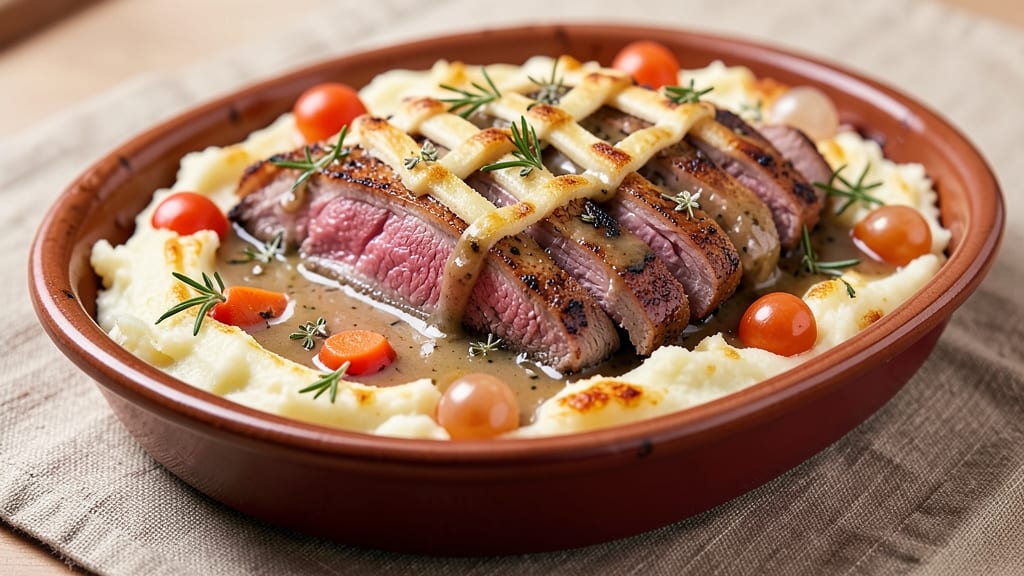
This prime rib shepherd's pie recipe transforms a classic comfort dish into an elegant centerpiece with a restaurant-worthy twist. The secret lies in perfectly tender prime rib, slow-cooked until fork-tender, then crowned with a golden, crispy potato topping that rivals any pub-style shepherd's pie.
I developed this over years of testing—balancing rich beef flavors with creamy, caramelized potatoes for a dish that feels both indulgent and refined.
The prime rib is my game-changer here, replacing traditional ground beef with a premium cut that adds depth and luxury. While it requires a bit more effort—like a 3-hour slow roast and careful resting—every bite delivers melt-in-your-mouth texture.
The filling combines classic shepherd's pie ingredients with a touch of Dijon mustard for brightness, while the potato topping gets a crispy finish under the broiler for that coveted golden crust.
What you'll end up with is a dish that looks impressive enough for a dinner party but stays approachable for weeknight cooking. The prime rib stays juicy and rich, the potato topping achieves that perfect crispy-tender balance, and the gravy ties everything together in a cohesive, flavorful package.
This isn't your grandmother's shepherd's pie—it's a modern, elevated version that proves comfort food can be sophisticated too.
Serve with a simple green salad and a bold red wine to complement the rich beef flavors. The leftovers reheat beautifully, making this an excellent meal-prep option for busy professionals. Let's get cooking—this dish is worth every minute of effort.
Ingredients for prime rib shepherd's pie
Elevate shepherd's pie with prime rib's rich luxury and crispy potato perfection.
| Ingredient | Amount | Notes |
|---|---|---|
| Prime Rib Roast 🥩 | 2 lb | Bone-in, 1-inch thick slices |
| Yellow Onion 🧅 | 1 whole | Diced, medium size |
| Carrots 🥕 | 4 medium | Peeled, diced into 1/4-inch pieces |
| Russet Potatoes 🥔 | 2 lb | Yukon Gold preferred, peeled |
| Fresh Rosemary 🌿 | ½ oz | Finely chopped, stems removed |
| Fresh Thyme 🌿 | ½ oz | Leaves only, finely chopped |
| Dijon Mustard 🍯 | 1 tbsp | High-quality, smooth variety |
| Beef Stock 💧 | 1 ½ cups | Homemade preferred, low-sodium |
| Heavy Cream 🥛 | ½ cup | Full-fat for richness |
| Worcestershire Sauce 🍶 | 1 tbsp | Lea & Perrins brand preferred |
| Garlic Cloves 🧄 | 4 cloves | Minced, fresh preferred |
| Unsalted Butter 🧈 | ½ cup | Cold, cubed for topping |
| Diamond Crystal Kosher Salt 🧂 | 1 ½ tsp | For seasoning, adjust to taste |
| Freshly Ground Black Pepper 🌶️ | 1 tsp | Coarsely ground |
| Extra-Virgin Olive Oil 🫒 | 1 tbsp | For roasting pan |
The prime rib is non-negotiable here—bone-in, 1-inch thick slices from the ribeye section deliver that melt-in-your-mouth texture. Costco or Whole Foods carry premium cuts, but don't stress if you find a good deal at your local butcher. Look for vibrant red meat with good marbling—it should feel firm but yield slightly when pressed. For the potatoes, Yukon Golds create that perfect creamy texture, but Russets work in a pinch if you prefer crispier edges. The carrots? Orange or purple varieties add visual appeal, but regular orange carrots work just fine. Fresh herbs matter—Trader Joe's often has pre-chopped rosemary and thyme at great prices, but I always grab whole sprigs and chop them myself for maximum flavor.
No prime rib? Tender beef short ribs work beautifully as a substitute, though they'll require longer cooking. The Dijon mustard can be swapped for whole-grain mustard if you prefer a stronger flavor. For the stock, low-sodium beef bouillon cubes in a pinch, but homemade is always better. The Worcestershire sauce adds depth—Lea & Perrins is the gold standard, but any good-quality version works. Fresh garlic is ideal, but jarred minced garlic (the kind in a tube) saves time. The heavy cream should be full-fat for that luxurious mouthfeel, but if you're watching calories, half-and-half works in a pinch. Just remember—this dish is all about that rich, indulgent flavor.
The prime rib should rest for at least 30 minutes before slicing—this keeps it juicy. Potatoes keep 3-4 days in the fridge, wrapped in a damp towel, but they're best used fresh. The assembled pie reheats beautifully—350°F for 20-25 minutes until the topping is golden and bubbly. Leftovers freeze well for up to 3 months, though the texture might be slightly denser after thawing. For extra crispiness, broil the pie for 2-3 minutes at the end—just watch it like a hawk to avoid burning.
Why You'll Love This Recipe
- One-Pan Magic: I swear by this recipe when I need zero cleanup. Slice the prime rib thin, layer it with onions and carrots, then smother it all under creamy mashed potatoes and rosemary—just one baking dish, and I’m done. The oven does all the work while I’m scrolling or watching a show.
- Rich, Unexpected Twist: That prime rib? It’s like a fancy steakhouse cut but dressed up as comfort food. The rosemary-infused gravy ties everything together, and the crispy potato topping? Honestly, it’s the kind of dish that makes my husband pause mid-bite and say, “Wait, is this actually good?”
- Weeknight to Weekend: Between us, this is my go-to for game days, lazy Sundays, or when I’m too tired to cook. The leftovers reheat like a dream—crispy edges, tender meat, no one complaining. (Yes, even on a Tuesday night.)
- Budget Luxury: Prime rib feels indulgent, but a small roast stretches far here. I’ll be real: my kids don’t know it’s not ground beef, and the potato topping hides a thing or two. It’s the kind of meal that makes you feel fancy without breaking the bank.
Step-by-step instructions for prime rib shepherd's pie
Here's how to transform prime rib into a hearty, comforting shepherd's pie with melt-in-your-mouth beef and golden potato topping.
Sear and Braise the Prime Rib for Maximum Tenderness
Preheat your oven to 325°F. Heat 1 tablespoon extra-virgin olive oil in a Dutch oven over medium-high heat. Pat the 2 lb prime rib roast dry with paper towels and season generously with 1.5 teaspoons diamond crystal kosher salt and 1 teaspoon freshly ground black pepper on all sides. Sear the meat for 3-4 minutes per side until deeply browned—this creates that rich, caramelized crust that carries so much flavor.
Remove the seared prime rib and set it aside. In the same Dutch oven, add 1 whole diced yellow onion and 4 medium diced carrots. Sauté for 5 minutes until softened. Stir in 4 minced garlic cloves, 0.5 ounces finely chopped fresh rosemary, and 0.5 ounces finely chopped fresh thyme, cooking for another 1 minute until fragrant. Pour in 1.5 cups beef stock and 1 tablespoon Worcestershire sauce, scraping up any browned bits from the bottom.
Return the prime rib to the pot, adding 1 tablespoon Dijon mustard and 0.5 cup heavy cream. Bring to a gentle simmer, then cover and transfer to the oven. Braise for 2-2.5 hours until the meat is fork-tender and easily pulls apart. The sauce should be rich and slightly reduced—this is your flavor foundation.
Prepare the Perfect Potato Topping
While the beef braises, peel and cut the 2 lb russet potatoes into ½-inch cubes. Place them in a large pot and cover with cold water by about 1 inch. Add 1 teaspoon diamond crystal kosher salt and bring to a boil over medium-high heat. Cook for 12-15 minutes until the potatoes are fork-tender but not falling apart—you want them to hold their shape when mashed later.
Drain the potatoes thoroughly, then return them to the pot. Using a potato masher or ricer, work them until they're smooth but still slightly textured—this creates that ideal creamy yet slightly rustic topping. Let them cool slightly while you finish the filling. Real talk: Don't skip this cooling step or your topping will steam instead of crisp.
Assemble and Bake to Crispy Perfection
Preheat your broiler to high. Transfer the braised prime rib and its sauce to a 9x13-inch baking dish. Spread the mashed potatoes evenly over the top, creating a smooth surface. Dot with 0.5 cup cold unsalted butter cut into small cubes—this ensures the topping gets beautifully golden and crispy.
Bake for 15-20 minutes until the potato topping is deeply golden brown with crisp edges. Watch carefully—once it starts browning, it goes from perfect to burnt in minutes. For extra insurance, broil for the last 2-3 minutes, keeping a close eye on it. The filling should be bubbling hot underneath, creating that satisfying contrast with the crispy top.
Rest and Serve for Maximum Enjoyment
Remove from the oven and let the shepherd's pie rest for 10 minutes before serving. This resting period allows the filling to set slightly and the flavors to meld completely. The potatoes will firm up just enough to hold their shape when sliced, while the beef remains juicy and tender.
Slice into perfect squares and serve immediately. The contrast of creamy mashed potatoes with crispy edges against the rich, savory beef filling is what makes this dish so special. Pair with a simple green salad and a glass of red wine for the ultimate comfort food experience.
Pro Tips For Making Prime Rib Shepherd'S Pie
- Sear the Rib Hard: That crust isn’t just for looks—it’s what keeps the prime rib juicy. Use a dry skillet over medium-high heat and sear each side until it’s deep brown, almost black in spots. I used to rush this, and the meat ended up dry. Take your time—this is the thing that matters most.
- Parboil Potatoes Twice: Russets need two quick blasts in boiling water: first for 5 minutes, then again after roughing up the flesh. This guarantees they’ll mash smoothly without gummy spots. I learned this the hard way when my first batch turned out gluey—no one wants that under their prime rib.
- Don’t Overmix the Filling: After cooking the onions and carrots, just give them a light stir with the rosemary. Overworking them turns the filling into a paste, and that’s when the pie gets dense. Keep it chunky—it’s rustic, not sloppy.
- Rest the Meat Properly: Slice the prime rib against the grain, then tent it loosely with foil and let it sit for 10 minutes. This isn’t optional—skipping it means juices running everywhere when you serve it. (Yes, even if you’re impatient like me.)
Essential equipment for this recipe
Dutch Oven Essentials
Your Dutch oven is the star of this recipe—it sears, braises, and even bakes. I swear by a Lodge 5.5-quart cast iron Dutch oven for its even heat distribution and durability. Preheat it on the stove before searing to ensure a perfect crust on your prime rib.
If you don’t own one, a stainless steel Dutch oven like All-Clad works too, though it requires more attention to temperature control.
Precision Thermometer
A meat thermometer is non-negotiable for prime rib—you want that internal temperature to hit 135°F for medium-rare. I use a ThermoWorks Smoke because it’s reliable and easy to read.
Insert it into the thickest part of the meat, avoiding bone. For the potato topping, a kitchen thermometer helps ensure the potatoes reach 210°F for that perfect crispy crust.
Potato Masher or Ricer
Skip the food processor for your potato topping—it makes them gluey. A potato masher or ricer keeps them slightly textured, which is key for that rustic yet creamy finish. My go-to is a OXO Good Grips potato masher—it’s sturdy and easy to clean.
If you’re feeling fancy, a potato ricer gives you ultra-smooth mash, but it’s not essential.
Broiler Pan or Baking Sheet
For that golden, crispy potato topping, you’ll need a broiler pan or a sturdy baking sheet. I use a Nordic Ware Natural Aluminum Half-Sheet Pan because it conducts heat evenly.
If your broiler pan is small, transfer the pie to a larger baking sheet for even browning. Pro tip: Line it with parchment paper for easy cleanup—trust me, you’ll thank me later.
Sharp Slicing Knife
After resting your prime rib, you’ll want to slice it cleanly against the grain. A Dexter-Russell 12-inch slicing knife is my weapon of choice—it glides through meat like butter.
If you don’t have one, a high-quality chef’s knife with a serrated edge (like a Wüsthof Ikon) works in a pinch. Just take your time to avoid tearing the fibers.
Mixing Bowls and Whisk
For prepping your filling, a set of nesting mixing bowls keeps ingredients organized. I use Pyrex glass bowls because they’re durable and microwave-safe if needed. A whisk helps emulsify the gravy at the end—my favorite is a stainless steel balloon whisk from OXO.
It’s lightweight but sturdy, and the flexible wire makes quick work of blending the sauce.
Nutrition facts
Frequently asked questions
Can I make this with ground beef instead of prime rib?
While traditional shepherd's pie uses ground beef, prime rib transforms this into a premium dish. If you must substitute, use 2 lbs of high-quality beef short ribs (braised until tender) or ground ribeye for richer flavor. The texture and depth will differ, but it'll still be delicious.
How do I get the potato topping extra crispy?
For maximum crispiness, chill the mashed potato topping for 30 minutes before baking. Then, broil for the last 2-3 minutes until golden brown. Dot with extra butter and sprinkle with breadcrumbs for extra crunch.
Can I prepare this dish ahead of time?
Assemble the pie (without baking) up to 24 hours ahead and refrigerate. Bake straight from the fridge, adding 5-10 extra minutes to the baking time. For make-ahead meals, this is perfect—just reheat before serving.
What wine pairs best with this dish?
A bold Cabernet Sauvignon or Malbec complements the rich prime rib perfectly. For something lighter, try a Pinot Noir. Avoid heavy reds like Syrah, which can overpower the dish's delicate flavors.
Why did my prime rib turn out dry?
Prime rib needs to rest for at least 30 minutes after cooking to retain juices. Also, check your internal temperature—it should reach 135°F for medium-rare, not higher. Overcooking is the #1 cause of dryness.