
Desserts
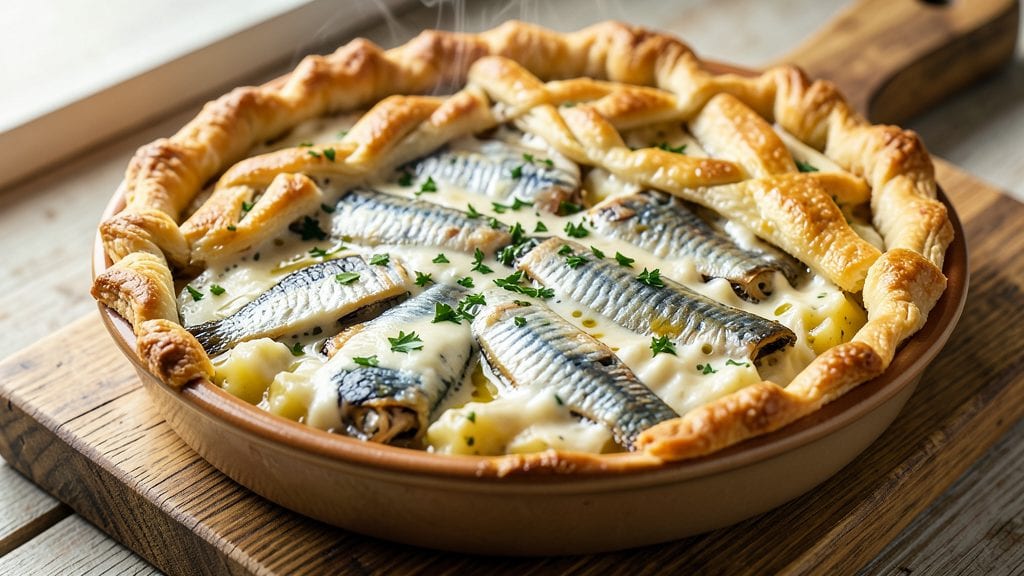
This sardine pie recipe delivers a savory, hearty dish that bridges coastal tradition and home comfort—think crispy potato crowns hugging a rich, briny sardine filling. The secret lies in balancing the fish’s natural saltiness with creamy eggs and sharp herbs, creating a filling that’s both tender and satisfying.
I first made this during a chilly winter when I craved something warm yet substantial, and it became an instant family favorite.
The beauty of sardine pie is its versatility—whether you stick to a classic Spanish pastel de bonito approach or experiment with Italian sarde in saor flavors, the foundation remains the same: layers of flaky crust, fluffy potatoes, and sardines that melt into a velvety texture.
The crust should be golden and crisp, while the filling stays moist and rich, with just enough acidity from lemon or vinegar to cut through the saltiness. It’s the kind of dish that feels indulgent yet simple to prepare.
What you’ll end up with is a savory crown that’s as comforting as it is impressive—perfect for brunch, a light dinner, or even a festive gathering. The aroma of baking potatoes and sardines fills the kitchen, promising a meal that’s both nostalgic and refined.
This recipe ensures every bite delivers that perfect balance of textures and flavors, making it a standout for any meal.
For those looking to adapt, consider a vegan crust or adding roasted peppers to the filling for extra depth. The possibilities are endless, but the core remains: a foolproof method that transforms simple ingredients into something truly special. Let’s get started!
Ingredients for sardine pie
Six hearty ingredients transform into a savory, comforting pie that tastes like home.
| Ingredient | Amount | Notes |
|---|---|---|
| Russet Potatoes 🥔 | 3 lbs | Yukon golds work too, peeled |
| Sardines in Olive Oil 🐟 | 12 oz | High-quality, drained well |
| Large Eggs 🥚 | 4 whole | Room temperature preferred |
| Heavy Cream 🥛 | 1 cup | Full-fat for richness |
| Whole Milk 🥛 | ½ cup | Warmed slightly |
| Fresh Parsley 🌿 | ¼ cup | Chopped, stems removed |
| Fresh Dill 🌿 | ¼ cup | Chopped, or dried at 1/4 amount |
| Lemon Zest 🍋 | 1 tbsp | Bright yellow lemon preferred |
| Lemon Juice 🍋 | 1 tbsp | Freshly squeezed |
| Extra-Virgin Olive Oil 🫒 | ¼ cup | For richness and moisture |
| Salt 🧂 | 1 ½ tsp | Adjust to taste |
| Black Pepper 🌶️ | ½ tsp | Freshly ground preferred |
| Garlic Cloves 🧄 | 2 cloves | Minced, for depth |
| Unsalted Butter 🧈 | ½ cup | Cold, cubed for crust |
| All-Purpose Flour 🌾 | 2 cups | Plus 1 tsp for work surface |
| Ice Water 💧 | ¼ cup | For dough elasticity |
The sardines are the star—high-quality, oil-packed ones make all the difference. Grab the freshest you can find at Whole Foods or your local fishmonger (they’ll know the good stuff). If you’re using canned sardines, drain them thoroughly—the oil can make the filling soggy. The potatoes? Russets are ideal for fluffiness, but Yukon golds add a touch of creaminess. For the crust, cold butter is non-negotiable—it keeps the layers crisp. I always make extra dough for savory tarts, but this recipe uses just enough for a perfect crown.
No fresh herbs? Dried dill and parsley work at one-quarter the amount, but fresh is worth the trip to the market. Short on sardines? Anchovies or smoked mackerel can stand in, though the flavor will shift slightly. The lemon zest and juice are key—Meyer lemons add a hint of sweetness, but regular lemons work fine. For the crust, if you’re gluten-free, almond flour or a pre-made mix will do, but the texture won’t be the same. The filling can be prepped a day ahead—just bake it fresh for the best texture (trust me on this).
This pie reheats beautifully—350°F for 15 minutes brings it back to life. Keeps in the fridge for 4 days, though it’s best within 2 days for peak crispiness. Freezes for 2 months if wrapped tightly in foil. The crust stays crispy if you bake it straight from the fridge—just add 5 minutes to the time. Leftovers? Slice it thin and toast in the oven for a crispy sandwich filling.
Why You'll Love This Recipe
- One-Pot Magic: I swear by this recipe when I’m too tired to dirty more than one bowl. The potatoes go in raw, the sardines melt into the cream, and the eggs bind it all—no fancy layers, no fuss. Just slice, mix, bake, and done.
- Umami Bomb: That first bite? The sardines in olive oil bring this pie a salty, briny depth that cuts through the richness of the cream. Honestly, it’s the kind of flavor that makes you pause mid-bite—like a hug from the sea.
- Lunchbox Hero: Between us, this pie reheats like a dream for packed lunches. The texture holds up, the flavors get even better, and my kids actually eat it cold the next day. (Yes, even my picky eater.)
- Budget Powerhouse: Russets and canned sardines? That’s a pantry staple combo that won’t break the bank. I’ve made this for $8 and fed four people—plus, leftovers keep for days. Practical, reliable, and still feels special.
Step-by-step instructions for sardine pie
This pie delivers homey comfort with flaky crust and creamy filling—easy steps for perfect results.
Prepare the Potato Filling
Peel the 3 lbs russet potatoes and cut them into ½-inch thick rounds. Boil in salted water for 10-12 minutes until fork-tender but not falling apart. Drain well and let cool slightly.
In a large bowl, combine the potatoes with the 12 oz drained sardines (crushed slightly with your hands), 1 cup heavy cream, 0.5 cup whole milk, 0.25 cup chopped fresh parsley, 0.25 cup chopped fresh dill, 1 tbsp lemon zest, 1 tbsp lemon juice, 0.25 cup extra-virgin olive oil, 1.5 tsp salt, and 0.5 tsp black pepper. Mix gently until just combined—you want the sardines to distribute evenly but not break into tiny pieces. The filling should look creamy and speckled with fish.
Make the Crust Dough
In a food processor, pulse the 2 cups all-purpose flour, 0.5 cup cold unsalted butter (cubed), 2 minced garlic cloves, and 1 tsp additional salt until the mixture resembles coarse crumbs. With the processor running, gradually add the 0.25 cup ice water until the dough just comes together. Avoid overmixing—it should form a rough, shaggy ball.
Turn the dough onto a lightly floured surface and knead just until smooth (about 30 seconds). Divide it into two equal pieces, flatten each into a disk, wrap in plastic, and refrigerate for 30 minutes. This chilling step is crucial—it prevents the crust from shrinking during baking.
Assemble the Pie
Preheat your oven to 375°F. Roll out one dough disk on a floured surface to fit a 9-inch pie dish, leaving a ½-inch overhang all around. Transfer to the dish and trim the edges, leaving the overhang intact. Roll out the second dough disk to the same size.
Spread the potato-sardine filling evenly into the crust, mounding it slightly in the center. Drape the second dough disk over the top, pressing gently to seal the edges. Crimp the overhangs together using your fingers or a fork, then cut a few small slits in the top crust for steam to escape. Brush the crust with a little beaten egg (from the 4 large eggs) for a golden finish.
Bake to Golden Perfection
Place the pie on a baking sheet (to catch any drips) and bake for 45-50 minutes until the crust is deep golden brown and the filling is bubbling through the slits. The center should be just set—it'll continue cooking slightly as it rests. If the edges brown too quickly, cover them loosely with aluminum foil after 25 minutes.
Let the pie cool for 15 minutes before slicing. The filling should be creamy with tender potatoes and flaky, buttery layers. Serve warm with a simple green salad or crusty bread—this pie tastes even better the next day, so plan ahead!
Pro Tips For Making Sardine Pie
- Pre-Cook Potatoes Slightly: Boil your Russets for 8-10 minutes first—they’ll hold their shape better in the pie and absorb that creamy sardine sauce without turning to mush. I learned this the hard way after serving a soggy bottom crust once. Trust me, it’s worth the extra 10 minutes.
- Drain Sardines Well: Pat those sardines dry with paper towels before adding them to the pie—even the "drained" ones from the can still cling to oil. Wet sardines make the filling greasy and uneven. (Yes, it’s tedious, but your pie will taste cleaner.)
- Temper the Cream: Warm the heavy cream and milk together over low heat until just steaming, then whisk in the eggs. Cold eggs in hot cream curdle faster than you can say "disaster." I now do this in a double boiler—no more scrambled pie filling.
- Blind-Bake the Crust: Roll out the crust, prick it all over, and bake it empty for 10 minutes at 375°F before adding the filling. This prevents a soggy bottom when the creamy sardine mix steams up. (Your future self will thank you—trust me, I’ve served both versions.)
Serving suggestions for this sardine pie
Classic Pairings
Serve your sardine pie with a crisp green salad dressed in a light lemon vinaigrette—the acidity cuts through the richness of the filling beautifully. I like to use arugula, cherry tomatoes, and shaved fennel for a fresh, peppery contrast.
A slice of crusty sourdough bread on the side is perfect for soaking up any extra sauce. 🥗
Wine Pairings
A medium-bodied white wine with citrus notes works best. I recommend a dry Vermentino from Sardinia—its bright acidity and mineral finish complement the sardines and lemon zest. Alternatively, a chilled Rosé from Provence adds a refreshing touch without overpowering the dish.
For red wine lovers, a light Pinot Noir with earthy undertones pairs surprisingly well. 🍷
Beer & Cider
For beer drinkers, a crisp lager like Peroni or Corona cleanses the palate between bites. A Belgian witbier with its citrusy coriander notes also works wonderfully. If you prefer cider, a dry, sparkling apple cider from the Pacific Northwest adds a crisp, slightly tart counterpoint to the pie’s richness. 🍺
Garnish & Finishing
Just before serving, sprinkle the pie with extra fresh parsley and dill for a pop of color and freshness. A drizzle of high-quality extra-virgin olive oil (like Colavita) adds a luxurious finish. For a smoky twist, top with crumbled feta cheese—the saltiness enhances the sardines beautifully. ✨
Make It a Meal
Turn your sardine pie into a full meal by adding roasted asparagus or sautéed green beans—both pair well with the savory filling. A simple tomato and basil soup on the side balances the richness, especially if you’re serving it for a cozy dinner.
For a festive touch, pair it with olives and marinated artichokes for a Mediterranean-inspired spread. 🍅
Leftovers Reinvented
Slice leftover sardine pie into thin rounds and toast in the oven until crispy for a delicious open-faced sandwich. Top with avocado slices and a sprinkle of chili flakes for a quick lunch.
You can also shred the filling and serve it on toasted baguette slices with a side of roasted red peppers for a deconstructed version. 💡
Nutrition facts
Frequently asked questions
Can I substitute sardines with another type of fish?
While sardines are ideal for their rich, briny flavor, you can swap them for anchovies or smoked mackerel in a pinch. Just reduce the salt in the recipe since these fish are naturally saltier. Avoid delicate white fish like cod—they won’t hold up as well in the creamy filling.
How do I prevent the crust from getting soggy?
Chill the assembled pie for 30 minutes before baking to help the crust set. Brush the bottom crust with a thin layer of beaten egg white before adding filling, and avoid overfilling the pie—leave a ½-inch headspace for the filling to expand.
Can I make this pie ahead of time?
Yes! Assemble the pie (unbaked) and refrigerate for up to 24 hours. Bake it straight from the fridge, adding 5-10 minutes to the baking time. For leftovers, reheat slices at 350°F for 10-15 minutes to restore crispiness.
What’s the secret to flaky crust?
Use cold butter and ice water in the dough, and avoid overworking it. Roll the dough gently and let it rest between layers. For extra flakiness, sprinkle a pinch of salt between crust layers before baking.
Is this pie gluten-free?
The crust requires flour, but you can substitute with a gluten-free 1:1 flour blend (like Bob’s Red Mill). The filling stays the same, but the texture may be slightly denser. For a vegan option, use a store-bought gluten-free crust or almond flour.