
Desserts
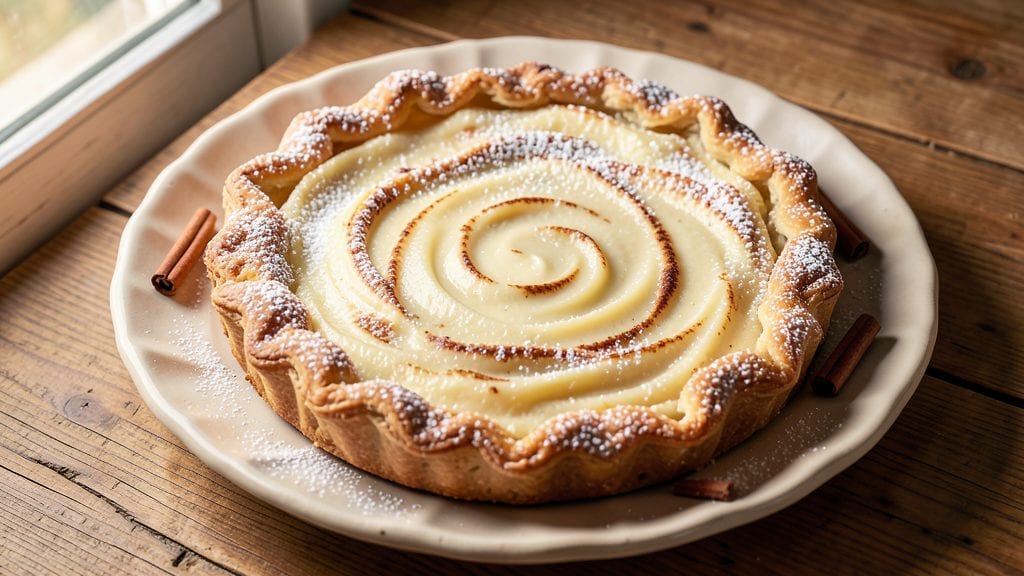
This Sicilian pie recipe brings the sun-drenched flavors of Sicily to your kitchen with its signature orange blossom and ricotta swirls. The combination of tender crust, creamy ricotta filling, and floral orange blossom water creates a dessert that feels both nostalgic and luxurious.
I first discovered this recipe while exploring Sicilian home cooking, and it quickly became a staple in my dessert repertoire.
The beauty of this pie lies in its balance of tradition and simplicity. You'll start with a classic Sicilian-style crust, often enriched with a touch of lard for that signature flakiness.
The filling combines sweet ricotta with a hint of citrus to complement the orange blossom water, while a sprinkle of cinnamon adds warmth. The result is a pie that's rich yet not overly sweet, with layers of flavor that unfold with every bite.
What makes this recipe special is how it captures the essence of Sicilian baking—where every ingredient tells a story. The orange blossom water, a staple in Sicilian cuisine, adds a delicate floral note that elevates the ricotta filling to something truly extraordinary.
The crust, baked until golden and crisp, provides the perfect contrast to the creamy, fragrant filling inside.
Whether you're serving it at a family gathering or simply treating yourself, this pie delivers restaurant-quality results with minimal fuss. The best part? It's versatile enough to adapt with seasonal ingredients while staying true to its Sicilian roots.
Let's get started on creating this taste of Sicily in your own kitchen.
Ingredients for sicilian pie
Sunshine in a pie: flour, butter, ricotta, and orange blossom water transform into Sicily's most beloved dessert.
| Ingredient | Amount | Notes |
|---|---|---|
| All-Purpose Flour 🌾 | 3 cups | Sifted for flakier crust |
| Unsalted Butter 🧈 | 1 cup | Cold, cubed, for crust |
| Lard 🐖 | ½ cup | Traditional Sicilian touch |
| Granulated Sugar 🍚 | ½ cup | For crust sweetness |
| Large Egg 🥚 | 1 whole | Cold, for binding |
| Ice Water 💧 | ¼ cup | For dough consistency |
| Whole Milk Ricotta 🧀 | 2 cups | Full-fat for creaminess |
| Granulated Sugar 🍚 | ¾ cup | Balances ricotta sweetness |
| Large Eggs 🥚 | 4 whole | Room temperature |
| Orange Blossom Water 🍊 | 1 tbsp | Authentic Sicilian flavor |
| Ground Cinnamon 🌿 | 1 tsp | Warmth without overpowering |
| Zest of 1 Large Orange 🍊 | 1 tbsp | Bright citrus note |
| Vanilla Extract 🍯 | 1 tsp | Pure extract preferred |
| Powdered Sugar 🍚 | ¼ cup | For dusting top |
| Coarse Sugar 🍚 | ¼ cup | For crust sprinkle |
The crust is where Sicilian tradition shines. Lard gives that signature flakiness—don't skip it if you can find it (check the meat section at Whole Foods or Trader Joe's for leaf lard). If you're avoiding it, extra butter works, but the texture won't be quite the same. For the flour, King Arthur or Gold Medal brands are my go-tos—they handle the butter beautifully. Keep everything cold when mixing the dough, and don't overwork it. The ricotta should be full-fat and whole milk—that's what makes it truly creamy. I always grab mine from the Italian market if I'm near one, but the regular grocery store stuff works fine too.
Orange blossom water is the soul of this pie, but it's not always easy to find. Middle Eastern or Mediterranean markets usually carry it, and Amazon has reliable brands like Nabulsieh. If you can't find it, a mix of orange zest plus 1 tsp vanilla extract gets you close. For the sugar, I use turbinado for the crust sprinkle—it adds that gorgeous crunch and caramelizes beautifully. No vanilla extract? Seeds from a vanilla bean work wonderfully if you've got them. The eggs should be room temperature when you mix them into the filling—it makes for a smoother texture. And trust me on the cinnamon: Ceylon cinnamon is ideal if you want that authentic flavor, but regular ground works too.
This pie tastes even better the next day once everything settles. Store it in an airtight container at room temperature for up to 3 days, or freeze the whole pie for up to 3 months. I like to wrap it tightly in plastic wrap before putting it in a freezer bag—prevents freezer burn. To reheat, just warm it at 350°F for 10-15 minutes until the crust is crispy again. The ricotta filling is delicate, so I usually slice it right before serving. And if you make a double batch? It disappears in one sitting—worth every minute.
Why You'll Love This Recipe
- No-Fuss Dough: I swear by this crust—just flour, butter, and lard tossed together like a lazy Sunday. No food processor, no chilling stress, and that flaky magic happens with minimal effort.
- Sweet Butter Crunch: That sugar in the dough? It caramelizes into this irresistible crunch, like a cross between a shortbread cookie and a pie crust. One bite and you’ll understand why I keep making it.
- Leftover Goldmine: This pie stays fresh for days, so I bake it once and enjoy it twice—warm with ice cream or cold in the morning. Honestly, the second day is when it really shines.
- Budget Baking: Five ingredients, zero specialty items. If you’ve got flour and butter, you’ve got everything you need. My wallet (and my taste buds) thank me every time.
Step-by-step instructions for orange blossom and ricotta swirl pie
This pie combines a buttery Sicilian crust with a velvety ricotta filling infused with bright orange blossom and citrus.
Create the Flaky Crust
In a large bowl, combine the 3 cups all-purpose flour with the 0.5 cup granulated sugar and 1 tsp ground cinnamon. Cut in the 1 cup unsalted butter and 0.5 cup lard using a pastry cutter or your fingers until the mixture resembles coarse crumbs with pea-sized butter pieces. Add the 1 whole large egg and mix just until combined.
Gradually add the 0.25 cup ice water, 1 tablespoon at a time, mixing gently with a fork until the dough comes together. Avoid overworking—just until it holds when pressed. Shape into a disk, wrap in plastic, and chill for 30 minutes. This resting period relaxes the gluten for a flakier crust.
Prepare the Citrus-Infused Ricotta Filling
In a medium bowl, whisk together the 2 cups whole milk ricotta, 0.75 cup granulated sugar, 4 whole large eggs, 1 tbsp orange blossom water, 1 tbsp zest of 1 large orange, and 1 tsp vanilla extract until completely smooth. The mixture should be thick but pourable—this ensures a creamy texture without being runny.
Real talk: Don't skip the orange zest. It adds that authentic Sicilian brightness that makes this pie truly special. Taste the filling now—it should be sweet but not cloying, with a subtle floral aroma from the orange blossom water.
Assemble the Pie
Roll out half of the chilled dough to fit a 9-inch pie dish, leaving a 1-inch overhang. Trim the edges and crimp decoratively. Sprinkle the bottom crust with 0.25 cup coarse sugar—this creates a beautiful caramelized crust when baked.
Pour the ricotta filling into the crust, spreading it evenly. Roll out the remaining dough and cut into strips. Weave them over the filling in a lattice pattern, trimming any excess. Brush the top with water to help it brown nicely in the oven.
Bake to Golden Perfection
Preheat your oven to 375°F. Place the pie on a baking sheet lined with parchment paper to catch any drips. Bake for 50-55 minutes until the crust is deep golden brown and the filling is just set in the center (it should still have a slight wobble—it'll firm up as it cools).
If the edges brown too quickly, cover them with aluminum foil. The filling should be custard-like but not firm—this pie is all about that creamy texture. Let it cool completely before slicing, as the filling will continue to thicken as it sits.
Finish and Serve
Once completely cooled, dust the top generously with 0.25 cup powdered sugar using a fine-mesh sieve. This adds that signature Sicilian touch and balances the richness of the ricotta. Let the powdered sugar settle for 5 minutes before slicing.
Slice into wedges and serve at room temperature. The contrast between the flaky crust, creamy ricotta, and citrusy sweetness makes every bite unforgettable. Store leftovers covered in the refrigerator for up to 3 days—though I doubt there'll be any left!
Pro Tips For Making Sicilian Pie
- CHILL THE FAT FIRST: Cold lard and butter cut into flour better than soft fat—no need to wait for a fridge, just pop the block in the freezer for 10 minutes. I learned this the hard way when my first batch turned into a greasy mess because the fat melted before it could incorporate.
- USE A THIMBLE FOR SUGAR: Pack that granulated sugar tightly into the measuring cup—tap it on the counter 3-4 times to eliminate air gaps. Too much sugar later means a dense, dry crust, and nobody wants that with Sicilian pie’s signature flaky layers.
- DON’T OVERWORK THE DOUGH: Mix just until the flour disappears—no more than 10-12 turns with a fork or pastry cutter. Overmixing develops gluten, and that’s how you end up with a tough, chewy crust instead of the tender, melt-in-your-mouth texture this pie deserves.
- COOL THE PIE COMPLETELY: Let it sit at room temperature for at least 2 hours before slicing—yes, even if you’re starving. Cutting warm pie spreads the filling like glue, and you’ll end up with a sticky disaster instead of clean, elegant slices. (Your future self will thank you.)
Troubleshooting this dish
Crust Too Tough
If your crust turns out tough instead of flaky, the issue is likely overworked dough or not enough fat. I’ve found that lard is key—it creates steam during baking, which separates the layers. If you skipped it, try using 1 extra tablespoon of butter next time.
Also, make sure your butter and lard are ice cold when cutting into the flour. Another common mistake? Overmixing the dough. Once the water comes together, stop immediately—just handle it enough to shape it into a disk. 💡
Filling Too Runny
A runny filling usually means the eggs weren’t fully incorporated or the ricotta wasn’t thick enough. I always whisk the ricotta and eggs together for at least 2-3 minutes until completely smooth. For extra stability, add 1 tablespoon of cornstarch to the filling—it thickens beautifully without altering the flavor.
If the filling still separates, strain it through a fine-mesh sieve before pouring into the crust to remove any lumps. 🥣
Orange Blossom Overpowering
If the orange blossom flavor dominates and tastes artificial, it’s likely too strong. Start with just ½ teaspoon and adjust to taste. For a more natural balance, pair it with 1 teaspoon of vanilla extract—this rounds out the floral notes beautifully.
If you can’t find orange blossom water, a mix of orange zest plus a pinch of cardamom mimics the effect without overpowering. Taste as you go! 🍊
Crust Burning Too Fast
When the crust browns too quickly, it’s usually because the oven runs hot. Preheat your oven for at least 30 minutes before baking to ensure even heat. If the edges still darken too fast, cover them with a strip of aluminum foil halfway through baking.
Another trick? Place a baking sheet on the lower rack to reflect heat upward. This helps the filling cook evenly while keeping the crust golden, not burnt. 🔥
Filling Not Setting Properly
A filling that doesn’t set could mean the oven wasn’t hot enough or the pie wasn’t baked long enough. I always bake until the center is just slightly jiggly—it’ll firm up as it cools.
If yours still feels too soft, pop it back in the oven for 5-10 minutes at 350°F. For extra insurance, chill the pie in the fridge for 1 hour after baking to help the filling set completely. 🍰
Lattice Top Collapsing
If your lattice top caves in, the dough strips might be too wide or the filling too heavy. Roll the dough strips to about ¼-inch thickness and weave them tightly over the filling. Brush them with a little egg wash before baking to help them hold their shape.
Also, make sure the filling is evenly distributed—no thick spots that could weigh down the lattice. A little extra support goes a long way! ✨
Nutrition facts
Frequently asked questions
What makes this Sicilian pie different from other ricotta pies?
The magic lies in the orange blossom water and Sicilian-style crust with lard. Unlike traditional ricotta pies, this version has a delicate floral note from the orange blossom and a flakier crust that balances the creamy filling. The citrus zest adds brightness that's pure Sicilian tradition!
Can I make this pie without orange blossom water?
Use 1 tbsp orange zest plus 1 tsp vanilla extract for a similar citrusy flavor. For extra depth, add a pinch of ground cardamom—it mimics the floral notes beautifully. The pie will still taste amazing without the exact ingredient.
How do I store leftovers to keep them fresh?
Store in an airtight container at room temperature for up to 3 days. For longer storage, freeze the whole pie (wrapped tightly) for up to 3 months. To reheat, warm at 350°F for 10-15 minutes until the crust is crispy again. The filling firms up beautifully when chilled.
Why does the crust need to rest before rolling?
The 30-minute chill relaxes the gluten, preventing shrinking and creating those perfect flaky layers. Cold butter and lard also stay firm during baking, which is key for that signature Sicilian texture. Never skip this step—it makes all the difference!
What's the best way to serve this pie?
Serve at room temperature with a dusting of powdered sugar and a cup of strong espresso or Sicilian cannoli-style coffee. For extra flair, add fresh berries or a sprinkle of toasted pistachios. It's perfect for celebrations or as a decadent dessert anytime!