
Desserts
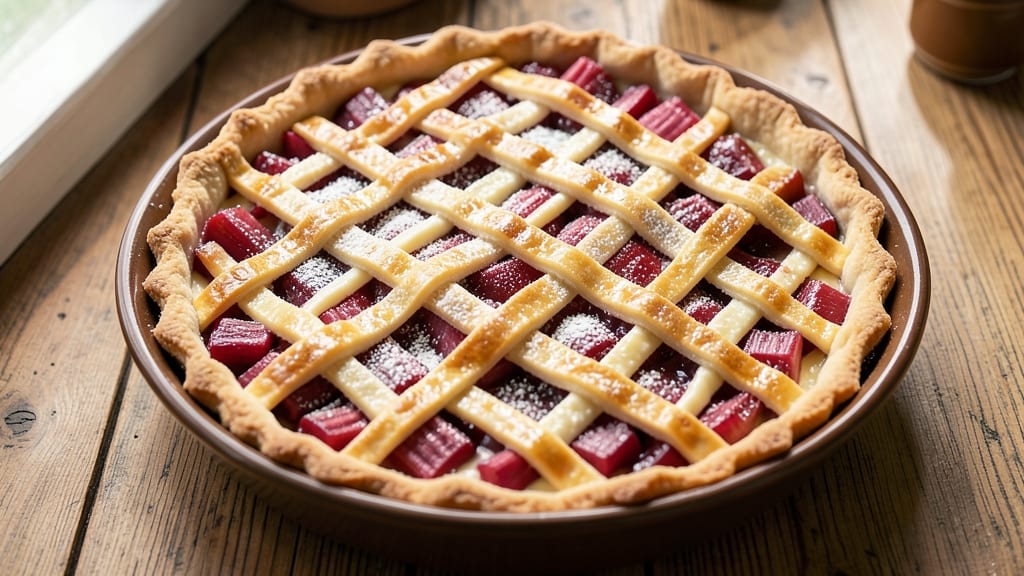
This Amish rhubarb custard pie delivers the perfect balance of tart rhubarb and velvety custard, all wrapped in a golden crust that’s crisp yet tender. The secret lies in the spiced filling—cinnamon and nutmeg deepen the rhubarb’s natural tang, while the custard layer adds a rich, creamy contrast.
I’ve perfected this recipe over years of baking, ensuring every slice delivers that signature Amish homestyle comfort.
The crust starts with a simple, all-butter base that bakes to a golden crown, while the filling combines fresh rhubarb with a vanilla-infused custard for that signature texture. No lattice here—just a classic top crust that seals in the flavors while keeping the filling lusciously moist.
The result? A pie with a crisp exterior and a filling that’s neither too runny nor too dry, striking the ideal balance.
What makes this recipe stand out is how the tartness of the rhubarb plays against the custard’s smooth sweetness, creating a harmony that’s both nostalgic and refined. The spices—just a pinch of cinnamon and nutmeg—enhance the rhubarb’s natural flavor without overpowering it.
Each bite offers that perfect mix of textures: the crisp crust, the jammy rhubarb, and the creamy custard that ties it all together.
Perfect for spring gatherings or a cozy weekend dessert, this pie is as impressive as it is simple. The technique is straightforward, but the results are restaurant-quality—just like Grandma used to make. Let’s get baking!
Ingredients for amish rhubarb custard pie
Golden crust meets velvety custard—this pie’s magic lies in the rhubarb’s tartness and spiced sweetness.
| Ingredient | Amount | Notes |
|---|---|---|
| Fresh Rhubarb Stalks 🍓 | 4 cups | Trimmed, chopped into 1-inch pieces |
| Granulated Sugar 🍚 | 1 ½ cups | Divided for filling and custard |
| All-Purpose Flour 🌾 | ½ cup | For custard thickening |
| Large Eggs 🥚 | 4 whole | Room temperature for custard |
| Unsalted Butter 🧈 | 1 cup | Cold, cubed for crust |
| All-Purpose Flour 🌾 | 2 ½ cups | Plus 1 tbsp for crust |
| Ice Water 💧 | ½ cup | For pie dough |
| Ground Cinnamon 🌿 | 1 tbsp | Plus 1 tsp for filling |
| Ground Nutmeg 🌿 | ½ tsp | Freshly grated preferred |
| Pure Vanilla Extract 🍯 | 1 tsp | High-quality for custard |
| Diamond Crystal Kosher Salt 🧂 | ½ tsp | For crust and filling |
| Heavy Whipping Cream 🥛 | ½ cup | Optional for custard richness |
Rhubarb is the star, so pick vibrant stalks—avoid leafy or slimy ones. Local farmers markets often have the freshest, brightest rhubarb in spring. For the crust, Land O’Lakes unsalted butter is my go-to—it’s rich enough to create that signature golden crown without overpowering. If you’re using frozen rhubarb, thaw and drain it well, but fresh is absolutely essential for that jammy texture. The cinnamon and nutmeg? Penzeys Spice Shop sells the best—freshly ground, not the dusty stuff from the supermarket spice aisle. Trust me, it makes all the difference in that spiced filling.
No fresh rhubarb? Frozen works in a pinch—just thaw and drain thoroughly. Running short on vanilla? Imitation vanilla extract is fine, but add a pinch of almond extract for depth. The custard can handle vanilla bean paste if you’re feeling fancy—it’s richer and more aromatic. For the crust, shortening instead of butter gives a flakier texture, but you’ll lose that buttery aroma. The sugar is divided—1 cup for the rhubarb filling to balance the tartness, and 0.5 cup for the custard to sweeten without overpowering. If you’re watching sugar, reduce by 1 tbsp and boost the vanilla to 1.5 tsp for extra flavor.
This pie keeps beautifully—3 days at room temperature wrapped in foil, or up to 1 week refrigerated. The custard layer thickens as it cools, so reheat slices for 10-15 seconds to restore that silky texture. For make-ahead baking, prepare the crust and filling the night before, then bake fresh in the morning. The crust stays crisp for 2 days if stored in an airtight container. Freezing? Slice and freeze—just reheat from frozen for 20 minutes at 350°F. Every bite tastes like Grandma’s kitchen, and it’s worth the extra effort.
Why You'll Love This Recipe
- No Chopping Stress: I swear by this recipe because you just slice the rhubarb stalks into even chunks—no dicing, no fuss. The pie crust handles the rest while you mix the custard in one bowl, then pour it in. That’s right: no food processor, no measuring cups for flour dust everywhere.
- Tart-Sweet Magic: The rhubarb’s sharp tang gets balanced by the custard’s creamy richness, but here’s the secret: a pinch of cinnamon in the filling turns it from good to ridiculously good. It’s the kind of flavor that makes you pause mid-bite, like a dessert that remembers it’s spring.
- Weekend Crowd Pleaser: This pie disappears at gatherings—no one fights over the last slice. Between us, I’ve served it at brunch, potlucks, and even as a late-night treat after a bonfire. The custard’s velvety texture holds up, and the rhubarb’s acidity keeps it from feeling heavy.
- Budget-Friendly Luxury: You’re using pantry staples—eggs, flour, sugar—and a single stick of butter makes the crust flaky. Fresh rhubarb is cheap in season, and the leftovers? Perfect for breakfast the next day. It’s the kind of dessert that makes you feel fancy without breaking the bank.
Step-by-step instructions for Amish rhubarb custard pie
This classic pie delivers a perfect balance of tart rhubarb and velvety custard—every layer crafted with precision.
Prepare the Rhubarb Filling
In a large bowl, combine the 4 cups chopped fresh rhubarb stalks, ½ cup granulated sugar, 1 tablespoon ground cinnamon, ½ teaspoon ground nutmeg, and ½ teaspoon diamond crystal kosher salt. Mix gently but thoroughly—you want the sugar to coat each piece evenly while preserving the rhubarb's natural texture. The tartness will mellow slightly as it cooks, but the spices will intensify that signature Amish warmth.
Transfer the mixture to a 9-inch pie dish and press it down lightly with a spatula, creating an even layer. This prevents the filling from shifting during baking and ensures consistent cooking. The rhubarb should look compact but not overly compressed—think of it as a firm base for the custard layer that will follow. Preheat your oven to 375°F while you prepare the crust, as every minute counts in pie assembly.
Craft the Two-Stage Custard Layer
In a medium saucepan, melt the 1 cup unsalted butter over medium-low heat. Once fully melted, whisk in the 2.5 cups all-purpose flour and cook for 2-3 minutes, stirring constantly, until the mixture forms a smooth, pale roux. This foundational step prevents lumps in your custard—don't rush it, or you'll end up with a gritty texture that ruins the silky finish.
Gradually whisk in 1 cup granulated sugar and the 4 whole large eggs, one at a time, ensuring each is fully incorporated before adding the next. The mixture will thicken noticeably as you work. Remove the pan from heat and stir in the 1 teaspoon pure vanilla extract and ½ cup heavy whipping cream (if using). This custard blend should be thick enough to coat the back of a spoon but still pourable—it will set further during baking.
Assemble and Bake the Pie
Roll out the pie dough on a lightly floured surface to fit a 9-inch pie dish, leaving a ½-inch overhang for crimping. Gently fold the overhang under itself to create a decorative edge. Pour the custard mixture evenly over the rhubarb filling, spreading it with a spatula to create a smooth, even layer. The custard should cover the rhubarb completely but not overflow the pie dish.
Bake the pie at 375°F for 45-50 minutes, until the custard is set but still slightly jiggly in the center (it will firm up as it cools). The crust should be golden brown with no pale spots. If the edges brown too quickly, cover them with aluminum foil after 20 minutes to prevent burning while the center cooks through. The rhubarb should be tender but not mushy, and the custard should pull away cleanly from the edges of the pie dish.
Finish and Rest for Perfection
Remove the pie from the oven and let it cool on a wire rack for at least 2 hours—this resting period is crucial. It allows the custard to fully set and the filling to meld flavors without becoming watery. The contrast between the tart rhubarb and the creamy custard will deepen as it cools, creating that signature Amish balance of sweet and tangy.
Before serving, brush the crust with a simple glaze made by mixing 1 tablespoon melted butter with 1 teaspoon granulated sugar for extra shine. Slice into 8 equal wedges and serve warm or at room temperature. The pie will keep well in the refrigerator for 3-4 days, though I doubt it will last that long in your home!
Pro Tips For Making Amish Rhubarb Custard Pie
- Trim Rhubarb Like a Pro: Cut the stalks into even 1-inch chunks—no smaller, no larger. I learned this the hard way: smaller pieces turn to mush, and bigger ones stay undercooked. Use a sharp knife and work in batches if needed; rhubarb stains like a toddler’s highlighter.
- Whisk Eggs Cold: Beat the eggs and sugar straight from the fridge—room temperature eggs make the custard grainy, no matter how much you whisk. I used to skip this, and the filling always had that sad, lumpy texture. Trust me, 10 minutes in the icebox changes everything.
- Blind-Bake the Crust: Cover the crust with parchment, fill it with pie weights (or dried beans), and bake for 10 minutes before adding filling. This prevents soggy bottoms—my first attempt had a custard puddle instead of a pie. Preheat the oven to 375°F and don’t skip the weights.
- Sweeten Gradually: Taste the rhubarb mixture before adding all the sugar—it needs less than you think. Start with ¾ of the recipe’s sugar, bake, then adjust. I’ve ruined pies by assuming rhubarb’s tartness would balance out; it won’t. Let the fruit speak for itself first.
Troubleshooting perfect results
Crust Too Pale
If your crust emerges pale instead of golden, it’s likely underbaked or missing fat. First, ensure you’re using cold, cubed butter—room-temperature butter creates steam that prevents browning.
For future pies, brush the crust with an egg wash (1 egg yolk + 1 tbsp water) before baking, which promotes browning through the Maillard reaction. If baking, increase temperature to 400°F for the final 5-10 minutes to crisp the edges.
A light-colored crust often means the filling needs more time to set properly too.
Runny Custard
Overmixed custard or underbaked filling are the usual culprits. To fix, return the pie to a 350°F oven for 10-15 minutes until the custard firms up. For prevention, ensure your custard coats the back of a spoon before pouring—it should be thick but pourable.
If the custard still separates, whisk in 1 tbsp cornstarch mixed with 1 tbsp cold water and rebake. Underbaking is the #1 reason for a watery custard layer—always check for a slight jiggle in the center before removing.
Rhubarb Too Tart
The natural acidity of rhubarb can overpower if not balanced properly. Adjust by adding 1-2 tbsp more sugar to the filling or reducing the rhubarb by ½ cup in future batches. For a sweeter pie, sprinkle 1 tbsp brown sugar over the rhubarb before baking—it caramelizes slightly, adding depth.
If the tartness lingers, a dusting of powdered sugar on each slice at serving time softens the flavor beautifully. Penzeys cinnamon adds warmth without masking the tartness—stick to 1 tbsp max to avoid bitterness.
Soggy Bottom Crust
A soggy base usually means the filling released too much moisture. Pre-bake the crust for 8-10 minutes at 375°F before adding fillings to create a barrier. For rhubarb custard pies, press the rhubarb firmly into the crust to minimize air gaps where moisture can seep through.
If the crust is already soggy, chill the pie for 1 hour before slicing—this firms up the filling slightly. For next time, blind-bake the crust (with pie weights) for 15 minutes before adding fillings for extra insurance.
Custard Too Thick
Overcooking or over-thickening the custard leads to a dense, rubbery texture. To salvage, whisk in 1-2 tbsp warm milk or cream and rebake at 325°F for 5-10 minutes to soften. For future pies, reduce flour by 1 tbsp or increase liquid by 2 tbsp to maintain a silky consistency.
The custard should be just set when done—it firms up as it cools. Underbaking is better than overbaking here; the custard should pull away from the edges but still have a slight wobble in the center.
Filling Leaks
Leaking usually happens when the custard isn’t thick enough or the pie overfills. For an immediate fix, chill the pie for 1 hour before serving—this helps the custard set further.
To prevent leaks, ensure the custard is fully cooked (no liquidy spots) and the rhubarb is pressed firmly into the crust.
If the pie still leaks, thicken the custard by whisking in 1 tbsp cornstarch mixed with 1 tbsp cold water before baking. Overfilling is a common mistake—leave ½ inch of space at the top for expansion.
Nutrition facts
Frequently asked questions
Can I substitute frozen rhubarb in this recipe?
Frozen rhubarb works in a pinch, but fresh is ideal for that jammy texture. If using frozen, thaw and drain thoroughly first. For best results, reduce sugar by 1 tbsp since frozen rhubarb is often pre-sweetened. The pie will still taste delicious, though the filling may be slightly less vibrant than with fresh stalks.
Why does the custard layer sometimes separate?
Separation happens when the custard overheats or eggs cook too quickly. To prevent this, remove the pan from heat before adding eggs, then whisk constantly. For a quick fix, whisk in 1 tbsp cornstarch mixed with 1 tbsp cold water and rebake at 325°F for 5-10 minutes until set. The key is gentle heat and constant stirring.
How do I make this pie ahead of time?
This pie actually improves overnight! Assemble completely (including custard) and refrigerate for 12-24 hours before baking. The flavors meld beautifully, and the custard sets more perfectly. For make-ahead baking, prepare the crust and filling the night before, then bake fresh in the morning. The crust stays crisp for 2 days if stored in an airtight container.
Can I make a gluten-free version?
Yes, but with adjustments. Replace all-purpose flour with a 1:1 gluten-free flour blend (like Bob's Red Mill) for both crust and custard. Add ½ tsp xanthan gum to the crust flour to improve texture. The custard may need 1 extra tbsp cornstarch to thicken properly. Note that gluten-free crusts often brown differently—brush with extra egg wash for color.
What's the secret to that perfect golden crust?
The golden crown comes from three key steps: cold butter (never softened), egg wash (1 egg yolk + 1 tbsp water brushed on before baking), and baking at 400°F for the final 5-10 minutes if needed. The crust should be pre-chilled for 30 minutes before baking to prevent shrinking. Patience is key—don't peek too early!