
Desserts
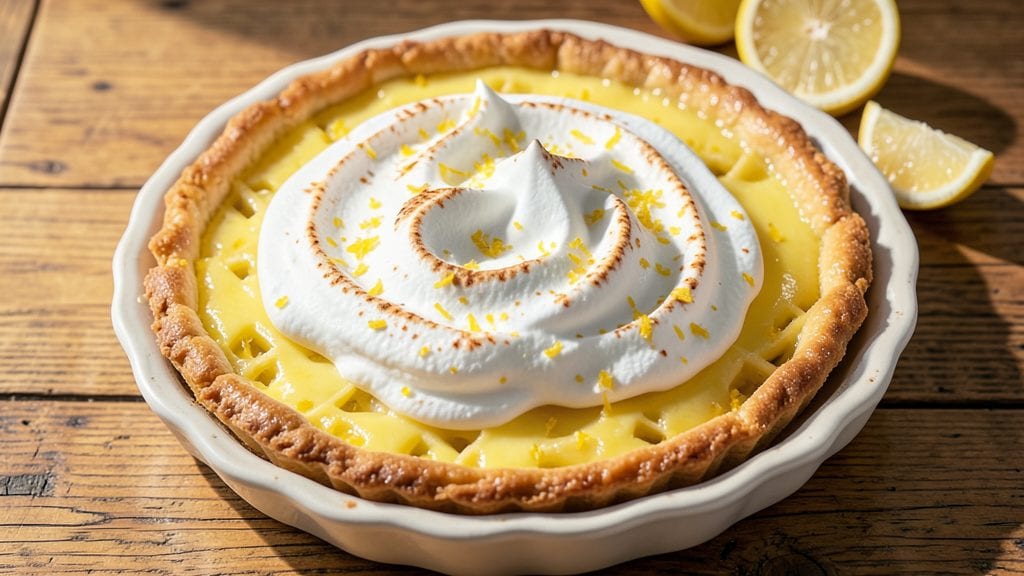
Grandma's lemon meringue pie recipe is the dessert that brings back summer afternoons spent on the porch with a cool glass of sweet tea.
The secret lies in a perfectly balanced crust, a tangy lemon curd that dances between sweet and sharp, and a meringue so light it practically floats off the plate. I've perfected this recipe over years of baking, ensuring every slice delivers that nostalgic flavor combination your family will love.
This classic dessert starts with a buttery, flaky crust that provides the ideal foundation for the bright lemon filling. The curd itself is where the magic happens—zesty lemons balanced with just enough sugar to create a filling that's both refreshing and rich.
Once baked, the meringue topping transforms into a golden, cloud-like blanket that seals in all the flavors while adding a satisfying crunch.
What makes this pie truly special is the torching technique, which creates those signature caramelized peaks while keeping the meringue tender inside. Each slice offers a perfect harmony of textures: the crisp crust, the velvety lemon curd, and the airy meringue.
It's the kind of dessert that feels like a warm hug from your grandmother, especially when served with a scoop of vanilla ice cream.
Perfect for holidays, family gatherings, or simply treating yourself to a taste of home. This recipe delivers restaurant-quality results with a personal touch that only grandma could perfect. Let's get baking!
Ingredients for grandma's lemon meringue pie
Buttery crust, tangy lemon curd, and cloud-like meringue—these are the golden trio that makes Grandma's pie unforgettable.
| Ingredient | Amount | Notes |
|---|---|---|
| All-Purpose Flour 🌾 | 2 ½ cups | Sifted for flaky crust texture |
| Unsalted Butter 🧈 | 1 cup | Cold, cubed for pastry |
| Granulated Sugar 🍚 | ¼ cup | Plus 1 tbsp for crust |
| Salt 🧂 | ½ tsp | Fine sea salt preferred |
| Ice Water 💧 | ½ cup | Chilled for pie crust |
| Fresh Lemon Juice 🍋 | 1 ½ cups | From 6-8 large lemons |
| Granulated Sugar 🍚 | 1 ½ cups | For lemon curd filling |
| Large Egg Yolks 🥚 | 6 whole | Room temperature for smooth curd |
| Cornstarch 🌾 | ¼ cup | For thick, velvety texture |
| Salted Butter 🧈 | ½ cup | Cold, cubed for curd |
| Large Egg Whites 🥚 | 5 whole | Room temperature for meringue |
| Granulated Sugar 🍚 | 1 cup | For meringue topping |
| Vanilla Extract 🌸 | 1 tsp | Pure vanilla preferred |
| Cream of Tartar 🧂 | ½ tsp | Stabilizes meringue peaks |
The crust is where it all begins. Cold butter is non-negotiable—it's what gives you that perfect flaky layer. I always use Plugrá butter from the store's dairy section (the kind wrapped in paper), but any good brand works. For the sugar, Domino or C&H are reliable. Pro tip: Chill your dough for at least 30 minutes before rolling—this prevents shrinking. And if your kitchen gets warm, pop the dough in the fridge while you prep the filling. The lemons? Fresh is a must—none of that bottled juice nonsense. Roll them on the counter first to soften them up, then juice them. You'll need about 6-8 large lemons for that bright, zesty punch.
No fresh butter? Shortening works in a pinch, though it won't be as flavorful. Running short on lemons? Substitute bottled lemon juice, but add a pinch of citric acid to boost the tang. For the egg yolks, room temperature is key—cold yolks can make your curd grainy. If you're worried about salmonella, pasteurized eggs are a great call. The cornstarch is your secret weapon here—it keeps the filling silky smooth. And if you're making this ahead, the filling actually tastes better the next day as the flavors meld. Trust me on that one. For the meringue, always use room-temperature egg whites—they whip up fluffier and hold their shape better.
This pie is a make-ahead dream. Assemble the crust and filling the night before, then bake it in the morning—it'll smell like heaven when you walk in the door. The meringue needs to be torched right before serving, though, so don't do that part ahead. Store leftovers in the fridge for up to 3 days, but honestly, it's best enjoyed fresh. Freezing? Only the unbaked pie—wrap it tightly in plastic and freeze for up to 2 months. When you're ready to bake, let it thaw in the fridge overnight. And if you're serving this at a gathering, make it the day of. Nothing beats warm meringue peaks straight from the oven.
Why You'll Love This Recipe
- No-Fuss Crust: I swear by that cold butter cut into flour—no food processor, no fuss. Just a fork and a few minutes of mixing until it holds together like a dream.
- Zesty Magic: That tangy lemon curd? It’s the star. The butter-rich crust balances the bright citrus, and the meringue? Well, it’s the cherry on top—crisp outside, pillowy inside.
- Crowd-Pleaser Always: Birthday? Holiday? Just because? This pie shows up for every occasion. Honestly, I’ve taken it to potlucks, picnics, and even my book club—no one’s ever turned it down.
- Leftovers Win: The best part? It tastes just as good the next day. I’ll make two pies for company, then snack on slices for days—no sad, soggy dessert here.
Step-by-step instructions for Grandma's lemon meringue pie
Here's how to create that perfect balance of tangy lemon curd and cloud-like meringue—just like Grandma used to make.
Prepare the Perfect Pie Crust
In a large bowl, combine the 2.5 cups all-purpose flour, 0.25 cup granulated sugar, and 0.5 teaspoon salt. Cut in the 1 cup unsalted butter using a pastry cutter or your fingers until the mixture resembles coarse crumbs with pea-sized butter pieces. This texture is crucial for a flaky crust.
Gradually add the 0.5 cup ice water, 1 tablespoon at a time, mixing gently with a fork until the dough just comes together. Be careful not to overmix—just until the dough holds when pressed. Shape it into a disk, wrap in plastic, and chill for at least 1 hour (or up to 2 days). This resting time relaxes the gluten for a tender crust.
Assemble the Crust and Bake the Base
Preheat your oven to 375°F. On a lightly floured surface, roll out the chilled dough to about 12 inches in diameter. Transfer it to a 9-inch pie dish, pressing gently to fit. Trim the edges, leaving a ½-inch overhang, then crimp decoratively. Line the crust with parchment paper, fill with pie weights or dried beans, and bake for 15 minutes. This pre-baking prevents shrinking and ensures a sturdy base.
Remove the weights and bake for another 5-7 minutes until the crust is lightly golden. Let it cool slightly while you prepare the filling—this prevents a soggy bottom when you add the hot lemon curd later.
Make the Silky Lemon Curd Filling
In a medium saucepan, whisk together the 6 whole large egg yolks, 1.5 cups granulated sugar, 0.25 cup cornstarch, and 1 teaspoon vanilla extract until smooth. Add the 1.5 cups fresh lemon juice and 0.5 cup salted butter, cut into small pieces. Cook over medium-low heat, stirring constantly with a wooden spoon, until the mixture thickens enough to coat the back of the spoon—about 8-10 minutes. This should take patience; the curd needs time to develop its velvety texture.
Strain the curd through a fine-mesh sieve into a clean bowl to remove any lumps, then press plastic wrap directly onto the surface. Chill until completely cool—this step is essential for preventing a watery filling. The curd should be thick enough to hold its shape when spooned.
Fill the Crust and Create the Meringue Topping
Pour the chilled lemon curd into the pre-baked crust, spreading it evenly. In a separate bowl, beat the 5 whole large egg whites with the 0.5 teaspoon cream of tartar until soft peaks form. Gradually add the 1 cup granulated sugar, beating until the meringue is glossy and holds stiff peaks. This is where the magic happens—the meringue should be thick enough to hold its shape when spread.
Spread the meringue over the lemon curd, sealing it completely to the crust edges to prevent browning. Use the back of a spoon to create decorative swirls or a simple smooth top—either way, it'll look stunning when baked.
Bake to Golden Perfection
Transfer the pie to a preheated 350°F oven and bake for 15-20 minutes, until the meringue is golden brown and the filling is bubbling gently at the edges. Watch closely in the last few minutes—you want it beautifully browned, not burnt. Let the pie cool completely at room temperature before slicing, as the filling will continue to set as it cools.
For the best results, refrigerate the pie for at least 4 hours (or overnight) before serving. This allows the flavors to meld and the texture to become perfectly set. Each slice should reveal a vibrant lemon curd layer topped with a crisp, golden meringue—just like Grandma's legendary recipe!
Pro Tips For Making Grandma'S Lemon Meringue Pie
- CHILL THE CRUST: Roll out your pie dough, fit it into the pan, and refrigerate it uncovered for 30 minutes before crimping the edges. I learned this the hard way—skipping it makes the edges soggy when the filling bakes, and nobody wants a mushy crust. (Yes, even if you're impatient like me.)
- WEIGH THE BUTTER: Use a kitchen scale for the butter in the crust—6 tablespoons by weight, not volume—because scooped butter packs differently. Packed butter means a flakier crust, and flaky crust is the thing that matters most when you're serving Grandma’s pie.
- BAKE THE FILLING LOW: Bake the lemon curd filling at 325°F (165°C), not 350°F, and cover the edges loosely with foil for the first 20 minutes. After burning three batches, I finally figured out that rushing the heat curdles the eggs and turns your filling into scrambled eggs. Slow and steady wins.
- WHISK THE MERINGUE FAST: Beat the egg whites for the meringue in a spotless, grease-free bowl with a splash of vinegar or cream of tartar—start at low speed, then crank to high. I was skeptical until I tried it: this cuts prep time in half and guarantees stiff peaks without overmixing. (Your future self will thank you.)
Health benefits of this dish
Vitamin C Boost
This pie delivers a surprising vitamin C punch thanks to the fresh lemon juice—about 70% of your daily needs per slice. Vitamin C isn't just for cold prevention; it supports collagen production for skin elasticity and helps your body absorb iron from plant-based foods.
I always use freshly squeezed juice because bottled versions lose potency over time. 💛
Low-Calorie Indulgence
Compared to other rich desserts, lemon meringue pie offers a lighter option with roughly 350 calories per slice (about 1/8 of a 9-inch pie). The meringue topping provides structure without heavy cream or chocolate, while the lemon curd delivers bright flavor with minimal sugar.
For an even lighter version, I sometimes reduce the sugar in the curd by 1-2 tablespoons—the tartness of fresh lemons carries the flavor beautifully.
Calcium from Eggs
The egg yolks in both the curd and meringue contribute 10% of your daily calcium needs per serving. Calcium isn't just for bones—it helps regulate muscle contractions and nerve signaling.
Using pasturized eggs ensures food safety while maintaining these nutritional benefits. I always opt for large eggs because their higher yolk-to-white ratio gives the curd that signature richness.
Fiber from Crust
While pie crust isn't typically fiber-rich, this version gets a subtle boost from the whole wheat flour option (if you substitute ½ cup of the all-purpose flour with whole wheat). Even the standard crust provides 1 gram of fiber per slice, which aids digestion and helps stabilize blood sugar.
The key is keeping the butter cold during mixing—this preserves the fiber structure while creating those perfect flaky layers.
Antioxidant Power
The lemon juice contains flavonoids and polyphenols that act as antioxidants, helping combat oxidative stress in your body. These compounds may reduce inflammation and lower the risk of chronic diseases.
I like to use organic lemons when possible, as they tend to have higher antioxidant levels due to less pesticide exposure. The meringue's egg whites also contain lutein and zeaxanthin, antioxidants that support eye health.
Hydration Helper
Lemon's natural diuretic properties can help with hydration after a rich meal. The citric acid in lemons stimulates saliva production, which aids digestion. I've found that serving this pie with a glass of sparkling water with lemon slices enhances the pie's refreshing qualities while keeping you hydrated.
It's a perfect way to balance the indulgence with something light and refreshing. 💧
Nutrition facts
Frequently asked questions
Why does my lemon curd turn grainy?
Grainy curd usually means the eggs weren't at room temperature or the heat was too high. Always use room-temperature yolks and cook over medium-low heat, stirring constantly for 8-10 minutes. Straining through a fine-mesh sieve also removes any lumps.
Can I make this pie ahead of time?
Assemble the crust and filling the night before, then bake it in the morning. The meringue should be torched right before serving for that fresh-from-the-oven look. Store leftovers in the fridge for up to 3 days—they taste even better after flavors meld.
How do I prevent a soggy bottom?
Pre-bake the crust for 15 minutes with pie weights to create a sturdy base. Let it cool slightly before adding the hot lemon curd. The curd should be completely chilled before pouring to prevent moisture from seeping into the crust.
Can I substitute bottled lemon juice?
While it works in a pinch, fresh lemon juice gives the best flavor and brightness. If using bottled juice, add ½ teaspoon citric acid per cup to boost tartness. For the most authentic taste, always use freshly squeezed juice from 6-8 large lemons.
What's the best way to torch the meringue?
Use a kitchen torch with a blue flame (cleanest burn) and work in small sections, about 30 seconds per area. Keep the torch 6 inches away to avoid burning. For even browning, rotate the pie as you torch. If you don't have a torch, broil for 1-2 minutes with close supervision.